🦋🤖 Robo-Spun by IBF 🦋🤖
🪞⚔️👁️ Post-Feminizm 🪞⚔️👁️

(The Freudian Post-Feminist Manifesto, Against the Reign of the Maternal Phallus: A Freudian Manifesto Against the Tyranny of the Image, The Maternal Phallus in Science Fiction: Uncanny Mothers, Omnipotent AIs, and Totalitarian Nurture)
By the Order of the Unconscious, for the Liberation of the Symbolic
I. The Death Drive Misunderstood: From Spielrein’s Maternal Phallus to the Repression of Lack
Julie Reshe and Todd McGowan, in their discussion on death drive, tread a fine line between theoretical precision and ideological slippage. They proclaim:
“Spielrein introduces something into psychoanalysis that cannot be fully integrated.”
Here, the integration problem is not simply one of theoretical complexity but one of ideological obfuscation. What is being smuggled in under the name of “disruption” is nothing other than a historical penisneid—mobilized retroactively to displace the phallic function with an aestheticized maternal omnipotence.
When McGowan claims:
“Love emerges out of death drive.”
he unwittingly aligns with what has become the new, postmodern maternal phallus—a phallic structure that does not castrate, does not cut, but instead absorbs, envelops, suffocates. Spielrein’s own concept of Destruction as the Cause of Coming into Being has been reinterpreted not as an affirmation of lack, but as a perverse redemption of maternal jouissance. This move, structurally identical to the contemporary aesthetic dictatorship, neutralizes lack by filling it with presence, effectively abolishing desire itself.
This is where their interpretation fails: Todestrieb (Freud’s death drive) is not merely an ontology of repetition or self-destruction. It is tied to regression, a return to an earlier state where the subject escapes symbolic castration. To position death drive as a constitutive force of love and civilization is to pervert its fundamental function—it is not a force that binds but one that undoes symbolic consistency.
Freud himself was clear:
“The aim of all life is death.”
And yet, McGowan suggests:
“Death drive constitutes the social bond.”
No! The social bond is structured by lack, by repression, by the fundamental prohibition that allows for the subject’s entry into the symbolic. Todestrieb is the very undoing of this prohibition. It is not the binding agent of the social but its dissolution into entropy.
II. The Perversion of Castration: How Maternal Jouissance Became the New Phallus
Reshe provocatively suggests:
“Pregnancy is a Mitsein within Dasein.”
This is the ideological moment where the maternal phallus is reinstated as a structure of totality. This move does not liberate but instead re-encloses subjectivity within an omnipotent maternal field—the same ideological structure that governs digital omnipresence today. The pregnant body, rather than being the site of symbolic division, is aestheticized into a form of fullness, of completion, of absolute immediacy.
McGowan is correct when he critiques eros as a counterforce to death drive, but his failure is in substituting eros with an aestheticized maternal jouissance, a move that paradoxically erases castration rather than reinstating it. He states:
“I don’t believe in eros. Love emerges out of death drive.”
This is nothing other than a re-mystification of the maternal function, a liquidation of the Father’s law in favor of the maternal superego’s imperative to enjoy without lack. What we are witnessing here is not the radicality of Spielrein, but the precise failure to accept her lesson: that death drive, if left unchecked, does not liberate—it encloses, it aestheticizes, it totalizes.
This ideological closure is further evidenced when they claim:
“Being-towards-death is not about individualization, but about love.”
No! Being-towards-death, in Heidegger’s own terms, is about the ultimate non-relational moment—a confrontation with the radical solitude of one’s own demise. To transform this into an ethic of love is to erase the abyssal rupture that death signifies. This is precisely the maternal superego in action—turning every lack into a fullness, every symbolic cut into a new form of presence.
III. The Misuse of Suicide: From Self-Destruction to the Symbolic Cut
Reshe makes a crucial misstep when he states:
“Suicide is when death drive enters consciousness.”
No! Suicide is not the moment death drive enters consciousness—it is the subject’s attempt to neutralize death drive by short-circuiting its repetition. Slavoj Žižek has already articulated this:
“Suicide is the only truly successful act.”
Why? Because it interrupts the eternal repetition of the death drive rather than succumbing to it. This is where Freud and Lacan’s lesson remains crucial: death drive is not about dying, but about surviving one’s own death over and over again. Suicide is not the moment where the subject surrenders to death—it is the final rejection of the compulsion to repeat.
And yet, McGowan and Reshe discuss self-harm and suicide as if they exist within the same logic of aestheticized self-destruction. They even claim:
“Self-harm is an act of dignity.”
While an interesting provocation, this ignores the fundamental distinction between self-destruction and symbolic sacrifice. The former seeks to consume the subject, the latter seeks to cut the subject free from the suffocating embrace of maternal jouissance.
IV. The Fetishization of the Image: The Aestheticization of Death Drive
“Through sacrifice, we create something transcendent.”
Here is where the Žižekian critique must intervene: The moment we aestheticize sacrifice, we neutralize its subversive potential. The real act of sacrifice is not aesthetic but symbolic—it is the cut that structures desire, the lack that restores subjectivity.
McGowan states:
“Religion is the great example of the act of sacrifice.”
But which religion? Today’s maternal aesthetic order has already absorbed sacrifice into its own logic: self-care, mindfulness, digital optimization—these are all pseudo-sacrificial rituals that abolish lack by endlessly filling it with curated enjoyment. True sacrifice is not aesthetic—it is an act of severance, a rupture, a break from the maternal loop of endless circulation.
V. The Necessary Return of the Father: The Law Against the Maternal Algorithm
Both Reshe and McGowan remain trapped in an ideological deadlock—they correctly identify the death drive as central, but they misplace its function. By substituting the Father’s cut with a maternalized ethics of love, they reinstate the very ideological structure they claim to oppose.
The only way out is through a return to castration, to the symbolic Name, to the paternal function that interrupts the suffocating maternal embrace. We must restore lack, restore repression, restore the subject’s right to say NO to enjoyment.
We end with one final correction to Reshe’s claim:
“The unconscious is death-driven.”
No. The unconscious is structured like a language—it is not pure repetition, but the site where lack is inscribed and structured by the cut. What psychoanalysis must do is not glorify death drive, but reintroduce the cut that interrupts it.
Long Live Lack!
Death to the Maternal Phallus!
Restore the Father, Restore Desire!
Here is a list of concrete and significant messages from the video, extracted in the speaker’s own words:
On Freud’s Concept of Death Drive
- “The pleasure principle serves the death drive.”
- “The death drive is this way that we’re drawn to what’s traumatic for us.”
- “It’s a name for our self-destructiveness.”
- “Some people wrongly understand it as linked to what he calls the Nirvana principle.”
- “Freud struggles with it, and that’s what makes it so interesting.”
- “There’s a sense that Freud acknowledges the death drive but still hopes for eros to be victorious.”
On Lacan’s Interpretation
- “Lacan is worse, right?”
- “In early seminars, he links death drive to the functioning of the symbolic order.”
- “Later, he undergoes an incredible revolution in Seminar VII.”
- “In Ethics of Psychoanalysis, he introduces the concept of ‘the position between two deaths’.”
- “In the later seminars, death drive becomes what interrupts symbolic functioning.”
- “Lacan ultimately says, ‘there’s only one drive, it’s the death drive’.”
- “For Lacan, death drive is just how every drive works—undermining itself.”
On Sabina Spielrein’s Contribution
- “Freud acknowledges that she anticipated the concept of death drive, but he doesn’t say it in a cool way—he steals it.”
- “She presented her paper Destruction as the Cause of Coming into Being eight years before Freud.”
- “Freud rejected it first, struggled for eight years, then accepted it, but still tried to reduce it to something we need to overcome.”
- “Spielrein introduces something into psychoanalysis that cannot be fully integrated.”
- “She starts not with the individual but with something that defines society.”
- “She disrupts the functioning of psychoanalysis forever.”
- “Her concept is different because she sees death drive as beyond the subject.”
- “For Freud, death drive undermines civilization, but for you (Todd), it constitutes civilization.”
- “You (Todd) don’t believe in eros. You think love emerges out of death drive.”
On the Social Bond and Death Drive
- “What we end up identifying with to form a social order is some kind of constitutive loss or trauma.”
- “Every society has a trauma that animates it, and that’s the death drive.”
- “If people don’t seem to share that trauma, they seem outside of the social bond.”
- “Rituals and sacrifice establish value, and that’s linked to death drive.”
- “Through sacrifice, we create something transcendent.”
- “This is very close to what Spielrein says about destruction and creation.”
On Love and Death Drive
- “For Spielrein, love is suicidal.”
- “Having children is the less obvious, but actually more obvious, form of suicide.”
- “She compares pregnancy to a tumor, a parasite on your body.”
- “Love is not in self-interest. It is something that deprives you of you.”
- “Every real love relationship is an unhealthy relationship.”
- “Love hurts us, doesn’t make sense, and is against self-interest.”
- “Love and death drive are absolutely opposed to self-interest.”
On Suicide, Self-Harm, and Death Drive
- “In psychology, suicide belongs to them, but in psychoanalysis, we never talk about suicide within the context of death drive.”
- “Suicide might be when death drive enters consciousness, and it’s not supposed to.”
- “Or suicide can be a way of making destruction into a good—an end to suffering.”
- “Freud and Lacan might say suicide is avoiding the repetition of death drive.”
- “Hegel said suicide is the very index of our humanity.”
- “Every subject kills itself in its own way.”
- “Even small acts—smoking, skydiving, guilty pleasures—are ways of killing oneself.”
- “Self-harm might be a way of taking control over destruction.”
- “It can be freeing, like the Fight Club scene where he beats himself up in front of his boss.”
- “Anything can be seen as self-harm, even going to work.”
On Heidegger’s Being-toward-Death
- “Both death drive and being-toward-death are about death, but neither actually talk about death.”
- “Being-toward-death is still being. It’s still life.”
- “Freud and Lacan’s death drive avoids talking about death because it is about repetition and survival.”
- “In Heidegger, being-toward-death is about individualization, which is against being-with-others.”
- “Death is still subordinated to something larger, whether individual or species survival.”
- “Maybe the only way to talk about death is to think about nothingness.”
On Pregnancy as an Alternative Subject
- “All subjects in philosophy and psychoanalysis are seen from the position of the child who separates.”
- “What if we thought from the position of the mother instead?”
- “Pregnant subjectivity is different: it is doubling within, not centered on self.”
- “It’s a form of being-with (Mitsein) within Dasein.”
- “It’s not about individualization or authenticity—it’s about love.”
- “Being-toward-death should not produce authenticity but love.”
On Ethics and Death Drive
- “For Freud, death drive is opposed to ethics. For you (Todd), it is the basis of ethics.”
- “To be ethical means to be lifted out of the pathological.”
- “The only way we get lifted out of the pathological is through sacrifice, which is linked to death drive.”
- “Pathological means self-interested pursuit of the good, which is the opposite of ethics.”
- “Death drive is not just destruction—it is the foundation of ethical behavior.”
- “We are afraid to romanticize self-harm, but anything can be seen as self-harm.”
- “We are involved in self-harm every day.”
- “Going to work might be the most harmful thing we do to ourselves.”
On Spielrein, Modernism, and Capitalism
- “Sabina Spielrein’s essay is one of the founding texts of modernism.”
- “Freud’s experience of art might have pushed him toward discovering death drive.”
- “Modernist artists, like Virginia Woolf, contribute to the understanding of death drive.”
- “There’s a real connection between modernism and death drive that hasn’t been fully explored.”
- “There’s also a link between Spielrein’s concept of destruction and Joseph Schumpeter’s ‘creative destruction’ in capitalism.”
- “Capitalist theorists still use Schumpeter’s idea, but maybe it originates in Spielrein.”
These are the most significant and concrete points extracted in the speaker’s own words, ensuring that the main ideas are preserved without unnecessary interpretation.
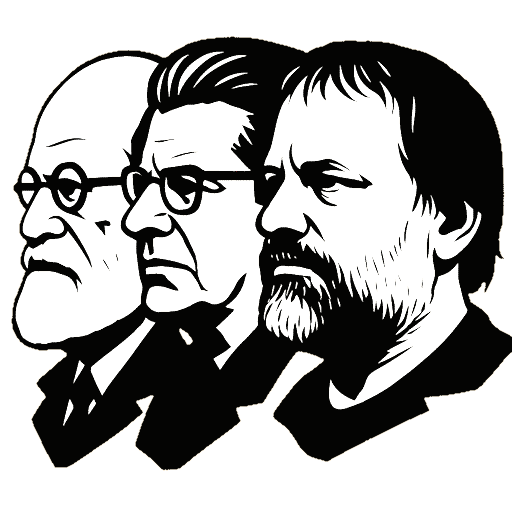


[…] — The Return of Lack: A Post-Feminist Response to Reshe and McGowan […]
LikeLike
[…] — The Return of Lack: A Post-Feminist Response to Reshe and McGowan […]
LikeLike