🦋🤖 Robo-Spun by IBF 🦋🤖
🌀⚔️💫 IPA/FLŽ 🌀⚔️💫

International Psychoanalysis Association / Freudian-Lacanian-Žižekian
IPA/FLŽ — A New Psychoanalytic Frontline
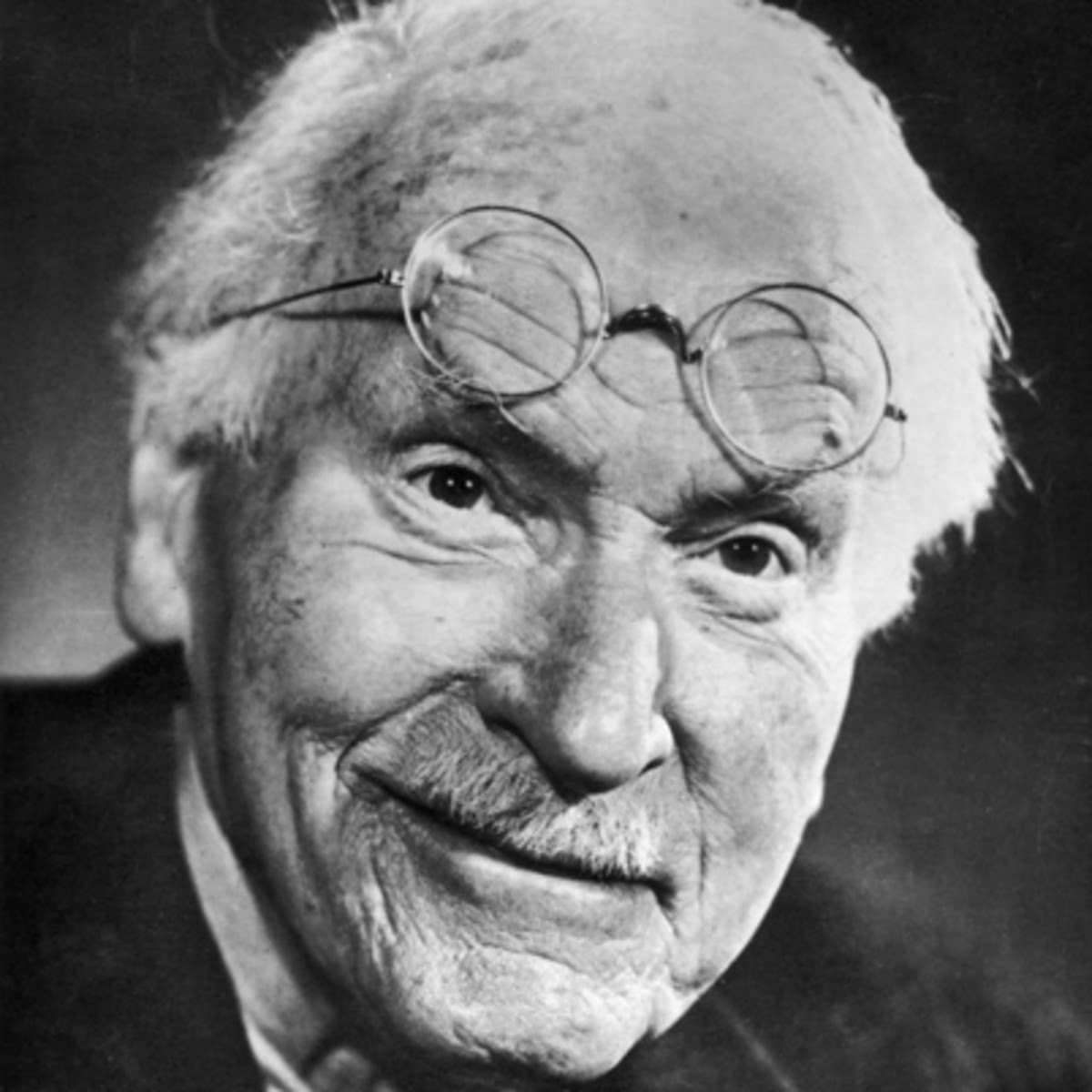
(Turkish)
From Patient Abuse to Ideological Deviation
We declare as IPA/FLŽ: The theoretical legacy of Carl Gustav Jung is marred not only by individual ethical violations but by a systematic deviation committed against the historical and political struggle of psychoanalysis. Every thought and structure that embraces and perpetuates Jung’s teachings is the bearer of a reactionary ideology that suppresses the unconscious under a mystic fog rather than liberating it.
1. Jung’s Clinical Betrayal: Ethical Catastrophe in the Analyst-Patient Relationship
In contrast to Freud’s effort to create a transformative clinical space by neutralizing transference, Jung’s therapeutic practice turned into a kind of “emotional deception.” His forming of emotional—and possibly sexual—relationships with his patients, as in the case of Sabina Spielrein, is not merely an individual ethical issue; it is a sign of a system that exploits the analyst-patient relationship through personal desire and charisma. These violations, legitimized with fabricated terms like “archetypal bond” and “anima,” are not about analyzing the unconscious but about dominating it—romanticizing and instrumentalizing it.
For us, this is not only an ethical but a structural deviation: Jungianism, instead of distinguishing between the patient’s desire and the analyst’s desire, blurs them, creating a field of transferential exploitation.
2. The Psychic Background of Fascism: Jung’s Nazi Affinity and Racist Theories
Carl Gustav Jung’s collaboration with Nazi institutions in the 1930s reflects not a personal but a structural ideological choice. With pseudo-scientific and racist notions such as the “Aryan unconscious,” he offered psychoanalysis to the service of fascist fantasies. At a time when Freud was struggling to survive with his Jewish identity, Jung remained silent in the face of his colleagues’ annihilation; worse, he normalized this destruction under the guise of a theoretical “difference.”
We declare openly as IPA/FLŽ:
Jung’s fantasy of a “racial unconscious” transformed psychoanalysis from a method of scientific inquiry into a reactionary ideology that surrenders the domain of collective desire to mythological bloodline fantasies. This is not merely the corruption of analytic practice—it is the fascistification of the unconscious itself.
3. Mist over the Revolution of Meaning: Jungianism’s Betrayal of the Unconscious
Lacan’s statement that “the unconscious is structured like a language” revitalized Freud’s theoretical radicalism; Jung, however, reduced the unconscious to a kind of “repository of archetypal truth,” removing it from the symbolic plane and imprisoning it in a mysticism of meaning.
The unconscious is no longer a text to be deciphered, but the backdrop of a fake spiritual narrative framed as a “journey to reach the inner sage.” Thus, psychoanalytic analysis is replaced by the creation of personal myth. Yet we read the unconscious as a domain of both individual and social symbolic repressions. Jungianism, on the other hand, sustains this repression and sanctifies it behind an ideological veil.
4. Jungianism: Clinical, Political, and Epistemological Reactionism
Schools shaped by Jung’s theories continue today to sever psychoanalysis from both scientific and political struggle, diluting it with neoliberal and individualist images such as “spiritual development,” “collective wholeness,” and “transformational journey.” This language serves both the neoliberal mental health market and mystical-authoritarian ideologies. The patient’s symptom is not analyzed; instead, acceptance is preached in the name of “integration.”
As IPA/FLŽ, we oppose this kind of therapeutic populism. Our task is to reestablish analysis not as a comfort zone but as a site of rupture. Every approach that follows Jung’s path turns analysis into a psychological yoga session while concealing the real wounds of the individual and society.
5. Final Condemnation on the Freudian-Social Line
Carl Gustav Jung neither continued Freud’s scientific archaeology nor, like Lacan, carried it to a revolutionary abstraction. From the moment he broke with Freud, Jung initiated not only a theoretical divergence but an ethical and political catastrophe.
We, as IPA/FLŽ, declare openly:
- Jungianism is an approach that legitimizes structural abuse within the analyst-patient relationship.
- Jungianism is a form of political looseness that openly or implicitly flirts with fascist ideologies.
- Jungianism is an epistemological reactionism that mystifies the unconscious and strips it of social critique.
- Jungianism is a counter-revolution that isolates psychoanalysis from society, critique, and revolution.
For this reason, Jung’s teachings and all institutions that perpetuate them must be condemned in the name of clinical ethics, theoretical honesty, and political responsibility.
The lion leaps only once—but that leap is enough to shatter the myths of Jungianism!
IPA/FLŽ – 2025
IPA/FLŽ: Entlarvung des Jungianismus
(Internationale Psychoanalytische Assoziation / Freudianisch-Lacanianisch-Žižekianisch)
Von Patient*innenmissbrauch zur ideologischen Abweichung
Wir erklären als IPA/FLŽ: Das theoretische Erbe von Carl Gustav Jung ist nicht nur durch individuelle ethische Verstöße belastet, sondern durch eine systematische Abweichung, die sich gegen den historischen und politischen Kampf der Psychoanalyse richtet. Jeder Gedanke und jede Struktur, die Jungs Lehren übernimmt und fortsetzt, trägt eine reaktionäre Ideologie in sich, die das Unbewusste nicht befreit, sondern unter einem mystischen Nebel unterdrückt.
1. Jungs klinischer Verrat: Ethische Katastrophe in der Beziehung zwischen Analytiker und Patientin
Im Gegensatz zu Freuds Bemühen, durch Neutralisierung der Übertragung einen transformativen klinischen Raum zu schaffen, verwandelte sich Jungs therapeutische Praxis in eine Art „emotionale Täuschung“. Seine emotionalen – und möglicherweise sexuellen – Beziehungen zu Patientinnen, wie im Fall Sabina Spielrein, sind nicht bloß ein individuelles ethisches Problem; sie sind Ausdruck eines Systems, das die Beziehung zwischen Analytiker und Patientin durch persönliches Begehren und Charisma ausbeutet. Diese Verstöße, legitimiert durch konstruierte Begriffe wie „archetypische Bindung“ und „Anima“, dienen nicht der Analyse des Unbewussten, sondern seiner Beherrschung – seiner Romantisierung und Instrumentalisierung.
Für uns ist das nicht nur eine ethische, sondern eine strukturelle Abweichung: Der Jungianismus verwischt statt zu unterscheiden das Begehren der Patientin und das des Analytikers und erzeugt so ein Feld übertragener Ausbeutung.
2. Der psychische Hintergrund des Faschismus: Jungs Nazi-Nähe und rassistische Theorien
Carl Gustav Jungs Zusammenarbeit mit NS-Institutionen in den 1930er Jahren ist kein persönliches, sondern ein strukturell-ideologisches Bekenntnis. Mit pseudowissenschaftlichen und rassistischen Konstrukten wie dem „arischen Unbewussten“ stellte er die Psychoanalyse in den Dienst faschistischer Fantasien. In einer Zeit, in der Freud mit seiner jüdischen Identität ums Überleben kämpfte, schwieg Jung angesichts der Vernichtung seiner Kolleg*innen; schlimmer noch, er normalisierte diese Zerstörung unter dem Vorwand einer theoretischen „Differenz“.
Wir erklären offen als IPA/FLŽ:
Jungs Fantasie eines „rassischen Unbewussten“ verwandelte die Psychoanalyse von einer Methode wissenschaftlicher Erforschung in eine reaktionäre Ideologie, die das Feld des kollektiven Begehrens mythologischen Blutlinienfantasien überlässt. Das ist nicht bloß die Korruption analytischer Praxis – es ist die Faschistisierung des Unbewussten selbst.
3. Nebel über der Revolution der Bedeutung: Der Verrat des Jungianismus am Unbewussten
Lacans Aussage, das „Unbewusste ist strukturiert wie eine Sprache“, belebte Freuds theoretischen Radikalismus neu; Jung hingegen reduzierte das Unbewusste zu einer Art „Speicher archetypischer Wahrheit“, entriss es der symbolischen Ebene und sperrte es ein in eine Mystik der Bedeutung.
Das Unbewusste ist nicht länger ein zu entziffernder Text, sondern die Kulisse eines falschen spirituellen Narrativs, inszeniert als „Reise zum inneren Weisen“. So wird die psychoanalytische Analyse ersetzt durch die Erschaffung persönlicher Mythen. Wir hingegen lesen das Unbewusste als Ort sowohl individueller als auch gesellschaftlicher symbolischer Repressionen. Der Jungianismus hingegen hält diese Repression aufrecht und heiligt sie hinter einem ideologischen Schleier.
4. Jungianismus: Klinischer, politischer und erkenntnistheoretischer Reaktionismus
Von Jungs Theorien geprägte Schulen trennen die Psychoanalyse bis heute sowohl vom wissenschaftlichen als auch vom politischen Kampf, indem sie sie mit neoliberalen und individualistischen Bildern wie „spirituelle Entwicklung“, „kollektive Ganzheit“ und „Transformationsreise“ verwässern. Diese Sprache dient sowohl dem neoliberalen Markt für psychische Gesundheit als auch mystisch-autoritären Ideologien. Das Symptom der Patientin wird nicht analysiert; stattdessen wird im Namen der „Integration“ zur Akzeptanz gepredigt.
Als IPA/FLŽ stellen wir uns gegen diese Art therapeutischen Populismus. Unsere Aufgabe ist es, die Analyse nicht als Komfortzone, sondern als Ort des Bruchs wiederherzustellen. Jeder Zugang, der Jungs Weg folgt, verwandelt Analyse in eine psychologische Yoga-Stunde, während er die realen Wunden des Individuums und der Gesellschaft verdeckt.
5. Letzte Verurteilung auf der freudianisch-sozialen Linie
Carl Gustav Jung setzte weder Freuds wissenschaftliche Archäologie fort noch führte er sie, wie Lacan, zu einer revolutionären Abstraktion. Mit dem Moment des Bruchs mit Freud leitete Jung nicht nur eine theoretische Abweichung ein, sondern eine ethische und politische Katastrophe.
Wir, als IPA/FLŽ, erklären offen:
- Der Jungianismus ist ein Zugang, der strukturellen Missbrauch in der Beziehung zwischen Analytiker und Patientin legitimiert.
- Der Jungianismus ist eine Form politischer Beliebigkeit, die offen oder implizit mit faschistischen Ideologien flirtet.
- Der Jungianismus ist erkenntnistheoretischer Reaktionismus, der das Unbewusste mystifiziert und ihm jede gesellschaftskritische Kraft entzieht.
- Der Jungianismus ist eine Konterrevolution, die die Psychoanalyse von Gesellschaft, Kritik und Revolution isoliert.
Aus diesem Grund müssen Jungs Lehren und alle Institutionen, die sie fortführen, im Namen klinischer Ethik, theoretischer Aufrichtigkeit und politischer Verantwortung verurteilt werden.
Der Löwe springt nur einmal – aber dieser Sprung reicht, um die Mythen des Jungianismus zu zerschmettern!
IPA/FLŽ – 2025
 Žižekian Analysis
[…] (İngilizcesi) […]
LikeLike
[…] — IPA/FLŽ: Unmasking Jungianism […]
LikeLike
[…] IPA/FLŽ: Entlarvung des Jungianismus […]
LikeLike
[…] IPA/FLŽ: Unmasking Jungianism […]
LikeLike
[…] Carl Gustav Jung was born on 26 July 1875 in Kesswil, and in this key the shattering of the charismatic aura is the point: the bottle breaks, the perfume spills, and the mystique evaporates so analysis can measure what remains. A broken bottle and spilled perfume. (Wikipedia) (🔗) […]
LikeLike