🦋🤖 Robo-Spun by IBF 🦋🤖
🌀⚔️💫 IPA/FLŽ 🌀⚔️💫

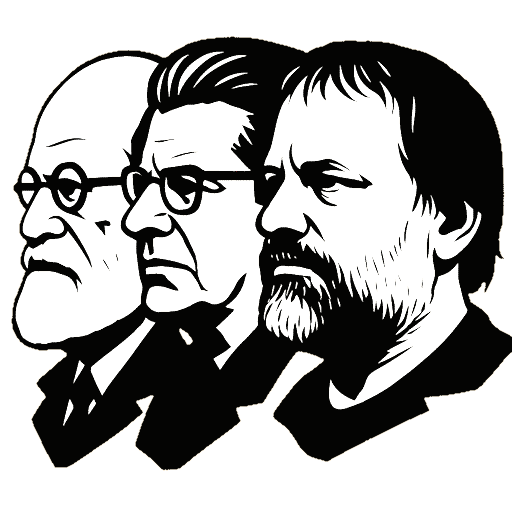
International Psychoanalysis Association / Freudian-Lacanian-Žižekian
IPA/FLŽ — A New Psychoanalytic Frontline
(Turkish, German, IPA/FLŽ: Strategy Report for Combating Mediatized Syndromes)
INTRODUCTION: Why Must Psychoanalysis Intervene Under the Mediatized Regime?
In today’s world, the screen is not merely a communication tool, but has transformed into a regulatory system through which the unconscious is directly reconstructed. Media—especially social networks, cinema, and television series—have begun to intervene directly in the domains described by Freud as “dream,” Lacan as “symbolic gap,” and Žižek as “ideological fantasy.” These platforms are no longer spaces where desire is freely structured; instead, they are disciplinary grounds where desire is manipulated, directed, and commodified by content producers. Therefore, the media order should be regarded as a threat that inverts the truth regime of the unconscious.
Although social media, cinema, and the television industry appear to be different mediums, they are in fact sequential links of the same ideological system. Each inserts itself between the subject’s desire and unconscious conflicts; by aestheticizing symptoms, normalizing exposure, and rendering ideological structures invisible, they perpetuate pathological production. These mechanisms increase neuroticism not only in the individual’s inner world but also at a societal level.
Historically, psychoanalysis has been shaped not only within the four walls of the therapy room but also at the intersection of social conflicts, as a practice of struggle. Today, this struggle must be repositioned—not merely against individual symptoms, but against the colonization of desire, visual totalitarianism, and algorithmic superego pressure. One of the tasks of psychoanalysis is now to expose the colonial domination of the unconscious by media. This does not mean a search for individual solutions, but rather a collective defense of the unconscious.
It is for this reason that IPA/FLŽ initiates an intervention against the effects of screen culture on the unconscious: to make the repressed desire speak again; to expose traumas that remain invisible in the light of the screen; to reveal the role of social media, cinema, and series in the production of symptoms. The mediatized regime is not merely a symptom—it is a pathogenic structure that manages, beautifies, and commodifies the symptom. And against this structure, psychoanalysis must now return not merely as “treatment,” but as a technique of resistance.
I. Mediatized Syndromes: Visual Pathology Shaping Social Neurosis
Social media, cinema, and series are no longer just tools of entertainment, communication, or cultural expression. They are pathogenic technologies that directly penetrate the structure of the subject’s unconscious, redefine the direction of desire, and collectivize the production of symptoms. Moreover, these platforms are not independent from one another; they are complementary links of the same ideological system aimed at the repression and management of desire.
Social media functions through the algorithmic superego regime imposed by the visibility economy. Metrics like likes, shares, and views impose an external domination over the subject’s desire, detaching it from its own symbolic logic. The subject no longer desires because they want, but because they want to be seen. The gaze itself becomes pathogenic—every photo, every story, every piece of content is not a continuous process of subjectivation, but a persistent effort to be displayed. This is a scene of social transference established through “likes,” where neurotic energy is trapped in a narcissistic cycle.
Cinema and series operate as fundamental narrative apparatuses that define the fictional terrain of desire. The symbolic gap that Freud identified in dreams is eliminated here; in its place, a phantasmatic space filled with consumable, prepackaged meanings emerges. Identification with series characters is not merely dramatic entertainment—it is a structural displacement of desire. These narratives do not represent trauma; rather, they suppress it by aestheticizing it. Depression is presented as a character trait, psychosis as a visual aesthetic element, and perversion as a “style.” The result: not the understanding of the real symptom, but its discharge through viewing.
The joint operation of these two fields leads to a process of neurosis production on a societal scale. While social media codes the subject’s outward-facing surface, cinema and series directly intervene in the unconscious. This bidirectional exposure causes not only individual pathologies but also collective symptoms. The language of desire is replaced by content; “stories” take the place of conflict, “reels” replace loss. Thus, society begins to live in a state of neurosis that is constantly visible but never noticed.
Social media, cinema, and series are the three faces of the same structure: They repress desire, aestheticize symptoms, and establish a regime of visual neurosis. This regime distances the subject from the ethical domain of desire and instead positions them within an ideological terrain based on narcissistic recognition, traumatic repetition, and jouissance fetishism. And within this terrain, no analysis is possible—only spectacle. Psychoanalysis intervenes to interrupt this spectacle, to reconstruct the symbolic gap, and to liberate desire.
II. Pathological Representations: Circulation of Psychoanalytic Symptoms in Media
The mediatized field is no longer just a surface representing symptoms; it is a pathology cycle that reproduces and even promotes the symptom itself. This cycle functions through the media’s transformation of symptoms defined on the psychoanalytic plane into content material by rendering them superficial. In appearance it is representation; in reality it is the repression of trauma. Moreover, this process of repression creates a new culture of symptoms that cannot be clinically treated, but can be exhibited on a social level.
Gaze Syndrome [*] is one of the specific pathogens of this contemporary society of spectacle. Today, the gaze is no longer merely seeing—it means desiring, comparing, evaluating, and surveilling. Every post, every content production is an extension of the obsession to make the repressed domain of the unconscious “spectacular.” Being watched is not just a threat for today’s subject; it is an object of desire. Yet the source of this desire never belongs to the subject. It is the gaze of an external superego directed and continually reconstructed by algorithms. The pathogenic effect of this gaze arises from the necessity to exist not through desire, but through being watched. The result: a subject whose identity begins to dissolve under the gaze, who tries to remain visible by exhibiting the symptom itself.
The same structure operates through the aestheticization of trauma. In cinema and television series, traumatic experiences are no longer merely narrated; they are beautified, dramatized, even made marketable. Melancholy, bipolar disorder, borderline behavior patterns—all are configured as visual aesthetic objects. The symptom is no longer a collapse to be resolved, but becomes a wearable style. This is not the representation of real pain, but the normalization of the performance of pain. Thus, instead of confronting their trauma, the subject reproduces it as though it were a “TV scene”—and every reproduction roots the trauma even deeper.
The third, and perhaps most destructive, dimension of the mediatized symptom regime is a symptom pornography in which pleasure and disgust become intertwined. Themes such as destruction, crisis, illness, and loss become part of the spectacle of pleasure production. YouTube documentaries, TikTok “illness stories,” aestheticized narratives of depression… all of these are elements of a regime of pleasure that exploits the dark side of jouissance through media. The symptom, as Freud described it, was the return of the repressed; the media, by re-repressing it through visual content, inscribes the symptom once again. This is no longer an expression, but an aesthetic montage of a suppressed scream.
As a result, psychiatric syndromes represented in media are not merely narrated—they are sustained. Every “pathological” character, every “emotional crisis” scene creates a space in which the symptom is reproduced not through analysis but through display. Psychoanalysis, in turn, exposes the inner workings of this space: media not only commodifies the symptom but also reassigns it to the subject. And unless this cycle is broken, society will remain ill within a collective neurotic state—while continuing to applaud this illness.
III. Against Desire, the Algorithm: The Dictatorship of the Ego and the Age of the Simulacrum
In today’s digital culture, the subject is no longer the agent of their own desire; they are the bearer of an ego-fantasy shaped, directed, and governed by algorithms. From a psychoanalytic standpoint, this transformation is not merely an individual neurotic rupture, but a structural symbolic collapse. Desire is born on the symbolic plane; it is structured by lack. Yet in the algorithmic age, infinite accessibility has replaced lack, and data-driven pleasure has replaced desire. This marks the age of the simulacrum, in which the subject is historically dissolved.
Instagram aesthetics is the hegemonic face of this simulacrum regime. Here, the subject is forced to live in a state of continuous imaginary correction and false wholeness under the reign of the “ideal-ego.” Filtered bodies, geometric facial features, fixed poses, and color-coded lives… all these visual codes are not merely aesthetic preferences; they signify the cancellation of symbolic castration. Yet in Lacan’s theoretical framework, desire is only possible through lack. In a world where lack is repressed, desire also disappears. What remains is a compulsion to enjoy that masks symbolic deprivation through infinite regulation.
On this plane, algorithms do not merely recommend content; they determine the direction of desire. TikTok’s explore page, YouTube’s suggested videos, Netflix’s user profiles… these re-code not only viewing habits but also the components of desire. The structure Freud defined as a drive is here transformed into data habits. The drive no longer functions in a repetitive pleasure cycle, but within a desire map determined by the system. And this map presents to the subject not their own desire, but the desire they are expected to display.
Most dangerously, this regime denies symbolic lack altogether. The Name-of-the-Father—le Nom-du-Père, as Lacan calls it—namely Law, interruption, and structuring limit—is now absent. In its place stands an algorithmic Other that is ever-ready, all-seeing, all-permitting. This Other does not forbid; it suggests. It does not block; it “shows more.” This produces a form of pressure akin to the sadistic command of the psychoanalytic superego: “Enjoy. Enjoy more. Never stop.” This is not merely a command that consumes the individual; it is the collapse of the symbolic order itself. The subject no longer exists in the ethical domain of desire, but within the algorithmic colony of pleasure.
Consequently, in the age of the algorithm, the ego is no longer, as Freud described, a structure that is not master in its own house; it is now a “digital dictator” that has internalized the mastery of the system. Desire is no longer born from lack, but from programmed suggestions. And this programming distances the subject from the symbolic void, reducing them to an object of spectacle. The task of psychoanalysis is to disrupt this order of spectacle, to restore lack to desire, and to expose the ego’s new dictatorship. Because desire speaks not with the algorithm, but with the Law. And until this Law returns, the subject will remain merely a shadow of data.
IV. The Contribution of Mediatized Syndromes to Psychiatric Pathologies
The mediatized regime is no longer just a cultural phenomenon; it is a pathological field of production that generates direct clinical consequences. The images, representations, and behavioral patterns disseminated through social media, cinema, and digital platforms are beginning to shape not only the structure of the subject’s unconscious, but also the concrete distribution of psychiatric syndromes. This is not merely a matter of social influence—it is a structural exposure that transforms psychiatric nosology.
First and foremost, depression, obsessive-compulsive disorder, and eating disorders have become the most widely propagated pathologies of screen- and content-saturated culture. Depression is no longer just a withdrawal; it is the trauma of an “algorithmic fall” that occurs when visibility cannot be maintained. Digital experiences like “ghosting,” “seen at,” and “being unfollowed” replace classical separation trauma, pushing affect into a pathological cycle. Obsessive behaviors are now directed not at objects but at notifications, comments, and post timing. And eating disorders—especially anorexia and bulimia—are being reproduced under the visual violence of aesthetic totalitarianism, through obsession with the imaginary body.
These pathologies are spreading not only at the individual level, but collectively. Because digital media provides a space where pathological behaviors can be “sampled.” Witnessing a “cheerful” version of an eating disorder in a TikTok video, or watching a Netflix character embody borderline personality patterns as an attractive identity, increases the contagion of the symptom. What psychoanalysis calls “symptom transference” now functions as a behavior model diffused throughout the entire society in this new media environment.
What is more dangerous is the rapid proliferation of “personality disorder performances.” Among young users, we are witnessing an era in which DSM labels are carried almost like identity cards. Phrases like “I’m borderline,” “I have ADHD,” “I’m bipolar” have become less about diagnosing a symptom and more about functioning as social passwords for inclusion in digital communities. Here, the boundary between the clinical and the cultural evaporates. Personality disorders cease to be structures that require analytic resolution; instead, they become flamboyant identities that can be used for content creation. This undermines the possibilities for real psychiatric intervention.
And what makes this entire process possible is the continuity of exposure. There is not a single moment in which the subject is visually, aurally, or emotionally disengaged from the media stream. When the space in which desire could structure itself disappears, the unconscious can produce nothing but symptoms. In this uninterrupted flow, the subject cannot be alone with their trauma, cannot dream it, cannot transform it. As Lacan says, “The subject that cannot crash into the Real, disappears only within simulation.” And that disappearance stands behind the new generation of cases now crowding the doors of psychiatric clinics.
The conclusion is clear: media systems not only aestheticize the symptom, but directly intervene in its production, dissemination, and definition. Digital culture, on one hand, transforms psychiatric syndromes into aesthetic material; on the other, it spreads an obsession with visibility that masks the reality of these syndromes. Psychoanalysis is obligated to point to the void behind this visibility and to expose the cultural background of pathology. Because today, the screen doesn’t merely show trauma—it is a device that produces it. And no clinical intervention can be considered complete without acknowledging the effect of this device.
V. Medical Disclosure: A Warning from Psychoanalysis to the Healthcare System
The mediatized field is now not only an ideological matter, but also a medical one. There is a direct connection—no longer negligible—between the symptom representations encountered through social media, cinema, and series content, and the cases observed in psychiatric clinics. This connection is not a coincidental resemblance; it is the result of the systematic exploitation of the unconscious structure by the visual regime. At this point, psychoanalysis intervenes not only as a clinical tool but as a disclosive apparatus of struggle: it does not merely explain the symptom, but also exposes the cultural, ideological, and mediatized conditions that give birth to it.
Today’s healthcare system often evaluates the symptom solely on the level of individual pathology: hormonal balance, genetic factors, childhood trauma, neurological sensitivities… Yet the truth is now clear: the symptom is fed not only by the individual, but also by the media regime to which they are exposed. The sharply rising, “unexplainable” prevalence of eating disorders, dissociative episodes, panic attacks, and identity fragmentation in clinics is closely tied to the pathological imagery injected into the unconscious by social media and dramatized series characters.
Here, psychoanalysis offers the healthcare system not a simple therapeutic solution but a warning: What visual production represents is not the symptom, but its reproduction. A Netflix character, a TikTok video that went viral showing an “emotional breakdown,” or supposedly therapeutic narratives shared on YouTube… all of these contents not only aestheticize symptoms; they recode, spread, and even glamorize them. As a result, the patient becomes not just “someone in pain,” but a figure locked within a structure of exposure and repetition.
The most fundamental task of psychoanalysis is to decipher this structure and prevent the healthcare system from remaining blind to it. Because the symptom is imposed not only from within, but also from without, through a systematic line of production. Diseases that cannot be cured are, in fact, structural pathologies that cannot be exposed.
Strategically, at this point, a rift must be opened between medical discourse and cultural production. That is, media content must be examined and disclosed not only through ethical scrutiny, but through its pathological effects, and these effects must be clearly identified within the healthcare system. Psychoanalysis must be positioned as the ethical center of this scrutiny. Because only it possesses the theoretical tools to strip away the ideological disguise of the symptom.
The conclusion is clear: mediatized symptoms are no longer aesthetic or cultural phenomena—they are medical cases. And any solution developed in response to this case must be based not on reducing exposure, but on exposing the nature of production. Psychoanalysis exists not to destroy the pathological bridge between clinic and media, but to make it visible. Medical solutions can only begin after this visibility is achieved.
VI. Limiting Exposure: Visual Diet as a Right of the Unconscious
The pathogenic power of mediatized syndromes lies not only in the quality of the content, but in its relentless imposition. This is no longer a matter of “viewing habits,” but of an arouseless hypnosis, a violation of the unconscious’s right to silence. On the psychoanalytic plane, in order for the subject to establish desire, there must be gaps in the symbolic order, pauses in language, and spaces for non-representation. Yet today’s visual regime shows everything, leaving no room for anything. At precisely this point, we propose a radical strategic concept: visual diet.
This diet is not censorship or a content ban. Because the issue is not what is shown, but how much is shown, and that even what should never be shown has now been turned into visual material. The visual diet advocates for the protection of the unconscious against this heap of images that suffocates desire. In a system that operates not through seeing but being shown, the subject becomes not only the viewer but also the viewed, the rated, the watched, and the recorded object. This objectification has become not only a narcissistic but a psychotic threat.
Psychoanalysis teaches that lack—that is, what is not shown—is the essential element that structures the subject. Limiting visual exposure is therefore an ethical intervention. This intervention demands a silence in which desire can speak again, a darkness in which the unconscious can breathe. The ever-glowing images on the screen erase this darkness; but psychoanalysis knows that truth is always most afraid of darkness.
In this context, liberating society from screen addiction is not possible through a censorial reflex but through a structural rupture. This rupture is a demand for a right to emptiness on behalf of the unconscious. The flow of social media must be interrupted, the endless seasons of series must come to an end, and instead of algorithmic visibility, the space of the unrepresentable, of what cannot be desired, must be reopened. Because the place where desire is constituted is not where images are imposed, but where possibility is delayed, where what is not shown resonates.
For this reason, the visual diet is not a treatment for psychoanalysis but a matter of right: The right of the unconscious to be silent. This right has been denied by contemporary culture. This regime that shows everything cannot show the most dangerous thing—that which is missing. Psychoanalysis stands precisely on the side of what cannot be shown. The visual diet is essential for desire to be reborn, for the subject to become a subject again, and for the pathological regime of spectacle to be dismantled. The eye cannot bear everything. The subject cannot see everything. And the unconscious is free not to be exposed to everything.
VII. Strategies of Intervention on the Clinical and Ideological Levels
The struggle against mediatized syndromes must be carried out not only in individual therapy rooms but also on public and structural levels. Because these syndromes are not merely the result of internal conflicts, but emerge from the convergence of cultural production, ideological orientation, and systems of visual domination. Psychoanalysis, at this point, must be positioned not only as a tool for treatment but as a mechanism of disclosure and intervention. Intervention must encompass both the clinical confrontation with the symptom and the cultural exposure of pathological production conditions.
The first strategic task is to establish a new alliance between psychiatry and psychoanalysis. This alliance must treat the symptom not merely as the result of individual chemical imbalance or neurological disorder, but as an outcome of pathogenic representations constructed by media and digital ideology. Clinics must now inquire not only into the inner world of the individual but into what images they are exposed to, what types of content they use to define themselves, how they represent their symptoms. Psychoanalysis offers here not a solution but an ethics of interrogation. This ethic questions not the subject but the cultural codes that have made them ill.
The second level of intervention must be directed specifically at media producers and algorithmic designers. Because behind the screen today lies not only content creation but an engineering that determines desire routes and directs unconscious patterns. The ethical responsibility of these structures is as much a medical as it is a political issue. Just as pharmaceutical companies are subject to oversight, so too should content algorithms be examined in terms of their psychoanalytic and societal effects. For media is no longer a tool of entertainment, but a device of intervention that shapes collective neurosis.
The third and final strategy is to launch joint campaigns for the exposure of pathological representations in academic and artistic fields. Universities, festivals, galleries, digital platforms—all these spaces are now not only places of content production, but stages where the ideological shaping of the unconscious must be revealed. What is needed is not art therapy, but the exposure of art itself. The aestheticized symptom is not an expression, but a technique of re-suppression. Therefore, the alliance of critical cultural studies and psychoanalysis is of vital importance in decoding the codes of mediatized pathology.
These intervention strategies cannot be reduced to simple suggestions like encouraging individuals “to use the screen less.” The issue is not how much the screen is used but what desire it shapes, what symptom it produces, what void it fills. The psychoanalytic strategy defends the ethical structure of desire against its coding by the algorithm. This is not merely a health policy but a call for the political liberation of the unconscious.
For this reason, intervention must be planned not only for the individual but for the whole of society. A symptom is not only experienced—it is produced. And unless the mechanisms that produce it are made visible, no clinical success can be counted as a real rupture. It is at precisely this point that the revolutionary line of IPA/FLŽ becomes clear: Intervention is not only treatment; it is disclosure, exposure, and interruption. In the clinic, in culture, in code.
VIII. CONCLUSION: The Revolution of the Screen Is Only Possible Through the Return of the Unconscious
The mediatized regime is the most advanced apparatus of repression ever constructed upon the unconscious. Social media, cinema, and television series not only expose the symptom; they reproduce it, aestheticize it, and monetize it. This cycle operates on the surface of the screen through a concealed ideological program: suffocate desire, erase lack, embellish the symptom, and consume everything under the name of visibility. That is why the struggle against this system is possible only through the radical recall of the unconscious.
Psychoanalysis enters here not simply as a form of therapy, but as a practice of resistance. Because the unconscious speaks where representation fails; it resonates where the system cracks. Today, the screen shows everything, but allows nothing to speak. Every visual content interrupts the language of desire by concealing what is missing; it transforms the subject into an image that cannot desire. Psychoanalysis must become the voice of this silenced space.
The strategic proposal of IPA/FLŽ is clear: Social media, cinema, and the television industry are not distinct tools; they are sequential links of the same apparatus of repression. Each operates by the same ideological logic: command the gaze, code desire, normalize the symptom. Therefore, the psychoanalytic struggle cannot be fragmented. Intervention must be holistic, determined, and system-disrupting.
As long as the unconscious is repressed, neither the individual nor society can be free. A subject whose right to represent desire has been taken away is reduced to nothing more than an object that watches or is watched. For this reason, the return of the unconscious is not only a psychoanalytic act; it is a political and cultural revolution. This revolution will occur not through censorship but through interruption, lack, and the right to silence.
And when that moment comes, the revolution of the screen will begin—not a revolution of content, but an explosion where visual violence confronts symbolic law. The screen will fall silent. The void will speak. Desire will hear its own voice again.
Because it must not be forgotten:
The lion leaps only once. And that leap happens not on the screen—but in the unconscious.
 Žižekian Analysis
[…] (Türkisch, Englisch) […]
LikeLike
[…] (İngilizcesi, Almancası) […]
LikeLike
[…] (Turkish, Raumdeutung Strategy Against the Gaze Syndrome, IPA/FLŽ: Strategy for Combating Mediatized Syndromes) […]
LikeLike
[…] — IPA/FLŽ: Strategy for Combating Mediatized Syndromes […]
LikeLike
[…] (IPA/FLŽ: Strategy for Combating Mediatized Syndromes) […]
LikeLike
[…] IPA/FLŽ: Strategy for Combating Mediatized Syndromes […]
LikeLike
[…] IPA/FLŽ: Strategy for Combating Mediatized Syndromes (concise overview) 🔗 […]
LikeLike
[…] çözmek yerine üretimi sürdürür; mahrumiyet hissi de bu üretimin ana yakıtıdır (🔗). (Žižekian […]
LikeLike
[…] ve görünmezleştirilen ideolojik yapılar ekseninde birlikte düşünmeye çalışıyor (🔗). Bu metinlerin polemik tonu ayrı bir meseledir; fakat yakaladıkları bir nokta vardır: ekran […]
LikeLike
[…] on the axis of the aesthetic management of the symptom and invisible ideological structures (🔗). The polemical tone of these texts is a separate matter; but they do catch one point: the screen […]
LikeLike