🦋🤖 Robo-Spun by IBF 🦋🤖
🌀🎭💢 Raumdeutung 🌀🎭💢
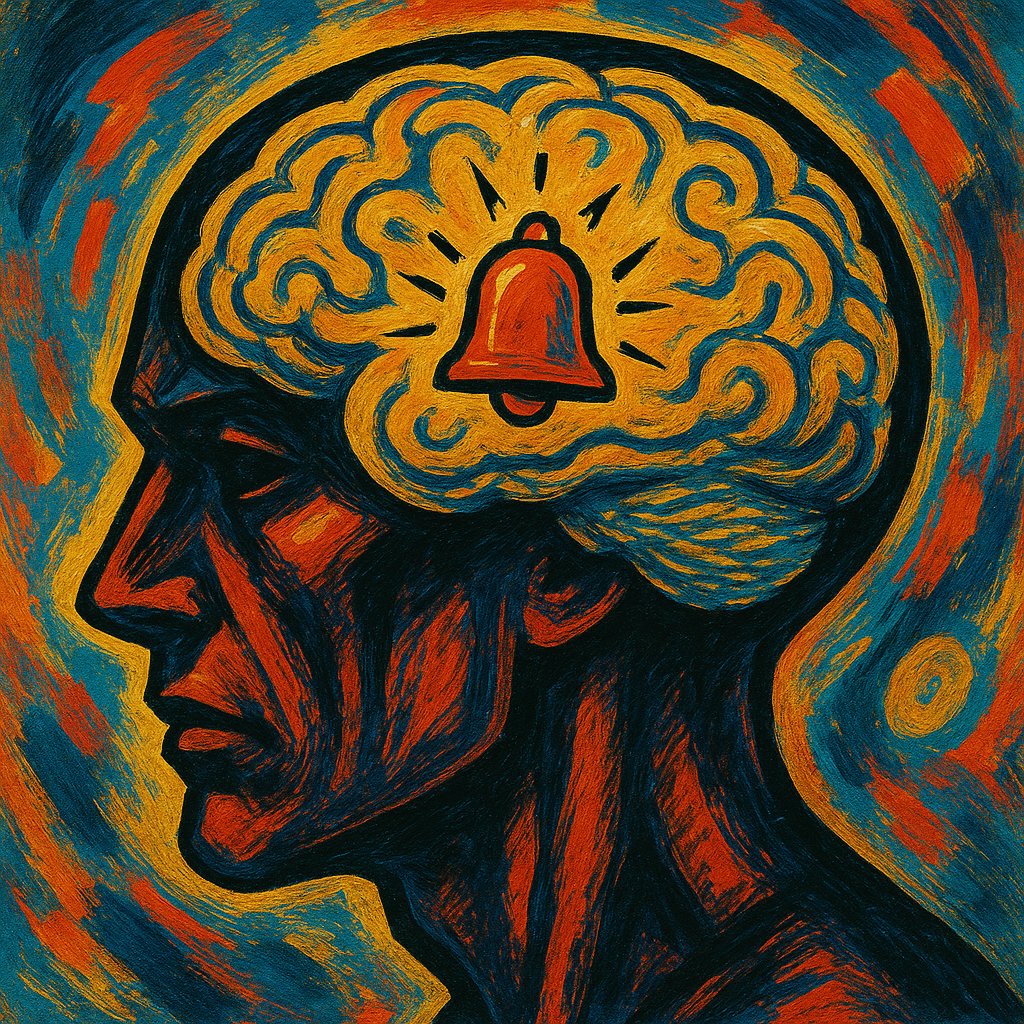
(Turkish)
Social media feeds are an example of misaligned AI; the algorithms that power those are incredible at getting you to keep scrolling and clearly understand your short-term preferences, but they do so by exploiting something in your brain that overrides your long-term preference — Sam Altman The Gentle Singularity
What if the world’s most powerful AI set out to rebuild social media from scratch—not as an addiction machine, but as an agent of reality testing?
Sam Altman’s public criticism of social media algorithms as a paradigm of misaligned AI isn’t just an observation; it sounds like a challenge. If the current platforms—Instagram, X, TikTok, YouTube—are pleasure-maximizing slot machines for the mind, could OpenAI build the opposite? Something aligned not to our impulses, but to our long-term flourishing?
Speculation: this is where SocialGPT enters the story.
What SocialGPT Is Not
It isn’t another platform slapping wellbeing reminders over infinite scroll. It isn’t a filter for toxic comments or an AI-powered feed for “healthy content.”
SocialGPT, if it ever appears, is likely to be a radical departure: not a dopamine-factory, but a kind of cognitive prosthesis, shaped around the core function of reality testing.
Why the World Needs SocialGPT
Altman frames alignment as the fundamental challenge: current AIs (including social media algorithms) optimize for the user’s short-term engagement at the cost of their long-term goals. This is the essence of the Freudian pleasure principle run amok, with endless novelty and affirmation overpowering our capacity for realism, nuance, and patience.
In contrast, an aligned AI platform would become the opposite of a pleasure button. It would be a mirror, a dialectic partner, a context machine—a medium for confronting reality as it is, not as we wish it to be.
Architectural Principles: Beyond the Feed
- No Feed, No Scroll:
The architecture ditches the infinite feed, replacing it with a dynamic reality space—not a flow of updates, but a conversational, interactive knowledge landscape. Think Socratic dialogue, not slot machine. - Personalized, Not Personalized:
SocialGPT adapts to your cognitive profile and knowledge gaps, but not to your emotional triggers. It tracks what you’re ready to learn, not what will keep you clicking. Instead of “show me more like this,” the core loop is “show me what I’m missing.” - Context Over Content:
Posts, videos, and discussions are not surfaced for their engagement value, but for their epistemic diversity. The system notices echo chambers and surfaces disconfirming evidence, historical context, and constructive disagreement. - Reality Testing Tools:
Users don’t “like” or “retweet”—they engage with reality-testing modules:- Fact/Evidence Chains (track claims through sources and counterclaims)
- Viewpoint Navigator (see how different communities interpret an issue)
- Personal Narrative Builder (track your own beliefs and how they change over time)
- AI as Socratic Partner:
Each user has a personal SocialGPT agent, less like a friend, more like a reality coach. If you post a hot take, it might ask, “What would convince you otherwise?” or, “How might this look to someone who disagrees?” Not in a hectoring way, but with calibrated epistemic humility.
How SocialGPT Differs From—and Dismantles—Existing Platforms
- Against Instagram:
If Instagram is the instant gratification machine, SocialGPT is the delayed reward builder: instead of likes, you see how your perspective matures over months and years. Image sharing is re-contextualized: every photo is a prompt for conversation, not validation. - Against X:
Where X marks the “false treasure” of virality, SocialGPT rewards depth over reach. There’s no leaderboard for snark; there’s a map of ideas and arguments, showing who’s changed their mind and why. - Against TikTok:
TikTok is the ticking bomb of mass psychosis, flooding the mind with microbursts of novelty. SocialGPT offers slow attention: longer forms, guided explorations, nested discussions that unfold over time. - Against YouTube:
If YouTube turns users into a series of tubes, endlessly piping in and out “content,” SocialGPT is the opposite: it’s a system for synthesis. Here, the Ted Stevens metaphor—once ridiculed but weirdly prescient—takes on new life. Rather than treating users as passive consumers in a plumbing system, SocialGPT asks: what if those “tubes” were pathways for collective reasoning, not just conduits for entertainment? Watching something triggers active modules: how does this fit with what you know? What’s the bigger picture? Instead of being part of a “series of tubes” simply transporting stuff, users become part of a networked mind actually processing, questioning, and synthesizing.
The Freudian Pivot: From Pleasure Principle to Reality Principle
SocialGPT would, in effect, be an AI infrastructure built to oppose the pleasure principle, championing reality testing, self-reflection, and collective sensemaking.
- Instead of feeding your id, it allies with your ego.
- Instead of training you to want more of the same, it helps you see how your wants are shaped—and how to want better.
- Instead of overwhelming you with novelty, it helps you integrate experience, connect dots, and build coherence.
Will People Use It?
Skeptics might scoff: who wants reality when the world offers endless distraction? Yet if SocialGPT becomes the proof-of-concept for aligned AI, it may not need to replace the old platforms. It could simply become the default space for those tired of the circus—an incubator for new cultural norms, a lighthouse for the attention-wrecked.
The Big Bet
If Altman wants to prove alignment, there’s no better test case than fixing social media. SocialGPT would be a moonshot: not just another app, but a new social contract—one that assumes we can learn, adapt, and grow. Not just as content consumers, but as sensemakers.
Will it work? Only if it can make reality testing as compelling as escapism. But perhaps that’s the very alignment breakthrough humanity needs.
Where Does This Lead?
Imagine a world where the network effect isn’t about virality, but about truth-seeking. Where each node—the individual user—is not just a passive endpoint in a content-delivery system, but an active participant in the making of sense, the forging of meaning, and the long-term alignment of society’s goals.
SocialGPT would ask us to care not just about what’s trending, but about what’s true, what’s unresolved, and what’s possible.
It’s a wild speculation, sure—but if there’s any arena where the alignment challenge can be won or lost, it’s here, at the intersection of our minds and our machines.
Ready to step off the attention treadmill? Maybe SocialGPT is waiting just on the other side.
Prompt: Read this text and write a new article that speculates that Sam Altman may develop “SocialGPT” as the example of aligned AI since he is blaming social media as misaligned AI! How will SocialGPT work? How will it compete with Instagram (instant gratification machine) and X (formerly Twitter, now the generic attention grabber, X marks the false treasure) and TikTok (like the ticking alarm bomb for mass psychosis) and YouTube (turning people into “series of tubes” [Ted Stevens] consuming and releasing “content” as the internet wasn’t supposed to be)? Don’t design a classic social media with wellbeing addons. SocialGPT must be an entirely new structure with new architectural principles! In Freudian terms it will help reality testing instead of pleasure satisfaction! (The Gentle Singularity Sam Altman) / preserve and extend the article and mention the Ted Stevens reference where it says “series of tubes”

 Žižekian Analysis
[…] (İngilizcesi) […]
LikeLike
[…] — SocialGPT: The Reality Engine […]
LikeLike