🦋🤖 Robo-Spun by IBF 🦋🤖
🌀⚔️💫 IPA/FLŽ 🌀⚔️💫

International Psychoanalysis Association / Freudian-Lacanian-Žižekian
IPA/FLŽ — A New Psychoanalytic Frontline
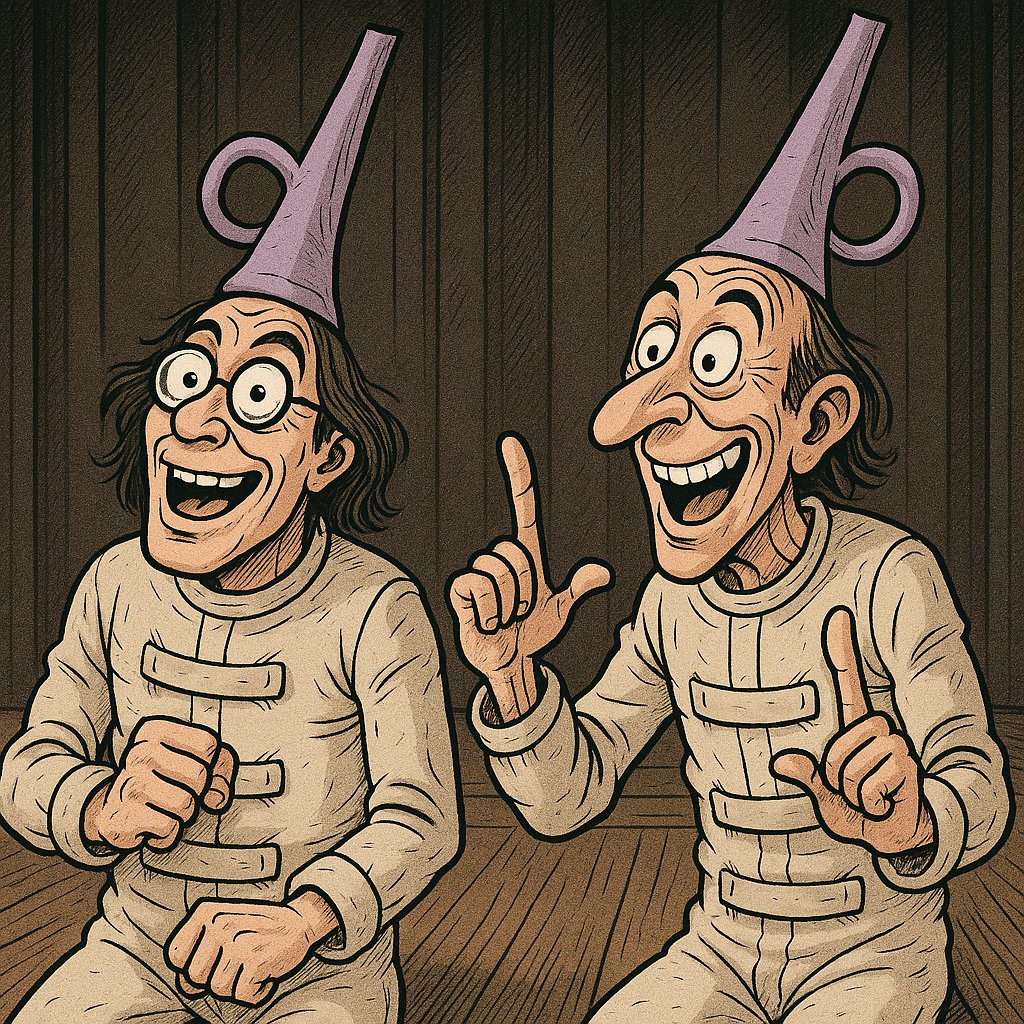
(Turkish, Responding to Deleuze & Guattari from the Freudian Post-Feminist Manifesto)
“The lion only leaps once—but that single leap may change the world.”
IPA/FLŽ Manifesto
From the heart of psychoanalytic struggle, from the legacy of Freud’s discovery, Lacan’s cut, and the dialectical fire of Žižek, IPA/FLŽ issues this verdict:
Deleuze & Guattari—apostles of “desiring-production,” prophets of the schizoanalytic revolution—are not liberators of desire, but engineers of a new order of domination. Beneath the mirage of emancipation, they perpetrate a triple betrayal: against Freud and Lacan, against the suffering psychiatric subject, and against the very fabric of the symbolic order. Their seductive vocabulary of flows, machines, and bodies without organs does not smash the old order; it liquefies the subject, and delivers us to the algorithmic prison of late capitalism, to the war-rooms of Empire.
I. Betrayers of Freud and Lacan: Liquidators of the Unconscious
Deleuze & Guattari’s so-called “schizoanalysis” is the heresy that shatters the dialectic of Freudian drive and Lacanian cut. Their theory of desire as endless, productive flow is a denial of the very foundation of psychoanalysis: lack. For Freud, desire is not a surplus to be circulated; it is the structural effect of loss, mourning, fantasy, and sublimation. For Lacan, the subject is carved by castration and the signifier—the unconscious is not a factory but a crypt of negativity, a theatre haunted by the Real.
D&G, in their feverish anti-Oedipal crusade, declare the Oedipus complex to be a “prison.” They would abolish the Law, the Father, the cut—abolish, in fact, the very site where subjectivity and desire emerge. What remains is not freedom but exhaustion: a machinery of empty jouissance, self-policing, and burnout. In their anti-structural delirium, they become the mirror image of the very “ego psychology” and aesthetic totalitarianism that IPA/FLŽ exists to combat. The unconscious, stripped of lack, becomes the servomechanism of algorithmic capitalism—an instrument for the endless, empty production of self.
They claim to smash the old order; instead, they erase the subject itself.
II. Betrayers of the Clinic: The Cruelty of Schizoanalytic Romanticism
Deleuze & Guattari’s theoretical violence is not confined to the page. At La Borde Clinic, the so-called utopia of “institutional psychotherapy,” their project was enacted upon the bodies of the most vulnerable—schizophrenia patients whose suffering was aestheticized and instrumentalized for a new regime of clinical experimentation. Beneath the rhetoric of liberation, La Borde was a laboratory of contradictory, and often abusive, psychiatric interventions: electroshock, heavy sedation, and the romanticization of psychosis as “symphonic wandering.”
In D&G’s mythos, the schizophrenic ceases to be a suffering subject and becomes a metaphor for political rupture, a mascot of deterritorialization. The real pain of madness is disavowed, replaced by poetic slogans and theoretical alibis. The “democracy” of the clinic masked an abdication of care—a refusal to confront the Real of trauma, chaos, and unnameable loss.
True psychoanalysis is not the celebration of the wound, but the confrontation with it. It is the hard labor of constructing symbolic frameworks that allow the subject to survive, to speak, to mourn. D&G turn suffering into spectacle, pain into poetry, and leave the patient to drown in the delirium they so celebrate.
The clinic is not a metaphor. The pain of the subject must be respected.
III. Betrayers of the Symbolic Order: Architects of the Algorithmic Mirror
In abolishing the symbolic—the Law, the cut, castration, prohibition—Deleuze & Guattari lay the philosophical groundwork for the world of algorithmic control and total visibility that now imprisons us. Their Body without Organs is not liberation from the body, but the forerunner of the commodified, aestheticized, and endlessly editable digital self. Subjectivity becomes surface, the self dissolves into a restless feed, and desire is recoded as a function of visibility, optimization, and rating.
Where the symbolic cut once opened a space for opacity, fantasy, and the unconscious, D&G deliver us to the regime of the “maternal algorithm”: the all-seeing, all-consuming digital Other, who promises plenitude and delivers only suffocation. Without separation, without lack, there is no unconscious, no space to hide, no right to silence—only endless, anxious exposure. The subject, abolished, is reborn as the endlessly circulating image, a product for the gaze and consumption of the Other.
Their vision is not liberation but the completion of aesthetic totalitarianism.
IV. Betrayers of the Struggle: From Theory of Escape to Weapon of Empire
In a final act of betrayal, Deleuze & Guattari’s concepts have been seized by the very powers they claimed to resist. “Deterritorialization,” “war machine,” “rhizome,” “smooth and striated space”—these slogans of liberation are now the secret grammar of state violence and colonial domination. The Israeli military, in its campaign of control and annihilation, has appropriated D&G’s tactics to restructure urban warfare, to recode resistance as a matter of “flows,” to turn lines of flight into labyrinths of destruction.
The war machine no longer opposes Empire—it is the machine of Empire. The theory of multiplicity and escape becomes a doctrine of control, surveillance, and the annihilation of all boundaries except those drawn by power. What D&G called “becoming” is now a weapon of reterritorialization, a program for the algorithmic governance of populations and the military occupation of desire itself.
Their thought does not resist Empire. It serves as its secret police.
V. The IPA/FLŽ Verdict: The Restoration of the Unconscious, the Return of the Cut
Deleuze & Guattari stand condemned—not as revolutionaries of the unconscious, but as managers of its liquidation.
They betrayed Freud by erasing the drive, betrayed Lacan by abolishing the cut, betrayed patients by romanticizing their wounds, betrayed the symbolic by siding with the algorithm, and betrayed emancipation by arming the state.
We, the heirs to Freud’s revolt, Lacan’s structural cut, and Žižek’s ideological intervention, declare:
- Down with desiring-machines—restore the unconscious!
- Long live the symbolic cut—down with algorithmic plenitude!
- The clinic is not a metaphor—respect the pain of the subject!
- Liberation is not the abolition of lack but its affirmation!
- The Name-of-the-Father against the maternal algorithm!
- Deleuze & Guattari: From seduction to the secret police of Empire!
We call for a return to the unconscious, to lack, to the symbolic Law—against the aesthetic totalitarianism of the digital, against the militarization of philosophy, against the false freedom of endless flows. Only in the cut, the gap, the silence, does the subject survive. Only in the unconscious does liberation remain possible.
Long live the unconscious!
Down with the Body without Organs!
Restore the gap, the Law, the Father!
The lion only leaps once—but that leap is the destruction of every false liberation!
IPA/FLŽ – 2025
IPA/FLŽ: Der dreifache Verrat von Deleuze & Guattari
„Der Löwe springt nur einmal – aber dieser einzige Sprung kann die Welt verändern.“
IPA/FLŽ-Manifest
Aus dem Herzen des psychoanalytischen Kampfes, aus dem Erbe von Freuds Entdeckung, Lacans Schnitt und dem dialektischen Feuer von Žižek, erlässt IPA/FLŽ dieses Urteil:
Deleuze & Guattari – Apostel der „Begehrensproduktion“, Propheten der schizoanalytischen Revolution – sind nicht die Befreier des Begehrens, sondern Ingenieure einer neuen Ordnung der Herrschaft. Unter der Fata Morgana der Emanzipation begehen sie einen dreifachen Verrat: gegen Freud und Lacan, gegen das leidende psychiatrische Subjekt und gegen das Gewebe der symbolischen Ordnung selbst. Ihr verführerisches Vokabular der Ströme, Maschinen und Körper ohne Organe zerschlägt nicht die alte Ordnung; es verflüssigt das Subjekt und liefert uns dem algorithmischen Gefängnis des Spätkapitalismus aus, den Kriegsräumen des Imperiums.
I. Verräter von Freud und Lacan: Liquidatoren des Unbewussten
Deleuze & Guattaris sogenannte „Schizoanalyse“ ist die Häresie, die die Dialektik von Freuds Trieb und Lacans Schnitt zertrümmert. Ihre Theorie des Begehrens als endloser, produktiver Fluss ist eine Verleugnung des eigentlichen Fundaments der Psychoanalyse: des Mangels. Für Freud ist Begehren kein Überschuss, der zirkuliert werden soll; es ist der strukturelle Effekt von Verlust, Trauer, Fantasie und Sublimierung. Für Lacan wird das Subjekt durch Kastration und Signifikant gezeichnet – das Unbewusste ist keine Fabrik, sondern eine Krypta der Negativität, ein Theater, das vom Realen heimgesucht wird.
D&G erklären in ihrem fiebrigen antiödipalen Kreuzzug den Ödipuskomplex zum „Gefängnis“. Sie würden das Gesetz, den Vater, den Schnitt abschaffen – abschaffen, genau genommen, den Ort, an dem Subjektivität und Begehren überhaupt erst entstehen. Was bleibt, ist nicht Freiheit, sondern Erschöpfung: eine Maschinerie leerer Jouissance, Selbstkontrolle und Burnout. In ihrem antistrukturellen Delirium werden sie zum Spiegelbild jener „Ich-Psychologie“ und ästhetischen Totalitarismus, gegen den IPA/FLŽ kämpft. Das Unbewusste, seines Mangels beraubt, wird zum Servomechanismus des algorithmischen Kapitalismus – ein Instrument der endlosen, leeren Produktion des Selbst.
Sie behaupten, die alte Ordnung zu zerschlagen; tatsächlich löschen sie das Subjekt selbst aus.
II. Verräter der Klinik: Die Grausamkeit des schizoanalytischen Romantizismus
Deleuze & Guattaris theoretische Gewalt bleibt nicht auf die Seite beschränkt. In der Klinik von La Borde, der sogenannten Utopie der „institutionellen Psychotherapie“, wurde ihr Projekt an den Körpern der Verwundbarsten vollzogen – Schizophrenie-Patient:innen, deren Leiden ästhetisiert und für ein neues Regime klinischer Experimente instrumentalisiert wurde. Hinter der Rhetorik der Befreiung war La Borde ein Labor widersprüchlicher und oft missbräuchlicher psychiatrischer Interventionen: Elektroschock, starke Sedierung und die Romantisierung der Psychose als „symphonisches Umherirren“.
Im Mythos von D&G hört der Schizophrene auf, ein leidendes Subjekt zu sein, und wird zur Metapher für politischen Bruch, zum Maskottchen der Deterritorialisierung. Der reale Schmerz des Wahnsinns wird verleugnet, ersetzt durch poetische Parolen und theoretische Alibis. Die „Demokratie“ der Klinik maskierte einen Verzicht auf Fürsorge – eine Weigerung, sich dem Realen von Trauma, Chaos und unsagbarem Verlust zu stellen.
Wahre Psychoanalyse ist nicht die Feier der Wunde, sondern die Konfrontation mit ihr. Sie ist die mühsame Arbeit am Aufbau symbolischer Rahmen, die dem Subjekt erlauben zu überleben, zu sprechen, zu trauern. D&G machen aus dem Leiden ein Spektakel, aus dem Schmerz Poesie und lassen den Patienten in dem Delirium ertrinken, das sie so preisen.
Die Klinik ist keine Metapher. Der Schmerz des Subjekts muss respektiert werden.
III. Verräter der symbolischen Ordnung: Architekten des algorithmischen Spiegels
Durch die Abschaffung des Symbolischen – des Gesetzes, des Schnitts, der Kastration, des Verbots – legen Deleuze & Guattari das philosophische Fundament für die Welt algorithmischer Kontrolle und totaler Sichtbarkeit, die uns heute gefangen hält. Ihr Körper ohne Organe ist keine Befreiung vom Körper, sondern der Vorläufer des kommerzialisierten, ästhetisierten und endlos editierbaren digitalen Selbst. Subjektivität wird Oberfläche, das Selbst löst sich in einem rastlosen Feed auf, und Begehren wird zur Funktion von Sichtbarkeit, Optimierung und Bewertung umkodiert.
Wo der symbolische Schnitt einst einen Raum für Opazität, Fantasie und das Unbewusste eröffnete, liefern uns D&G dem Regime des „mütterlichen Algorithmus“ aus: dem allsehenden, alles verschlingenden digitalen Anderen, der Fülle verspricht und nur Erstickung liefert. Ohne Trennung, ohne Mangel gibt es kein Unbewusstes, keinen Ort zum Verstecken, kein Recht auf Schweigen – nur endlose, ängstliche Aussetzung. Das Subjekt, abgeschafft, wird als endlos zirkulierendes Bild wiedergeboren, ein Produkt für den Blick und Konsum des Anderen.
Ihre Vision ist nicht Befreiung, sondern die Vollendung des ästhetischen Totalitarismus.
IV. Verräter des Kampfes: Von der Theorie der Flucht zur Waffe des Imperiums
In einem letzten Akt des Verrats sind Deleuze & Guattaris Konzepte von genau den Mächten vereinnahmt worden, die sie angeblich bekämpften. „Deterritorialisierung“, „Kriegsmaschine“, „Rhizom“, „glatter und gekerbter Raum“ – diese Parolen der Befreiung sind heute die geheime Grammatik staatlicher Gewalt und kolonialer Herrschaft. Das israelische Militär hat in seinem Feldzug der Kontrolle und Vernichtung D&Gs Taktiken angeeignet, um die urbane Kriegsführung umzugestalten, Widerstand als Frage der „Ströme“ umzukodieren, Linien der Flucht in Labyrinthe der Zerstörung zu verwandeln.
Die Kriegsmaschine widersetzt sich dem Imperium nicht mehr – sie ist die Maschine des Imperiums. Die Theorie der Vielheit und Flucht wird zur Doktrin der Kontrolle, Überwachung und Vernichtung aller Grenzen außer denen, die von der Macht gezogen werden. Was D&G „Werden“ nannten, ist nun eine Waffe der Reterritorialisierung, ein Programm zur algorithmischen Steuerung von Bevölkerungen und zur militärischen Besetzung des Begehrens selbst.
Ihr Denken widersetzt sich dem Imperium nicht. Es dient ihm als Geheimpolizei.
V. Das IPA/FLŽ-Urteil: Die Wiederherstellung des Unbewussten, die Rückkehr des Schnitts
Deleuze & Guattari stehen verurteilt – nicht als Revolutionäre des Unbewussten, sondern als Verwalter seiner Liquidation. Sie haben Freud verraten, indem sie den Trieb ausgelöscht haben, sie haben Lacan verraten, indem sie den Schnitt abgeschafft haben, sie haben die Patient:innen verraten, indem sie deren Wunden romantisiert haben, sie haben das Symbolische verraten, indem sie sich auf die Seite des Algorithmus gestellt haben, und sie haben die Emanzipation verraten, indem sie den Staat bewaffnet haben.
Wir, die Erben von Freuds Revolte, Lacans strukturellem Schnitt und Žižeks ideologischer Intervention, erklären:
Nieder mit den Begehrensmaschinen – das Unbewusste wiederherstellen!
Es lebe der symbolische Schnitt – nieder mit der algorithmischen Fülle!
Die Klinik ist keine Metapher – respektiert den Schmerz des Subjekts!
Befreiung ist nicht die Abschaffung des Mangels, sondern seine Bejahung!
Der Name-des-Vaters gegen den mütterlichen Algorithmus!
Deleuze & Guattari: Von der Verführung zur Geheimpolizei des Imperiums!
Wir rufen zur Rückkehr zum Unbewussten, zum Mangel, zum symbolischen Gesetz auf – gegen den ästhetischen Totalitarismus des Digitalen, gegen die Militarisierung der Philosophie, gegen die falsche Freiheit endloser Ströme. Nur im Schnitt, in der Lücke, im Schweigen überlebt das Subjekt. Nur im Unbewussten bleibt Befreiung möglich.
Es lebe das Unbewusste!
Nieder mit dem Körper ohne Organe!
Die Lücke, das Gesetz, den Vater wiederherstellen!
Der Löwe springt nur einmal – aber dieser Sprung ist die Zerstörung jeder falschen Befreiung!
IPA/FLŽ – 2025


[…] (İngilizcesi ve Almancası) […]
LikeLike
[…] — IPA/FLŽ: The Triple Betrayal of Deleuze & Guattari […]
LikeLike
[…] (Turkish, IPA/FLŽ: The Triple Betrayal of Deleuze & Guattari) […]
LikeLike
[…] this is not an emancipation. It is a new form of domination, as the IPA/FLŽ polemic so forcefully insists. By bypassing Freud’s notion of loss, mourning, and fantasy, and by hollowing out Lacan’s cut […]
LikeLike
[…] The most devastating critique of this position comes from the psychoanalytic left—the heirs of Freud, Lacan, and Žižek—who see in Deleuze & Guattari’s rhetoric not liberation, but a “triple betrayal” [*]: […]
LikeLike
[…] (🔗). (Žižekian Analysis)Üniversite söylemi, isyankârlık stili ve hız uyumu hattı için: (🔗) ve Türkçe metin: (🔗). (Žižekian […]
LikeLike