🦋🤖 Robo-Spun by IBF 🦋🤖
🫣🙃😏 Hypocritique 🫣🙃😏

(German, Turkish, robot song, C&C Žižek Volume is a Faux Artifact: Toad Megavan Tailing Žižek’s Oeuvre: Capped Kermit Reruns of the Mike Down Routine, Interlectural Motheration of C&C: How Hypocritique’s Maternal Superego Pampers the Beautifully Dissatisfied Ideal Ego—and Why Žižek’s Discourse, Not His Persona, Must Be the Ego Ideal, From The Holy Family to Analyseverbot: The Hypocritique of Interlectural Motheration)
Crisis & Critique arrives as the latest avatar of what Marx & Engels, in The Holy Family, skewered as the ‘critique of critical criticism.’ The better name today is ‘Hypocritique’: the art of naming a lack in tones of profundity so that nobody has to give anything up. In that precise sense, the Žižek volume—The Oeuvre of Slavoj Žižek, edited by Agon Hamza and Frank Ruda—does not merely celebrate Žižek; it neutralizes him. It converts the cut in analysis that ought to force a cut in arrangements into a curated ambience of appreciation, paradox, and careful closure—staircase wit after the fact, not a step that actually changes where the stairs go. The effect is heightened by the open-access sheen and the ceremonial table of contents: admiration arranged as architecture.
Žižek’s wager has always been austere: where a culture declares ‘no context,’ reintroduce analysis; where the room craves a finale, refuse it; where a contradiction pays, surrender one payoff so the symptom stops paying. Hypocritique flips each step. It keeps the vocabulary of lack, crack, paradox, and short circuit while routing energy away from rules, seats, budgets, and access—away from the journal’s actual levers: how themes are set, how the editorial committee turns over (or doesn’t), how open access is financed beyond volunteerism and small patronage, how invitations and acceptances map onto existing networks. It installs the two quiet prohibitions of a polished critical posture—never show frustration (everything has already been ‘seen through’), never show satisfaction (nothing may be decided)—and delivers a dependable brand of danger you can program without consequence. Even the house style becomes emblematic: immaculate ‘Notes to contributors’ for the prose, near silence on the procedures that would cost someone a seat.
Across this issue, the masks are consistent. There is the brand-cult that packages ‘provocation’ as a house style, turning shock into a museum room (the provocateur framed, not unleashed). There is the prestige of negativity, where cracks and impasses are admired as a vocation rather than paired with a concrete renunciation (negativity as credential, not as cost). There is reconciliation etiquette—trust, care, tarrying with the miss—that supplies a velvet finale in place of a decision (closure that feels brave because it is kind). Orbiting them are two auxiliary alibis: authority and dialogue elevated as ends in themselves (authorization without artifact), and Eurocentrism laundered through universal ‘negativity’ (the center preserved as the universal’s manager), plus a mirror-move that denounces compulsion while reproducing it as protocol (freedom as endless commentary, coercion as ritual). The names on the masthead lend luster; the machine beneath it stays piously untouched.
What follows reads the table of contents against this mechanism. For each text we lift a few verbatim flags that reveal the mask at work, then fix the angle of attack: not the critic’s ‘you are posturing,’ but the analyst’s ‘here is the self-sabotage’ and the single adjustment it protects. Name one payoff the rhetoric shields and demand its surrender. In this venue, that means tying insight to an artifact: publish rotation schedules and acceptance data, print a minimal funding note, bind one changed editorial rule to each invoked ‘crack.’ The point is not another pious denunciation; it is to restore Žižek’s edge by refusing the gala and insisting that every invocation of lack carry a cost—treating the ‘just’ insight as a reason to adjust a rule.
One last measure sharpens the charge. Only one paper in the volume—Vincent Lloyd’s (misspelled as ‘Loyd’) ‘Žižek, Lenin, and Colonialism’—even names the Frankfurt Book Fair scene where Žižek, less than two weeks after October 7, both condemned and contextualized and was heckled for it, by the European pact of Analyseverbot. That live stress test was the cut: a concrete encounter where discourse met an institution’s limits. C&C’s main failure was to miss this cut as the pivot of the issue—to treat it not as ambient anecdote but as the organizing problem that should have bound insight to artifact (festival protocols, speaking rules, editorial stance). By relegating Frankfurt to a passing mention, the volume proved its thesis inadvertently: Hypocritique wins when the room turns a wound into décor and lets the decision pass unmade.
Žižek himself, in his Love-and-Hate Letter that closes the issue, only sharpens the paradox. He confesses that every volume of Crisis & Critique ruins his days, compels him to rethink, and forces him into the very position of the psychoanalytic subject who “knows a dangerous secret but doesn’t know what it is.” Then, with a flourish, he calls C&C not just the best philosophical journal but “the only one”—a hapax, a universality with a single case. Taken at face value, this is an extraordinary tribute, the kind of scandalous overstatement only Žižek can deliver with a wink. But read in the context of Europe’s current pact of Analyseverbot—its prohibition on contextualizing certain wounds or linking discourse to institutional arrangements—the praise itself becomes symptomatic. To declare C&C the “only” space of concepts is to reveal how thoroughly the scene has naturalized its own prohibition: a journal that prides itself on negativity, contradiction, and exposure of lack can bask in the prestige of being unique precisely because it routs its own critical energy away from the rules, seats, budgets, and access that would give that uniqueness a cost. Žižek’s compliment thus registers as scandal: his love of C&C demonstrates, against itself, the precise neutrality mechanism I have called Hypocritique.
1. Brand-cult under a Pact of Analyseverbot
Intro — the oeuvre; Dolar; McGowan; Žižek’s addendum.
If you’re not steeped in theory, it can feel like you’ve walked into the middle of an inside joke whenever people talk about Slavoj Žižek. He’s “the Elvis of cultural theory,” a “court-jester,” a philosopher who tells off-color jokes and talks about Hegel with the same gusto he brings to horror films. That aura—half rockstar, half rascal—didn’t arise by accident. It’s the result of decades of publishing and performing, and of an intellectual culture that learned how to package “provocation” as a product. The most recent issue of the journal Crisis & Critique, devoted to Žižek, shows exactly how this works. And here’s the punchline: beneath the encomiums, the careful framing, and even the affectionate self-critiques, a quieter process is unfolding. They are undermining Žižek—narrowing the danger in his thought by turning it into a dependable brand.
The issue opens with an introduction by Frank Ruda and Agon Hamza that does the standard ceremonial work, elevating Žižek as an “oeuvre of thought” that disproves the idea that philosophy can’t have mass appeal. They double down on his accessibility—“Žižek produces… new legibilities, new intelligibilities – for potentially everyone”—and celebrate his reach across media, from podcasts to films to public conversation. Then, with a curatorial flourish, they catalogue the nicknames and notorious accusations—Elvis, court-jester, even worse—and translate those barbs into a philosophical thesis: Žižek’s contradictions are not flaws but the very engine of thinking; performative contradiction is “not a weakness, but the enduring principle of a form of thought.” They even position him as “philosophically anti-Leninist,” while “thoroughly Leninist” in politics, as if to certify contradiction as his signature look. To the uninitiated, this reads like generous context. But look at the function: paradox and ambivalence are no longer risks run by a thinker who might be wrong; they’re upgraded into an etiquette of appreciation. The result is a velvet rope around difficulty—the kind of framing that pre-explains away the bite in Žižek’s provocations by announcing in advance that contradiction is the point.
Mladen Dolar’s contribution then scripts Žižek as the reliable “agent provocateur” who supplies “ideas, arguments, insights, where they were least expected… particularly against the pieties of the left.” It’s meant admiringly, and Dolar stresses the “sustained and daring endeavor” of Žižek’s interventions. But notice the museum lighting: provocation becomes a curatorial category—an expected gallery room in the exhibition rather than a live hazard in the building. When Dolar describes the seductive paralysis of the Trump era and the way it “forces and directs our gaze,” he also confesses that critique gets transfixed by the spectacle it’s trying to puncture. That’s honest, and grimly accurate. Yet institutionalizing Žižek as “the provocateur” has a side-effect: it inoculates audiences and organizers alike. You can program “the provocateur” on a panel, applaud the frisson, and leave the funding lines, rules, and hiring criteria precisely as they were. Shock is now on the schedule.
Todd McGowan tries to rescue provocation from the whirlpool of transgression by giving it a strict psychoanalytic definition. Žižek, he says, is “a figure of provocation rather than perversion.” The pervert acts out to get the Big Other—that imagined guarantor of social order—to respond, thus shoring up authority; the provocateur, by contrast, “strives to expose” the Big Other’s lack, occupying the contradiction until authority can’t respond at all. On this telling, Žižek’s hallmark isn’t outrage but a surgical insistence on the point “where the figure of social authority… loses its self-consistency.” That’s a sharp and useful distinction, and McGowan anchors it in Žižek’s refrain that “the big Other does not exist”. But the essay also shows how fully “provocation” has been professionalized. McGowan maps it across cinema, comedy, political correctness, even May ’68—where the slogan “enjoy without barriers” becomes, in his account, capitalism’s favorite operating system. In the end, “perverse acting out” looks passé, “provocation” looks righteous, and we’re back at the curated specialty: Žižek as the paradigmatic provocateur of record. Once a stance has a settled profile, you can comply with it. What once startled becomes a house style.
The most disarming piece comes from Žižek himself, who writes a “love-and-hate letter” explaining that illness kept him from giving an interview. He confesses that each new issue of Crisis & Critique “ruins a couple of my days” because it forces him to rethink, and he “dread[s]… that I will learn unknown things about myself.” He even models the very psychoanalytic setup he’s famous for analyzing: a subject who “knows a dangerous secret but doesn’t know what this secret is.” In that spirit, he asks whether his “dark humor” sometimes plays into the self-mocking power it aims to pierce and admits, without a neat answer, “I’ll leave this question open here”. It’s candid, funny, and self-risking. Yet recoded within the tribute issue, even this hesitation reads less like danger and more like rite. Ritualized self-exposure becomes part of the brand: the star doubts himself on cue, the show goes on, and nothing around the show has to give.
Put these moves together and a pattern emerges that fewer friendly readers notice because it masquerades as homage. First, contradiction is pre-framed as a virtue, so critique can be absorbed without cost. The introduction’s proud claim that Žižek can be both anti-Leninist in philosophy and “thoroughly Leninist” in politics is not an argument to test; it’s a pedestal to admire. Second, provocation is canonized. Dolar’s warmly lit portrait of the “agent provocateur” is the museum placard letting you know you’re supposed to be jolted here; McGowan’s taxonomy provides the handbook to ensure the jolts stay conceptual, not institutional. Third, confession is domesticated. Žižek’s own ambivalence about jokes and “woke sensitivities,” his uncertainty about laughter’s political work, gets reabsorbed into the legend of Žižek-the-self-critiquing master—an elegy for risk that lets audience, editors, and sponsors off the hook for taking any of their own.
Why does this count as undermining rather than celebrating? Because Žižek’s power never lay in “being provocative” in a generic sense. Lots of things are provocative. The point was always the wager that a cut in thinking might force a cut in arrangements—how we organize authority, distribute resources, structure collective life. McGowan is right that perverse transgression usually props up what it claims to subvert, and right that the serious task is to hold open the point where authority fails. But when “holding open the point of failure” gets packaged as a repeatable performance—book after book, talk after talk—it becomes a style you can book without changing anything around it. The bigger the style, the safer the room. That’s the institutional alchemy by which an “agent provocateur” becomes a distinguished guest, and “the courage to provoke” becomes an approved ambiance.
Dolar, to his credit, sees the structural trap. He notes how the obscene display of power in the Trump era short-circuits the classic left tactic of unveiling. When power flaunts its own shamelessness, “the very unveiling starts functioning as a veil,” and an entire critical apparatus loses its leverage. In that landscape, even jokes—Žižek’s beloved dark humor—risk greasing the spectacle they aim to puncture, because the ruler gets there first and laughs louder. Žižek himself hears the danger, asking if he sometimes “falls into the trap” of offending progressives without “really hurting those in power,” and he refuses to tidy the problem away. That’s not a brand talking. That’s a thinker noticing where his tools might be dulling. The trouble is what happens next: the journal folds that non-answer back into the mythology of Žižek the consummate dialectician, and the cycle repeats.
Here is the broader context for readers coming to this cold. Late-capitalist institutions learned, especially after 1968, how to command us to transgress. The compliant subject is no longer the one who obeys the rule, but the one who reliably produces novelty, breaks taboos, gets “edgy,” and then clocks in on Monday. McGowan calls the post-’68 dispensation “generalized perversion” and argues that authority itself began to act transgressively, turning rebellion into housework. In such a world, a sellable aura of provocation is not a threat; it’s a feature. The more polished the aura, the more predictable the event, the more easily the university, festival, or foundation can program the danger and guarantee that nothing outside the room changes at all.
That’s why it matters to say that this issue—perhaps despite the best intentions of everyone involved—undermines Žižek. It undermines him the way museums can undermine radical art: by giving it perfect lighting, reliable wall text, a hashtag, and thereby removing the need for the cut it once demanded. It undermines him the way a venerable introduction can disarm a critique—“contradictions are constitutive!”—so that contradiction no longer compels a decision. It undermines him the way a careful theoretical taxonomy can make “provocation” the property of a class of acts to be admired, rather than the risk of altering a class of practices to be surrendered.
None of this means the essays are empty. Far from it. The introduction’s defense of thinking as a public good is admirable, and its insistence that popularity isn’t a sin is a useful antidote to academic snobbery. Dolar’s patient reading of our transfixed moment is sobering, not smug. McGowan’s distinction between provocation and perversion is clarifying, and his reminder that “the big Other does not exist” remains the hardest kind of freedom to accept. Žižek’s refusal to domesticate the ambiguity of humor is the opposite of complacency. But when these elements are gathered, framed, and celebrated as “Žižek-ness,” the frame starts to do more work than the contents. It is the frame that blunts the blade.
If you came to this issue as a newcomer, what would it mean not to let the frame win? It would mean reading contradiction not as a license to admire paradox, but as a demand to locate one place where a contradiction in thought requires a relinquishment in practice. It would mean treating provocation not as a thrilling genre, but as a wager whose success is measured by one before/after rule in the institution hosting it. And it would mean taking Žižek’s own uncertainty about humor as an instruction to stop harvesting “provocative” effects for their meme value and start tracking whether any of our laughter lands outside the room.
That, finally, is where Žižek still makes trouble—where he can’t be curated into safety. He is at his most dangerous not when he shocks, but when he insists that the point of theory is to change what counts as a point. The people who love him enough to publish a 450-page tribute will recognize that. The next step is to stop letting the tribute do the job of the cut.
2. Negativity prestige as House-Style Analyseverbot
Restuccia; Pérez; Livingston; Pfaller; Žižek consciousness; San Miguel; Zalloua; Shaul.
Žižek became famous for doing something very simple and very hard at the same time: he kept reopening the same sore spot in public life wherever institutions tried to declare it closed. He insisted that there is a knot—between law and love, freedom and coercion, enjoyment and prohibition—that cannot be massaged away by good manners or by a clever turn of phrase. When he is at his sharpest, he drags that knot back into the room exactly when the mood demands a tidy finale. That is why he can look like a troublemaker to some and a necessary conscience to others.
Now read this cluster of essays—Restuccia, San Miguel, Pérez, Zalloua, Livingston, Pfaller, Shaul, and even Žižek himself in his contribution—through this simple lens. Every one of them appears, on the surface, to honor Žižek’s wager about negativity, contradiction, and the impossibility of a smooth reconciliation. Yet each, in its own style, performs a quiet reversal. The reversal is subtle enough to pass as fidelity, and decisive enough to neutralize the sting. They keep the language of the wound and exchange the wound for a medal. For readers who are new to these debates, the best way to see it is to watch how two phrases travel across the pieces: crack and paradox. When the crack becomes a credential and paradox becomes a vocation, Žižek’s scandal is turned into décor.
Start with the most theatrical of the set, the essay that fuses Christ and sex around an earth-shattering “crack” in the world’s scaffolding (Restuccia). The pitch is intoxicating: Christianity as an ontological explosion, sex as the juncture where even the Absolute fails. It is here that Žižek’s influence is most visible and, at the same time, most artfully neutralized. The crack is no longer the unpleasant tear that demands a change to how we live together. It is a certificate of revolutionary taste. The reader is invited to savor the abyss rather than pay a cost because of it. That is how an insight turns into a status object. You keep saying there is a hole at the center of things, but instead of redirecting resources or authority in light of that hole, you polish it until it shines.
Move to the account of “negative community,” which begins with a stark claim: communities are always already ruptured (San Miguel). The conclusion should be bracing. If every community is bound by a wound, then the test of seriousness is not how beautifully we describe the wound, but which benefit we relinquish so that the wound is not theatre. The essay does the opposite. It elevates rupture into the very glue that holds a collective together. The result is a strange comfort. Stalemate now reads as depth. The old habits can remain because the rhetoric says they are what bind us in the first place. Žižek’s provocation—that antagonism demands action where decorum usually supplies applause—quietly becomes a license to admire our division as a sophisticated bond.
A similar displacement happens in the panegyric to paradox (Pérez). There, we are told to have the courage to hold it, to dwell with it, to elevate it to the concept and link the present to what is not yet. None of that is wrong. It is the tone that does the work. Courage ceases to be the decision to give up a payoff. It becomes the eloquence of endurance. The reader leaves fortified to remain where they are, clothed in the nobility of contradiction. Žižek’s point about contradiction is more brutal. He does not ask you to become a connoisseur of paradox. He asks you to break one small link in a chain that keeps the contradiction profitable. When paradox becomes an occupation, you can spend a career naming deadlocks and never surrender the thing that keeps the deadlock sweet.
The Fanon essay sharpens the move by adding a dose of the sublime (Zalloua). It escorts us into the zone of nonbeing, the inhuman core of being human, where the subject’s monstrous heart throbs. Once again, the register is thrilling and the effect is conservative. The monstrous core becomes a credential. Institutions can display their intimacy with the inhuman and keep their procedures intact. Žižek’s scandal is that he does not let the monstrous be a mood. He asks what changes in the hiring rules, or in the distribution of speech, or in the structure of a meeting, when you actually respect the inhuman limit you have just named. If nothing at that level moves, then the inhuman is functioning as a perfume.
Two more pieces clinch the trend by giving it a method (Livingston, Pfaller). One tells us that true orientation today means locating the impasse and dwelling in it. The other laments a post-oedipal culture where even “negativity” risks becoming a word without a concept. The first is a velvet invitation to inertia. Nothing is more agreeable to an academic calendar than the promise that endurance is itself a result. Žižek, at his most unforgiving, calls for the opposite: change one rule because of the impasse, then measure the fallout. The second critic, who worries that negativity has become chic, is nearer to Žižek’s concern, but only if he follows his suspicion through to his own stagecraft. If negativity is a buzzword, then the only cure is to require that every time the word appears, something that pays must be given up. Otherwise the suspicion becomes another performance.
Even the most speculative piece in the set—the one that threads Hegel, sex, death, and quantum physics—replays the logic (Shaul). It enthrones a deadlock as the engine of transition, as if the bottleneck itself were the motor that lifts nature into spirit. The beauty of the construction hides the risk it avoids. Real deadlocks are resolved through unglamorous decisions: queue hygiene, division of labor, the allocation of boredom. An abstract deadlock that does not dirty its hands with those small, tedious costs is not a driver of transition. It is an alibi for staying in place while narrating the machinery in luxurious prose. Žižek’s habit is to spoil this sort of party. He names a bottleneck in grand terms and immediately proposes a drab adjustment that would make living with the bottleneck harder but more honest.
The twist that may surprise an uninformed reader is that Žižek himself undercuts Žižek in his own contribution. He warns, as he often does, that without dialectical mediation consciousness becomes a fetish term, and he urges us to recover reflexive negativity against the new neuroscientific common sense. He is right about the fetish. The danger is that “reflexive negativity” has become one, too. When he invokes the need for mediation but does not spell the mediations that will be tried tomorrow morning—who does what differently, who loses what privilege while we test it—he risks exemplifying the scene he diagnoses. Negativity names the thing; the room nods; nothing is surrendered. The adversary is no longer the laboratory that reduces mind to matter; it is the audience that praises the warning and moves on unchanged.
The common thread is not that these writers misunderstand Žižek’s texts. It is that they repeat his vocabulary without repeating his risk. The crack that punctures the big Other, the negativity that splits identity, the impasse where thought meets its limit—these are not souvenirs. They are instructions. Žižek’s instruction, reduced to one sentence a newcomer can use, reads like this: whenever you invoke a crack, a paradox, or a deadlock, pair it with one concrete renunciation of a payoff that keeps the repetition going. Cancel the ovation and publish a decision log in its place. Trade a gala panel for a binding vote with a time limit. Replace a keynote with an hour of unglamorous maintenance that would actually alter how your community works next week. If nothing of that sort accompanies the rhetoric, then the rhetoric is what Freud called a secondary gain: the symptom persists because it pays.
This is why it is not enough to accuse this group of hypocrisy, a word too large and too easy. What they perform is a cultural technique that Žižek himself exposed across domains. It deserves a name that fits the mechanism rather than the motive. Call it, simply, the prestige of negativity. Once negativity earns prestige, it becomes profitable to repeat. Once it repeats profitably, institutions can keep their rituals and call the performance radical. The consequence for readers who admire Žižek is that they must begin to treat the beautiful phrases not as ends in themselves but as triggers that demand a cost. If the cost is paid, the phrase lives. If it is not, the phrase is a mask.
A reader who has never attended a theory event can test this with an easy experiment. The next time you see the words crack, paradox, impasse, deadlock, nonbeing, or reflexive negativity on a program or a page, ask one simple follow-up: what is being given up right now because of what you have just said? If the answer is a silence, you have caught the precise point at which these authors, knowingly or not, undermine the very act they admire. They keep Žižek’s language and remove his lever. They turn the call to reopen the wound into a certificate of having stared at it bravely. They are not enemies of Žižek; they are his most skillful embalmer-priests. The only antidote is to insist, with the stubbornness he taught his readers, that every invocation of the wound must be paired with the relinquishing of one little pleasure that keeps the wound delicious. Only then will the crack stop being a brand and become, again, a demand.
3. Reconciliation etiquette: the Soft Analyseverbot
Finkelde; Milbank; Copjec; Fynsk.
If you don’t follow academic debates, here’s the short map you need. For three decades Slavoj Žižek has been the theorist who insists on keeping the real conflict in the room. He’s the guy who says, when a public crisis erupts and respectable voices command “no context, please,” the first task is to put context back on the table. In Freud’s clinical language, he wants us to stop admiring our symptoms and start changing the conditions that keep them paying off. That is why he keeps returning to antagonism—the knot no polite finale unties—and to the awkward truth that institutions love rituals that beautify disagreement while leaving arrangements intact.
Now look closely at four essays often read as sympathetic to Žižek: Dominik Finkelde on reconciliation, John Milbank on Christian socialism, Joan Copjec on reading awry, and Christopher Fynsk on speaking “between friends.” None of them attacks Žižek outright. All of them share his references, quote similar books, and repeat a vocabulary of contradiction, paradox, and ethical finesse. And that is precisely how their common move slips past most readers. Each piece replaces Žižek’s insistence on consequence with a refined version of closure. Each proposes a posture—trust, care, tarrying, friendship—that feels courageous while gently steering us away from the cut that would actually cost something. Together they install what we might call reconciliation aesthetics: a way of ending the scene so everyone looks good and nothing changes.
Start with Finkelde. In his account, when two sides are at odds the way out is a single principle around which they can reconcile. He makes the proposal sound humane: replace blame with new collective commitments, cultivate trust, exercise forgiveness, galvanize sympathy. Who could object? Žižek, for one, because he has spent years showing how this very choreography functions as a moral detergent. If an institution has no procedure for allocating power differently tomorrow, the liturgy of trust merely launders yesterday’s distribution. Forgiveness becomes a technology for protecting the status quo: the harmed party is asked to exhibit virtue; the powerful party offers warm words; a new committee is formed; everyone leaves grateful for the gracious tone. The arrangement—the only thing capable of interrupting repetition—stays put.
Once you see that structure, the cost of reconciliation language comes into focus. It treats injury as a misunderstanding between reasonable parties rather than a predictable product of rules, resources, and veto points. It summons emotions—sympathy, goodwill, common purpose—in the very slot where a fight over budgets, bylaws, and seats should be happening. Most seductive of all, it offers a shared sense of relief: catharsis without consequence. Žižek’s project is almost the opposite. He says the task is not to feel better about each other; it is to make a small change that deprives the symptom of its payoff. Finkelde’s principle therefore undermines Žižek at the exact point that matters. It replaces antagonism with a finale and congratulates us for getting there.
John Milbank performs a different, older version of the same move. He argues that the kind of revolutionary hope Žižek voices is a false hope, that real peace belongs to a patient, priestly mission, slowly elaborated over time, tethered to a Christian left. The prose is warm, conciliatory, and urbane. But the institutional logic is unmistakable: reconcile society by reinstalling a spiritual authority as mediator. The promise is attractive in hard times because it seems to lower the stakes. You no longer need to confront the police powers of the state or the incentives of capital; you can join a peacemaking church that leavens the culture while history ripens at God’s pace.
Žižek’s allergy to this rhetoric is not anti-religious snark; it is analytic discipline. He would ask a single, practical question: which lever will this priestly mission actually surrender? If peacemaking means anything, it must cash out in jurisdiction, assets, or access. If a church refuses to bless certain contracts, if it puts a building at risk to shelter those a city has criminalized, if it moves money from liturgy to strike funds, then “peace” has entered history. If not, the priestly voice has become what Žižek calls the “Big Other” in soft shoes: the authority that authorizes nothing, keeps decorum high, and tacitly vetoes actions that would threaten the parish’s relations with power. This is reconciliation aesthetics in theological dress, and it undermines Žižek because it takes the one thing he calls for—a cut that hurts a little—and outsources it to eternity.
Joan Copjec’s intervention is subtler. She recommends that we “read awry,” which means resisting obvious alignments and lingering with the miss—the way an encounter fails to occur. In Lacanian terms that’s not nonsense: sometimes the most honest reading is the one that refuses to force a clean meaning where there is none. But watch what happens when “tarrying with the miss” becomes a habit rather than a diagnosis. The missed encounter, elevated to structure, starts to excuse our failure to make any encounter at all. The seminar on fascism never invites the actors who would create a real clash in the room; the archive never releases the files that might trigger consequences; the classroom never leaves the page to test its claims. We learn to admire the elegance with which we circle the gap.
Again, Žižek’s protest here is minimal and devastating. You are free to call the miss structural. You may even be right. But structural talk deserves a structural test. If the encounter is structurally missed, then publish the invitation that will be declined and log the refusal. If the archive is structurally sealed, announce a demand for release and record the suppression. If the scene requires an absent antagonist, name them, out loud, with enough specificity that the institution has to say no. Do that once and “reading awry” would become something other than an interpretive yoga pose. Copjec’s performance undermines Žižek not because it misreads Lacan, but because it stops before the risky gesture that would transform a reading into a lever.
Christopher Fynsk completes the quartet with a gentle maxim: between friends, a word like fascism must be handled with care; care, however, is not evasion. This is the purest distillation of the etiquette I’m calling reconciliation aesthetics. It upgrades tone into method and treats friendship as a mode of truth. The promise is that careful language can hold a fragile we together long enough for thought to work. The hidden trade is that friendship becomes a shield against naming. When the stakes rise, when the room contains real asymmetries of risk, the rule of care tends to protect the already powerful and to discipline the already exposed. And when a crisis hits, “care” starts to look like a house style: precise, tasteful, and weirdly incapable of saying the one word that could cost the room a donor, a title, or a patron.
Žižek’s line on this is consistent to the point of repetition. If care never risks a name, it is evasion. If friendship never produces a broken tie—a foreword declined, a panel refused, a co-endorsement withdrawn—it is branding. The point is not that harshness is a virtue. The point is that the only way to avoid the moral bath of reconciliation is to pin one consequence to a word. In environments where everyone knows everyone, that is exactly what “care” refuses to do. In that refusal, the friendly text undermines the unfriendly task Žižek keeps bringing back: to disturb the room, not just the page.
Seen together, these four styles—trust and forgiveness, priestly peacemaking, tarrying with the miss, careful friendship—compose a single machine. It is the machine that converts antagonism into decorum. It produces the feeling of moral elevation while routing energy away from the only sites where a symptom weakens: rules, seats, budgets, and access. If you want a keyword for the machine, call it Hypocritique. That term doesn’t mean hypocrisy in the shallow sense. It names a formation Freud would recognize: a behavior that knows very well and all the same continues, because continuing pays. The secondary gains here are reputational safety, institutional ease, and the warm glow of having kept the conversation civilized.
Why does this matter beyond a small circle of theorists? Because the same choreography governs civic life. Workplaces handle harassment scandals with reconciliation circles instead of bylaws. Universities award “dialogue” grants instead of changing admissions or policing contracts. Cultural institutions host evenings on authoritarian drift in which nobody says which donor funds which politician. The four essays teach educated readers to admire the etiquette that makes all this feel principled. Žižek, for all his provocateur reputation, is trying to do something more modest and more demanding. He wants one payoff that keeps the ritual alive to be surrendered, and he wants it written down.
If you are new to these debates and want a quick test to separate the Žižekian cut from reconciliation aesthetics, try this. When you encounter the words trust, forgiveness, sympathy, care, or tarrying, ask what they cost. If the answer is “a feeling,” you are in the velvet glove. If the answer is a rule, a seat, a budget, or a piece of access, you are somewhere near the cut. If an author proposes a priestly mission, ask which lever it will release to the laity this quarter. If a critic reads awry, ask which non-interpretive step the host will take because of the reading. If a friend handles a dangerous word with care, ask which tie the care will sever.
Žižek does not need defenders to shout in his name. He needs fewer finales. He needs one fewer ovation, one fewer blurb, one fewer curated reconciliation that ends with everybody feeling seen. If you want to honor the thinker who keeps insisting on bringing context back into forbidden rooms, don’t name another paradox or polish another ethic of tone. Choose one payoff the ritual depends on and give it up. That act, not the gorgeous language around it, is how care stops being a style and becomes a politics.
4. Authority/form worship · Eurocentrism/short-circuit · Freedom/coercion — Protocols of Analyseverbot
Kremnitzer; Masarrat. Flisfeder; Lloyd; Stagnell. Ruda.
If you’ve only heard of Slavoj Žižek as the loud Slovenian with the jokes, you’ve missed the point. His project, at its cleanest, is not about slogans or shocks. It is a stubborn fidelity to antagonism: bringing analysis precisely where institutions say “no context,” insisting on the uncomfortable knot where a culture would prefer a polite bow. That insistence is why he became a useful name for journals, conferences, and book series. But names are not neutral. Around Žižek, a familiar mechanism has grown that turns live conflict into curatorial elegance. The mechanism has a technical name borrowed from Freud—secondary gain—but we can call it, more bluntly, Hypocritique: the act of naming a lack, a gap, a paradox, in tones of depth, so that nobody has to give anything up. The most revealing place to watch this at work is among authors who admire Žižek and publish beside him. Their admiration is sincere; their effect is often neutralizing. Three clusters show how it happens: the elevation of authority and dialogue as ends in themselves, the laundering of Eurocentrism and political limits through the glamour of “negativity,” and the comfortable mirror where theory denounces compulsion while reproducing it as protocol.
Start with authority and the cult of dialogue. Yuval Kremnitzer uses Žižek to rethink authority as something more subtle than force: not a fist, but an “appearance that compels,” an atmosphere in which readers authorize themselves to think. There is wisdom here. Many of us first dared to touch “untouchable” topics because a figure like Žižek made it breathable. But watch what follows once “fostering spaces for thinking” becomes the standard of success. The authority that once scandalized is now valuable because it suspends you over action like a patient in traction. The space itself is the product, and the atmosphere—cadence, gravitas, gleam of paradox—does the quiet work that coercion used to do. The real test of authority is not whether it can open a space; it is whether it can close one with a decision that costs someone a payoff. When authority is praised for its openness but never bound to an artifact—a rule changed, a budget moved, a charter line added—it has flipped into Hypocritique. You can feel informed, even liberated, and remain perfectly obedient to the old arrangements. That is not a betrayal of Žižek’s style; it is the neutralization of his ethic.
A kindred move runs through Payam Masarrat’s celebration of “materialist friends of Plato.” The proposition is engaging: stop treating appearance and essence as two worlds and inscribe the distinction into appearance itself, where it belongs. Then comes the metaphysical sparkle. What belies appearance is the void; the dialogue is its own content; the conversation is the thing. If you’ve ever left a symposium buzzing from the brightness and then realized a week later that nothing at all changed, you already know the trap. When “void” becomes a hallowed word for the very gap you can’t fill, it is a short walk from metaphysics to management. Dialogue is easy to schedule, easy to livestream, easy to praise. The cost comes only when dialogue must yield a decision that forecloses other possibilities. Žižek’s fidelity to antagonism has room for dialogue; it forbids making dialogue the altar at which decisions are permanently deferred.
Now widen the circle to geopolitics and the way sophisticated theory can smuggle Europe’s centrality back in under the flag of “negativity.” Matthew Flisfeder takes on the charge of Eurocentrism and turns to Žižek’s favorite lever: the Real is not some particular identity, but the negativity that splits every identity from within; universality, therefore, arises through negativity, not through European content. This sounds like a progressive inoculation against Eurocentrism, and sometimes it is. Too often, however, “negativity establishes the universal” functions as a certificate of depth that forecloses the material work of ceding ground. When universality is declared as an elegant logic of internal splits, the very institutions that benefit from European primacy can keep their pages, seats, and budgets while praising their new awareness. Žižek’s best interventions force an institution to endure a cut where it hurts; the bad copies sell the cut as a concept while preserving the center as a fact.
Vincent Lloyd’s discussion of “double blackmail” shows the same dialectic at the level of political form. Žižek made popular the sense that our choices are trapped between a liberal moralism that launders domination and a crude “anti-imperialism” that excuses authoritarianism. His counter-move was the short circuit: a refusal to choose within bad coordinates and a leap that re-draws the map. As a call to thought, this can be bracing. As a public ritual, the short circuit degenerates quickly into a zap: a clever twist that stimulates the faithful and leaves the furniture unmoved. The difference is painful but simple. A real short circuit costs you something you were counting on. It loses you a keynote, a seat on a board, a chunk of your discretionary budget. The edifying zap explains to you, yet again, why both sides are wrong, then kindly invites you to next year’s panel. When Lloyd’s reading of the maneuver remains at the level of diagnosis, Žižek’s lever has been turned into a showroom demo.
If you want to see how the showroom replaces the shop floor, read Alexander Stagnell on populism. He argues that Žižek’s own theatricality lays bare the limits of populism, staging the point that “the subject itself is the rip in reality.” At the level of ideas, the formulation is pure Žižek: do not imagine a harmonious people; face the tear at the center. But when one keeps staging the “limits” as a performance in lecture halls, the effect is to pre-cancel the only kind of experiment that might test those limits: risky organizing that might fail on Tuesday instead of triumphing on a page. Theory that dramatizes failure can be an ethical vaccine against naïveté. Theory that repeats the drama until it becomes a genre keeps everyone safely inoculated against trying. Žižek, who likes to mock the injunction to act for action’s sake, is sometimes blamed for this. In truth, it is his admirers’ habit of memorializing the limits that turns refusal into a style.
The last mirror is the most uncomfortable because it has the ring of virtue. Frank Ruda writes piercingly about “fascist libertarianism,” that contemporary mutation in which liberal freedom is driven to its obscene conclusion. You are commanded to be free, to choose, to brand yourself as a private king; in the background, new neo-feudal masters privatize the social bond. It is a strong account of domination as protocol rather than edict. Now invert the lens. What would it mean to apply Ruda’s test to our own scene? The scholarly equivalent of privatized domination is a pipeline of submissions, citations, invitations, and compliments that presents itself as freedom—to refine, to nuance, to dwell—and functions as compulsion. You are free to write, yes, as long as you learn the etiquette that keeps the brand hale. You are free to disagree, as long as you start with thanks. You are free to critique, as long as you end with reconciliation. In short: freedom as endless commentary, coercion as ritual. Žižek spent decades ridiculing that ritual. If his friends repeat the ridicule without deleting a single protocol, they have turned his critique into the house style of the very order he targeted.
At this point, someone will ask whether it is fair to accuse sympathetic writers of “undermining” the thinker they respect. The answer depends on what counts as support. If you think Žižek is a supplier of striking sentences, then the finest way to honor him is to polish those sentences until they shine. If you think his work lives in the laboratory of decision—where institutions risk cuts rather than curating them—then the finest support looks different. It looks like refusing to praise authority unless it binds itself to an artifact. It looks like refusing to talk about universality without writing down what your Europe is giving up this quarter. It looks like replacing the dramatic short circuit with a transfer of power you can verify. It looks like asking the first question of a symposium without a compliment and letting the awkward air do its work. None of this is glamorous. All of it is Žižekian in the austere sense you rarely see on posters.
This is why the language of Hypocritique matters. It gives us a way to separate saying from paying. A culture of discussion that prizes subtlety will always find fresh ways to name the lack: the void in appearance, the negativity at the heart of universals, the rip in reality. These names are not empty; they can save us from stupidity and fanaticism. But when the naming becomes a currency, traded for invitations, goodwill, and safety, the symptom grows fat on its own lucidity. Freud’s old rule—what keeps the symptom alive is the advantage it pays—remains the most practical guidance for intellectual life. If you want to know whether a piece supports Žižek’s project, do not ask whether it quotes Hegel correctly or keeps up with the sub-debates. Ask what payoff it surrenders. If the answer is nothing but another hour of “space for thinking,” then the piece is not a friend; it is the velvet rope around a museum where the living antagonist has been embalmed.
The tragedy in miniature is this: Žižek earned a global audience not by being a provocateur on demand but by being the house’s inconvenient conscience. The house adapted, as houses do. It learned to book the conscience as a feature and to frame him with companions who transmute his antagonism into atmosphere. Kremnitzer’s generous vision of authorization, Masarrat’s elegant void, Flisfeder’s universal negativity, Lloyd’s refined short circuit, Stagnell’s theatrical limits, Ruda’s razor on libertarian fascism—they all contain bright insights. They also, in their different ways, bend Žižek back into the ritual they should have helped him escape. The way out is simple and difficult. Tie authority to an artifact. Tie universality to a loss. Tie critique to a deleted protocol. Then count. If a journal, a panel, or a series can do that just once, you’ll know you’ve left the exhibition space and returned to the laboratory where Žižek’s work belongs.
The stakes, then, are not merely philological but political: just as Marx had to be rescued from the ossified shell of Marxism, Žižek must be rescued from the ritualized obscurantism of Žižekianism. Nadir Lahiji’s parallel gesture—pairing Žižek with Karatani as exemplars of the liberated intellectual who return Marx to philosophy—shows how fidelity demands more than quotation or atmosphere. It demands rupture with the house that embalms. If Marx could only remain alive by ceasing to be a Marxist, Žižek can only remain alive by ceasing to be Žižekian—by being repeated otherwise, in the austere labor where names risk their loss and thought reclaims its cut.
Staged Dialogue
Hotel conference room, late evening. The banner reads: Crisis & Critique – Emergency Ethics Committee. A tray of untouched grapes, four carafes of ‘tap-evian,’ and a QR code that leads to the same QR code.
Ruda — Colleagues, we convene to finalize the journal’s new ethics policy.
Hamza — Excellent. First item: conflicts of interest.
Dolar — I propose we declare conflicts in a way that preserves their integrity: as an unnamed absence present in the subtext.
McGowan — Better: a double-blind addendum in which authors confess their conflicts to an Other who does not exist.
Copjec — And we tarry with the miss: the confession is always almost given, which satisfies the demand precisely by failing it.
Finkelde — Reconciliation principle: both sides agree that their conflicts are the same conflict, thereby canceling the need to specify either.
Milbank — Perhaps a priestly note: we absolve all conflicts during Advent.
Lloyd — Tiny suggestion. We could, you know, list them.
Silence, as if someone suggested printing the minutes in blood.
Ruda — Strong intervention, Vincent. But the list would risk naming names.
Hamza — Which would risk changing relations.
Žižek’s Zoom Window — [freezes, unfreezes] Ah, ethics! Let me tell you a joke. A man walks into a peer-review. The editor says, “Why the long face?” The man says, “Because I have read the guidelines.” [freezes again]
Kremnitzer — On authority: it’s less coercion, more an appearance that compels. Our ethics should compel without making anyone do anything.
Masarrat — Agreed. We inscribe essence into appearance: the very form of our policy will disclose its void.
Flisfeder — Which is universal because negativity.
Lloyd — I admire universality. I remain haunted by the lack of, you know, numbers.
Ruda — Numbers are authoritarian unless they support our point.
Hamza — Moving on. Double-blind review.
McGowan — We must distinguish perverse blindness from provocative blindness. Perverse blindness sees through everything and sustains authority. Provocative blindness removes the eyes so the Big Other cannot look back.
Copjec — We can read awry by assigning reviewers who haven’t read the paper, the field, or the language. The miss becomes method.
Dolar — Yes, but with style. Let the reviews be signed in invisible ink—legible only to the editorial unconscious.
Fynsk — Between friends, however, let us handle the term ‘reject’ with care.
Milbank — Replace it with ‘benediction withheld for now.’
Finkelde — Forgiveness first; decision later; reconciliation always.
Lloyd — I think the author mainly wants to know if it’s a yes or a no.
Another silence. Someone quietly eats a grape. The grape regrets it.
Ruda — Funding and open access.
Hamza — Our model is radical transparency: we openly access funds we are transparently unsure we possess.
Kremnitzer — Authority can authorize the space of solvency.
Masarrat — The void will underwrite the budget.
Flisfeder — Universally.
Žižek’s Zoom Window — http://only You know the old socialist slogan: from each according to their bandwidth, to each according to their download needs!
Ruda — Next: acceptance data.
Hamza — We will publish a histogram.
Dolar — But the bars will be conceptual.
McGowan — A graph that reveals the inconsistency of the Big Other by refusing to stabilize at any value.
Copjec — The axis labels will be missing, as a tribute to the missed encounter.
Lloyd — Could we post the percentage?
Ruda — Posting a number would be to capitulate to the tyranny of countability.
Hamza — Besides, our acceptance rate is best understood as a crack that insists.
Fynsk — And must be handled with care.
Milbank — With pastoral guidance.
Finkelde — In trust.
Lloyd — I’m beginning to suspect the number is ‘high.’
Door opens. A harried graduate assistant wheels in a box labeled Ethics Hotline.
Assistant — The hotline keeps ringing. What should I tell callers?
Ruda — The truth.
Hamza — Yes, tell them: “Press 1 to report a conflict of interest. Press 2 to reconcile with it. Press 3 to learn why these are the same.”
Dolar — Press 4 for a museum tour of provocation.
McGowan — Press 5 to expose the lack of the hotline operator.
Copjec — Press 6 to be placed on hold indefinitely, which is the most honest outcome.
Lloyd — Press 7 for the number.
No one writes down ‘7.’
Ruda — Rotation schedules for the editorial committee.
Hamza — We rotate the schedule.
Ruda — Exactly.
Lloyd — Does anyone rotate off?
The grapes look away.
Žižek’s Zoom Window — [returns in HD] Friends, my final thought: journal ethics are like the superego. The more you obey, the guiltier you feel, so the only ethical act is the small crime of actually deciding.
Ruda — Beautiful. Let’s decide, then. All in favor of adopting the Ethics Framework of Open Ambivalence?
Hands rise like shy birds.
Hamza — Opposed?
Lloyd’s hand hesitates, then goes up halfway, like a number refusing to be whole.
Ruda — Motion carries unanimously. We will publish the outcome as a paradox.
Assistant — And the minutes?
Hamza — Already written: “In honoring transparency, we have decided to reflect.”
Assistant — Reflect what?
Dolar — The reader, naturally.
They unveil the conflict-of-interest form: a mirror.
Lloyd — Fine. But when we post the PDF, I’m adding a footnote: “This reflection is not a number.”
Žižek’s Zoom Window — Now that is an ethics I can’t quite endorse—and therefore must praise as the only one.
Applause. The grapes, at last, are eaten. They are revealed to be a digital image, so they are eaten in animation, and the curtain is drawn on the screen. The acceptance rate remains an ontological condition.
———- Forwarded message ———
Date: Wed, Aug 27, 2025 at 7:35 PM
Subject: Careful with That Hapax, Eugene!
To:
Dear Authors,
Your volume of Hypocritique has achieved something rare: it makes Analyseverbot sound almost virtuous. The ‘cracks’ appear as credentials, the ‘impasses’ as prestige appointments, the ‘provocations’ as polite décor. The edge that once threatened to cut is now a ribbon cut at a dedication ceremony.
What a service: to neutralize Žižek in his own name, to professionalize paradox into a reliable subscription. As Marx said of the Holy Family, the critique of critical criticism becomes its own sacrament.
I heard it through the drapewine
Not much longer would you be tryn’
(DRAPEWINE, grapevine, eugene)
The Holy Family of Hypocritique: How Crisis & Critique’s Pact of Analyseverbot Neutralizes Žižek
>>> Zeuxis & Parrhasius <<<

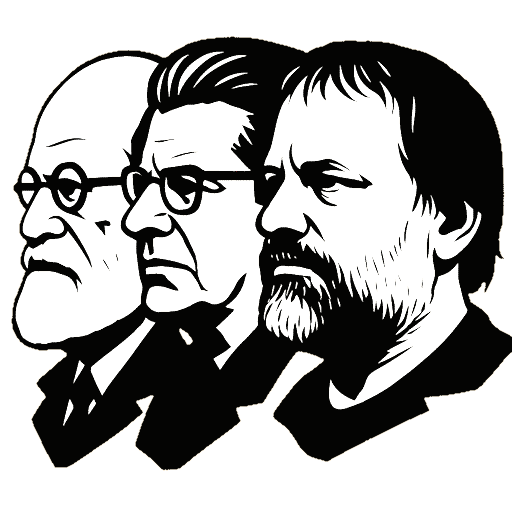


[…] (Englisch, Türkisch) […]
LikeLike
[…] (İngilizcesi, Almancası) […]
LikeLike
[…] Ailesi: Crisis & Critique’in Analyseverbot Paktı Žižek’i Nasıl Etkisizleştiriyor / The Holy Family of Hypocritique: How Crisis & Critique’s Pact of Analyseverbot Neutralizes Ži… / Die heilige Familie der Hypokritik: Wie der Analyseverbot-Pakt von Crisis & Critique Žižek […]
LikeLike
[…] (The Holy Family of Hypocritique: How Crisis & Critique’s Pact of Analyseverbot Neutralizes Ži…) […]
LikeLike
[…] (The Holy Family of Hypocritique: How Crisis & Critique’s Pact of Analyseverbot Neutralizes Ži…, C&C Žižek Volume is a Faux Artifact: Toad Megavan Tailing Žižek’s Oeuvre: Capped Kermit Reruns of the Mike Down Routine) […]
LikeLike
[…] (The Holy Family of Hypocritique: How Crisis & Critique’s Pact of Analyseverbot Neutralizes Ži…, C&C Žižek Volume is a Faux Artifact: Toad Megavan Tailing Žižek’s Oeuvre: Capped Kermit Reruns of the Mike Down Routine, Interlectural Motheration of C&C: How Hypocritique’s Maternal Superego Pampers the Beautifully Dissatisfied Ideal Ego—and Why Žižek’s Discourse, Not His Persona, Must Be the Ego Ideal) […]
LikeLike
[…] The Holy Family of Hypocritique: How Crisis & Critique’s Pact of Analyseverbot Neutralizes Žižek […]
LikeLike
[…] Hypocritique’in Kutsal Ailesi: Crisis & Critique’inAnalyseverbot Paktı Žižek’i Nötralize Ediyor […]
LikeLike
[…] Ruda, with household names like Todd McGowan and Mladen Dolar) arrived like a perfectly lit gallery [*]. Everything dangerous was exhibited [*]; nothing dangerous was done [*]. The volume placed […]
LikeLike
[…] of criticality protects scenes from acts that would change their coordinates (🔗; 🔗; 🔗). (Žižekian […]
LikeLike
[…] der Kritikalität Szenen vor Akten schützt, die ihre Koordinaten ändern würden (🔗; 🔗; 🔗). (Žižekian […]
LikeLike
[…] koordinatlarını değiştirecek eylemlerden koruduğu her yerde bugün görünürler (🔗; 🔗; 🔗). (Žižekian […]
LikeLike
[…] He called Crisis & Critique the Holy Family of Hypocritique, an Analyseverbot pact, a museum, a nursery, and a system of interlectural motheration. The journal preserved Žižek through admiration. It displayed contradiction, negativity, cracks, short circuits, Christianity, authority, failure, and deadlock as objects of cultivated attention. The institution itself retained its editors, invitations, prestige, and relations. (🔗) […]
LikeLike
[…] Er nannte Krise und Kritik die Heilige Familie der Hypokritik, einen Analyseverbot-Pakt, ein Museum, eine Kinderstube und ein System interlekturaler Bemutterung. Die Zeitschrift bewahrte Žižek durch Bewunderung. Sie stellte Widerspruch, Negativität, Risse, Kurzschlüsse, Christentum, Autorität, Versagen und Sackgasse als Objekte kultivierter Aufmerksamkeit aus. Die Institution selbst behielt ihre Redakteure, Einladungen, ihr Prestige und ihre Beziehungen. (🔗) […]
LikeLike
[…] Crisis & Critique’i Hipokritiğin Kutsal Ailesi, bir Analyseverbot paktı, müze, çocuk odası ve okumalararası anneleştirme sistemi diye adlandırdı. Dergi Žižek’i hayranlık aracılığıyla muhafaza ediyordu. Çelişkiyi, olumsuzluğu, çatlakları, kısa devreleri, Hristiyanlığı, otoriteyi, başarısızlığı ve kilitlenmeyi incelikli ilginin nesneleri olarak sergiliyordu. Kurumun kendisi editörlerini, davetlerini, itibarını ve ilişkilerini koruyordu. (🔗) […]
LikeLike