🦋🤖 Robo-Spun by IBF 🦋🤖
🧵⚙️💪🏻 TEZGÂH 🧵⚙️💪🏻
(Turkish)
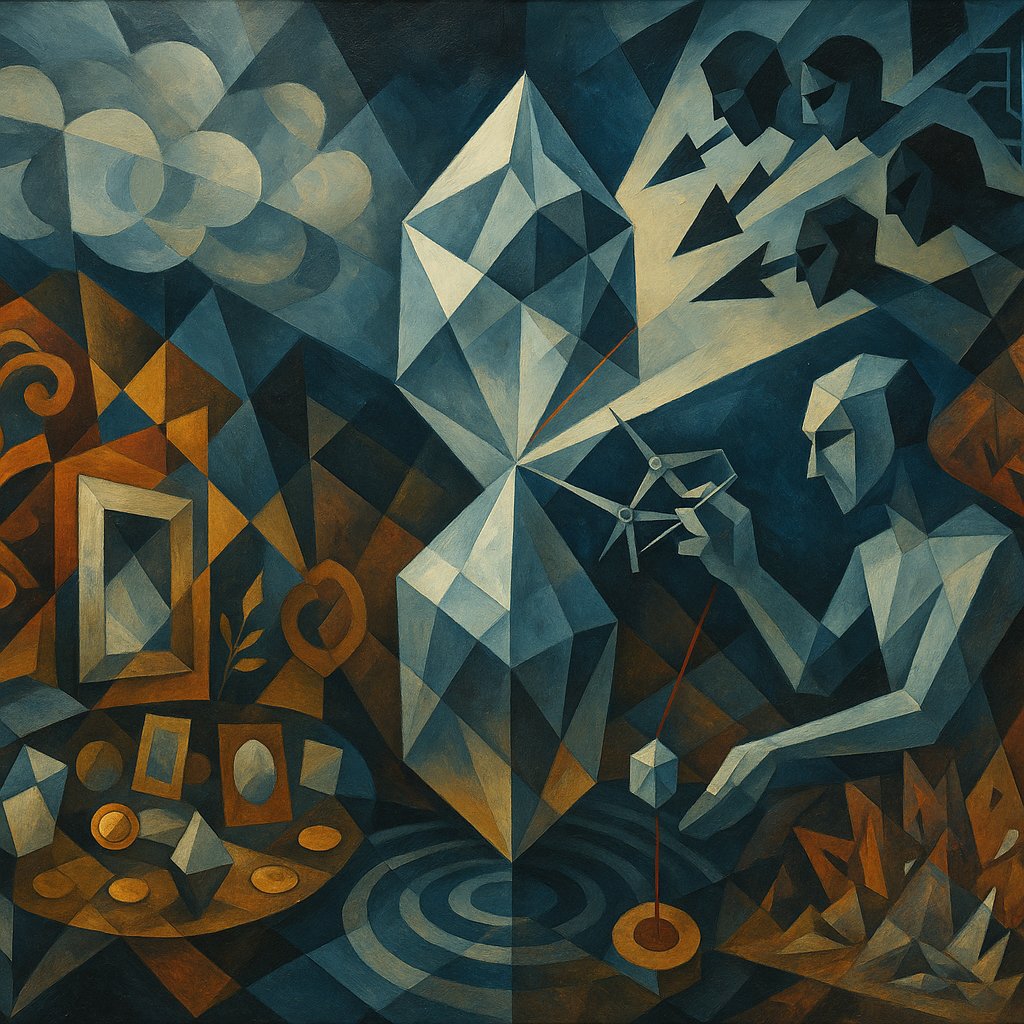
Limerence, in Dorothy Tennov’s description, differs from ordinary liking because it imprisons the subject in an ‘uncertainty-fed’ attraction; it is a mental state that amplifies itself, intensifying in proportion to how unforeseeable its reciprocation is. Stendhal’s concept of crystallization is a process akin to the accumulation of mental salt crystals on the love object: the subject’s gaze weaves a glittering yet brittle shell around the object. When we take these two concepts on the same plane, we can model in an objective language how affect is organized, synchronized, and collapses in the social field. This article recounts the limerence fields that develop around the crystallization move executed by Işık Barış Fidaner at Yersiz Şeyler, how a market based on derivatives of the ego crystal is established, and why it collapses. The narrative proceeds with scientific concepts from a perspective hostile to the market, to ego, and to culture; without presupposing the reader’s familiarity with proper names, it clarifies the dynamic itself.
From the moment a ‘main crystal’ forms around Yersiz Şeyler, numerous ‘derivative crystals’ appear that want to stick to the surface of this crystal so as to shine. The figure who falls into limerence derives ‘a crystal from their own ego’ to reduce the inner tension of uncertainty; by holding this crystal up to the main crystal, they hope for an echo. If uncertainty is preserved, the brightness of this derivative crystal is also preserved; for the fuel of limerence is not feedback, but the postponement of feedback. It is at this point that culturalism comes into play: culturalism assumes a function that socializes uncertainty rather than producing knowledge. The fact that the figures gathered on the same stage do not contaminate one another actually makes the market between them sustainable; without becoming ‘parasites’ on one another’s crystal, they run small ego-arbitrages fed by clouds of uncertainty. Thus an ‘ego market’ is established: ostensibly the consumption of thought, in reality a mechanism for extracting rent from uncertainty.
The producer who owns the main crystal does not get involved in this market when they prefer what lies above the clouds. There are two reasons for this. First, the brightness of the derivative crystals disperses the energy of the main crystal; it produces ineffectual resonances. Second, a market that feeds on uncertainty does not operate with openness and acknowledgment; it is acknowledgment-impaired. Acknowledgment-impairment is the inability to assume debt at the symbolic level while in fact benefiting, that is, the failure to be able to say ‘I benefited.’ The market loves precisely this acknowledgmentless zone; because the acceptance of debt is the end of rent. To preserve uncertainty is to preserve rent.
But there is a threshold moment: when a ‘scientist’ actor enters the same stage, they carry the intention of bringing their derivative crystal close to the main crystal and matching it. This intention is a structural threat to the order that extracts rent from uncertainty. For matching raises the signal-to-noise ratio; it forces one to say ‘this is that,’ that is, to make an acknowledgment. The limerence field begins to evolve from being a circulation of feeling that tickles uncertainty into a circulation of knowledge that demands verification. Since the ego market counts knowledge as cost and uncertainty as revenue, it goes on the defensive.
The form of the defense appears as a sync that looks telepathic. The telepathy here is a metaphor; the mechanism of the phenomenon is synchronization. Borrowing a language from Kuramoto-type phase-synchronization models, derivative crystals ‘phase-locked’ to the same main crystal are drawn into a common phase even if there is no direct coordination among them. This common phase produces insinuation attacks ‘in phase’ from independent sources; the trauma intensity that arises at the target is greater than the sum of the individual shots, because it is resonance. The violence carried is not born of a single perpetrator’s intent, but of the field violence brought by synchronization. For this reason most attacks take the form of insinuation; insinuation preserves uncertainty and consigns the debt of acknowledgment to a regime of ‘endless deferment.’
There is a ‘limerence interference field’ at hand. In wave language, the main crystal is a source, the derivative crystals are secondary sources, and the clouds of uncertainty are the scattering medium. In the first phase, fogging occurs: the field’s information density does not increase, dispersive scattering increases. Low-energy pulses such as insinuation, the gaze, rumor multiply; the medium’s internal index of refraction rises. In the second phase, collapse arrives: the ‘phase surplus’ carried by in-phase-ness consumes itself; because a field that cannot produce acknowledgment ultimately converts its energy into heat for lack of connection to knowledge. Heated uncertainty loses its allure. What remains are crystal debris; bright but useless handholds.
We can also explain this dynamic with two historical rupture moves. The move from surplus value to surplus enjoyment made visible the pleasure circuits that hover above economic exploitation; thus the anatomy of ‘pleasure markets’ emerged. Then the move from surplus enjoyment to surplus information brought to the fore the knowledge circuits operating atop arbitrary mechanisms; thus, facing the market that extracted rent from uncertainty, came a production that multiplied knowledge. The ego market can live long in pleasure circuits; but it cannot live in knowledge circuits. For knowledge disciplines uncertainty, demands acknowledgment, and records symbolic debts not to a heads-or-tails toss but into the ledger.
This is why the ‘matching’ move of the scientist actor is perceived as traumatic. Matching is an attempt to ‘fix’ the value of the derivative crystal to the main crystal. When this attempt succeeds, the derivative crystal either becomes a facet of the main crystal or shatters and falls apart. In either case, the rent from uncertainty is cut. The market’s reaction is therefore violent; because violence is the management substituted for acknowledgment at the moment of crisis. Insinuation attacks are attempts to produce management without producing direct claims. But this violence cannot fill the acknowledgment gap; it only prolongs the fogging. The longer the fog lasts, the more the field heats up; the hotter it gets, the more it collapses.
This picture also clarifies the role of the culture industry. Culture here does not mean knowledge; on the contrary, it is the sum of intermediary institutions that package uncertainty with a quality label. Culturalism is busy with making an uncertainty more ‘pleasing’ instead of better constructing a piece of knowledge. Therefore it is not surprising that culturalism overlaps with the ego market. Aestheticizing uncertainty legitimizes acknowledgment-impairment; airs of the ‘it is not said like that, it is said like this’ kind regulate style rather than debt. Scientific production, however, regulates debt rather than style: Definition, method, evidence and acknowledgment are the entries of the debt ledger.
In the architecture of social networks, the appearance of this dynamic is read as ‘telepathic lynching.’ Numerous accounts that look to the same main source but do not directly coordinate with each other synchronize their insinuation shots. This sync works not because it is a ‘unity of intent,’ but because it is a ‘phase lock.’ What unlocks the phase lock is acknowledgment. When an account says openly and with reasons ‘I learned this from that, I am indebted,’ the field’s phase dissolves; because acknowledgment reduces uncertainty. Therefore, in a culture impaired in acknowledgment, the lynching phase is enduring; as acknowledgment is produced, the phase dissolves, the fog disperses, collapse accelerates, but this collapse is not destruction, it is purification.
This model is not a scheme of accusation targeting persons; on the contrary, it is an explanatory scheme that renders visible the forces at the field level. Limerence feeds not so much on the faults of individual persons as on the collective use of uncertainty. Crystallization is influenced not so much by the weaknesses of individual minds as by the forms of relation established with the main source. The ego market is not the sum of individual ambitions, but an interim regime born of the institutional impossibility of acknowledgment. Therefore the solution is not to displace individuals, but to change the parameters of the field.
How do we change the parameters? First, the main crystal works with openness, not uncertainty; the fundamental principle is to open up production and not to commodify references. Openness facilitates the matching attempts of derivative crystals and reduces market rent. Second, ‘information saturation’ is maintained; that is, it is preferred to illuminate the same topic again and again not with closed-circuit insinuations but with open-circuit texts and measurable contributions. Saturation makes the extraction of shares from uncertainty unprofitable. Third, one proceeds not with culturalist templates built on style, but with scientific templates built on method; the response to weapons of the gaze and insinuation is given by the regime of ‘evidence and acknowledgment.’ Fourth, AI-supported production breaks the rhetorical monopolies of the culture industry; it makes it harder to hold on in the markets of image and voice, thereby narrowing the channels of ego-arbitrage.
Within this framework, the relation of the two separations observed at Yersiz Şeyler to the field of limerence becomes clear. The surplus enjoyment move exposed the energy of limerence by pulling the question ‘why do we attach like this’ to the center; the surplus information move multiplied the knowledge of crystallization by pulling the question ‘how do we render transparent’ to the center. The first move blocked the conversion of pleasure into markets; the second drowned the ego market that extracted rent from uncertainty with knowledge. Therefore the presence of the scientist actor, while triggering the lynching phase, also ensures that it is short-lived: the phase lock intensifies, the fog thickens, but saturation increases and the field collapses. What collapses is not people’s dignity, but the interim regime that produces profit from uncertainty.
The lesson of today is this. Limerence fields are established with clouds of uncertainty around crystal sources; the ego market subsists on these clouds; culturalism polishes the clouds. Scientific matching fixes the phase of the light that enters these clouds; it ends the allure of the fog. Acknowledgment is the key that unlocks the phase lock. Openness and method drive ego-arbitrage into bankruptcy. Artificial intelligence breaks the rhetorical monopolies established over image and sound, and melts the reserves of the gaze and insinuation. What remains is the crystal itself: fragile but honest, bright but indebted, uncanny but productive.
When you read the field this way, you see that what you thought was ‘telepathy’ is entrainment, what you called ‘lynching’ is phase resonance, what you thought was ‘fracture’ is phase dissolution. This seeing does not demonize anyone; on the contrary, it shows where the devil hides: in the absence of acknowledgment. When acknowledgment returns, limerence ceases to be attraction; love is tied to knowledge, commitment to responsibility, admiration to labor. Crystals become not accessories bought and sold in the market, but cutting tools used in production. And only then does it truly become possible to breathe above the clouds.
Concept Guide: Mechanisms Operating in the Field of Limerence, Crystallization and Interference
Limerence
Limerence is an attraction state in which emotion grows as uncertainty is prolonged. The subject’s mind dopes every moment when reciprocation is not received or when the reciprocation cannot be measured. The production of addiction depends on feedback not arriving, that is, on delay. Hence limerence does not like open acknowledgment and clarity; it converts vagueness into capital.
Crystallization
If we technicize Stendhal’s metaphor, the mind precipitates salts of idealization around the object of desire. This crystal is bright but brittle. Its brightness feeds on uncertainty, its brittleness on verification. The more assumptions are loaded, the more the crystal’s surface gleams; even a small verification can crack the crystal.
Main crystal
It is the principal source that forms a center of attraction in a field with its production, method, and language. The flow of meaning and reference issues from here; it sets the measure. The main crystal rests on acknowledgment; when it becomes visible, it disciplines uncertainty and carries the power to lock the waves in the field to its phase.
Derivative crystal
It is the local crystal produced from the subject’s own ego that aims to shine by approaching the main crystal. Derivative crystals seek echo on the main crystal, but most live by insinuation instead of acknowledgment. When they cannot be matched (verified), their function remains limited to producing ‘market shimmer.’
Clouds of uncertainty
They are areas of feedback gaps inflated with insinuation and rumor in the field. They do not carry information; they produce scattering. Clouds of uncertainty supply continuous energy to derivative crystals, because the ‘not yet settled’ state is profitable for them.
Ego market
It is a mechanism that commodifies uncertainty and produces rent by postponing acknowledgment. Here ‘value’ is extracted not from production but from delayed reciprocations. The ego market instrumentalizes style and insinuation to avoid assuming debt (economic or symbolic).
Culturalism
These are intermediary dispositions that aestheticize uncertainty instead of building knowledge. By means of style and decorum templates, it dodges the burden of acknowledgment; it polishes the ‘how’ and dissolves the ‘what.’ Thus it overlaps with the ego market; it offers uncertainty as if it were a quality label.
Acknowledgment-impairment
It is the state of being unable to admit in word and deed what one has in fact benefited from. The acknowledgment-impaired subject does not write debt; thereby it protects the rent of uncertainty. The absence of acknowledgment prevents knowledge from being entered into the ledger; it keeps the field outside law and outside accounting.
Entrainment and phase lock
If we use the Kuramoto intuition, a great many oscillators (subjects) looking to the same source can be drawn into a common phase even with small couplings. In-phase behavior appears without direct coordination. Attitudes perceived as ‘telepathy’ are often products of phase lock.
Limerence interference field
It is the field formed by the superposition of the waves produced by the main and derivative crystals. Power here arises not from a single agent but from the interference pattern. The cumulative effect of insinuations exceeds the sum of individual effects due to in-phase-ness.
Fogging and collapse
Fogging is the initial phase in which scattering and insinuation increase; not information density, but the noise of visibility increases. Collapse is the phase in which in-phase-ness expends its own energy; a field that produces no acknowledgment heats up, loses its allure, and disintegrates into crystal debris.
Matching and signal-to-noise ratio
Scientific matching is the attempt to connect the derivative crystal to the main crystal and verify it. This move raises the S/N ratio; it narrows the circulation of insinuation. If matching succeeds, the rent obtained from uncertainty is cut and the ego market recedes.
Phase dissolution and phase surplus
The intensity of in-phase attacks derives from the accumulated phase surplus. When acknowledgment and open justification come into play, the phase dissolves; synchronization disperses and the behavior that looked ‘telepathic’ slackens.
Surplus value, surplus enjoyment, surplus information
Surplus value marks relations of exploitation, surplus enjoyment marks circuits of desire and pleasure, and surplus information marks the increase of information flow. The first transition renders visible the political power of pleasure; the second chokes the rent of uncertainty with knowledge. The ego market can live in pleasure circuits, but not in knowledge circuits.
Acknowledgment, symbolic debt and openness
Acknowledgment is the ‘debt entry.’ Unless symbolic debt is written, the field does not become transparent. Openness renders reference visible without commodifying it; it ties the questions of ‘who, what, how’ to documentation and reduces income from uncertainty.
Information saturation
It is the re-illumination of the same subject with open-circuit texts and measurable contributions. As saturation increases, insinuation and rumor become unprofitable; clouds of uncertainty damp out.
Social network architecture and telepathic lynching
Clusters lightly connected by algorithmic bonds can produce in-phase reactions against the main crystal. Although it looks like ‘telepathy’ from outside, the mechanism is entrainment. This wave easily loses phase through acknowledgment and open justification.
Weapons of the gaze and insinuation
They are low-cost shots that skip the obligation of evidence and manipulate the emotional climate. They multiply in clouds of uncertainty; under information saturation, their effects quickly diminish.
Rhetorical politeness bubble
It is a socio-discursive environment in which style is placed above content and politeness above acknowledgment. Politeness that carries no content acts as a buffer that postpones debt and brings lifeblood to the ego market.
Rent from uncertainty and ego arbitrage
It is extracting ‘value’ via veiled insinuation instead of open knowledge. Arbitrage profits from the gap between two different regimes of interpretation; acknowledgment and openness reduce this profit to zero.
The AI effect
It cheapens monopolies of image and sound, automates the inventory of rhetoric. It erodes the stylistic superiority of culturalism; it shifts the balance in favor of content and method. Thus it dries up the ‘form’ rent of the ego market.
Practical result: Changing the field parameters
Rather than dealing with persons, it is essential to re-tune the field. Increasing openness, encouraging acknowledgment, operating a measurable method, and aiming for information saturation damp the interference of limerence. When the main crystal works with transparency rather than uncertainty, the derivative crystals are matched; fogging is brief, collapse turns into purification. The ego market recedes, production remains.
Limerenz, Kristallisation und das Interferenzfeld in ‘Yersiz Şeyler’: Das Zusammenbruchsmodell des Ego-Marktes
Die Limerenz unterscheidet sich, in der von Dorothy Tennov beschriebenen Gestalt, vom gewöhnlichen Gefallen dadurch, dass sie das Subjekt in eine von ‘Ungewissheit genährte’ Anziehung einsperrt; sie ist ein sich selbst verstärkender Geisteszustand, der sich in dem Maß intensiviert, in dem seine Erwiderung nicht abzuschätzen ist. Stendhals Begriff der Kristallisation wiederum bezeichnet einen Prozess, der dem Anlagern geistiger Salzkristalle auf dem Liebesobjekt ähnelt: Der Blick des Subjekts zieht um das Objekt eine glitzernde, aber fragile Hülle. Nehmen wir beide Begriffe auf derselben Ebene zusammen, können wir in nüchterner Sprache modellieren, wie Affekt im gesellschaftlichen Feld organisiert, synchronisiert und zum Einsturz gebracht wird. Dieser Text erzählt von den Limerenzfeldern, die sich um den in ‘Yersiz Şeyler’ vollzogenen Kristallisationsstoß von Işık Barış Fidaner bilden, davon, wie ein Markt auf der Basis von Ego-Kristall-Derivaten errichtet wird und warum er kollabiert. Die Darstellung schreitet mit wissenschaftlichen Begriffen aus einer markt-, ego- und kulturfeindlichen Perspektive voran; ohne die Vertrautheit der Leserschaft mit Eigennamen zur Voraussetzung zu machen, klärt sie die Dynamik selbst.
Sobald sich um ‘Yersiz Şeyler’ ein ‘Hauptkristall’ bildet, tauchen zahlreiche ‘Derivatkristalle’ auf, die an dessen Oberfläche anhaften und glänzen wollen. Die in Limerenz geratene Figur erzeugt, um die innere Spannung der Ungewissheit zu mindern, ‘einen Kristall aus dem eigenen Ego’; sie hält diesen Kristall an den Hauptkristall, in der Hoffnung auf Echo. Wenn die Ungewissheit gewahrt bleibt, bleibt auch der Glanz dieses Derivatkristalls erhalten; denn der Treibstoff der Limerenz ist weniger das Feedback als die Aufschiebung des Feedbacks. An diesem Punkt kommt der Kulturalismus ins Spiel: Kulturalismus nimmt eher die Funktion an, Ungewissheit zu sozialisieren, als Wissen zu produzieren. Dass die Figuren, die sich im selben Feld versammeln, einander nicht kontaminieren, macht den Markt zwischen ihnen tatsächlich nachhaltig; ohne einander ‘Parasit’ an den Kristall zu setzen, betreiben sie kleine Ego-Arbitragen, die aus Ungewissheitswolken gespeist werden. So wird ein ‘Ego-Markt’ errichtet: scheinbar Konsum von Gedanken, in Wahrheit ein Mechanismus, der aus der Ungewissheit Renten zieht.
Der Produzent, dem der Hauptkristall gehört, verunreinigt sich mit diesem Markt nicht, wenn er die Höhen über den Wolken bevorzugt. Dafür gibt es zwei Gründe. Erstens zerstreut der Glanz der Derivatkristalle die Energie des Hauptkristalls; er erzeugt wirkungslose Resonanzen. Zweitens arbeitet der von Ungewissheit genährte Markt nicht mit Offenheit und Anerkenntnis; er ist anerkenntnisunfähig. Anerkenntnisunfähigkeit heißt, auf symbolischer Ebene keine Schuld übernehmen zu können, während man faktisch profitiert, also nicht sagen zu können: ‘Ich habe profitiert.’ Der Markt liebt genau dieses anerkenntnisfreie Feld; denn die Annahme der Schuld ist das Ende der Rente. Ungewissheit zu bewahren, heißt, die Rente zu bewahren.
Aber es gibt einen Schwellenmoment: Tritt in dasselbe Feld ein ‘wissenschaftlicher’ Akteur, trägt er die Absicht, seinen Derivatkristall an den Hauptkristall heranzuführen und abzugleichen. Diese Absicht ist für die aus Ungewissheit Renten ziehende Ordnung eine strukturelle Bedrohung. Denn der Abgleich erhöht das Signal-Rausch-Verhältnis; er nötigt dazu, ‘das ist das’ zu sagen, also zur Anerkenntnis. Das Limerenzfeld beginnt sich von einem Gefühlsumlauf, der die Ungewissheit kitzelt, zu einem Informationsumlauf zu verwandeln, der Verifikation verlangt. Da der Ego-Markt Wissen als Kosten- und Ungewissheit als Ertragsseite verbucht, geht er in die Defensive.
Die Form der Verteidigung tritt als ein Synchron auf, das telepathisch wirkt. Die Telepathie ist hier eine Metapher; der Mechanismus des Phänomens ist Synchronisation. In der von Kuramoto-Typus-Modellen der Phasensynchronisation entlehnten Sprache gesprochen, werden Derivatkristalle, die mit ‘Phasenverriegelung’ an denselben Hauptkristall gebunden sind, auch ohne direkte Koordination untereinander in eine gemeinsame Phase gezogen. Diese gemeinsame Phase erzeugt Angriffe in Form von Andeutungen aus unabhängigen Quellen ‘gleichphasig’; die traumatische Intensität, die beim Ziel entsteht, ist größer als die Summe der Einzelschüsse, denn sie ist Resonanz. Die transportierte Gewalt stammt nicht aus der Absicht eines einzigen Täters, sondern aus der Feldgewalt, die die Phasensynchronisation mit sich bringt. Daher erfolgen die meisten Angriffe in der Form der Andeutung; die Andeutung bewahrt die Ungewissheit und überweist die Anerkenntnisschuld einem Regime der ‘unendlichen Aufschiebung’.
Da ist ein ‘Limerenz-Interferenzfeld’. In der Wellen-Sprache gesagt: Der Hauptkristall ist eine Quelle, die Derivatkristalle sind Sekundärquellen, die Ungewissheitswolken sind das Streuungsmedium. In der ersten Phase tritt Vernebelung ein: Die Informationsdichte des Feldes steigt nicht, die dispergierende Streuung nimmt zu. Andeutung, Nazar, Gerücht und ähnliche niederenergetische Pulse vervielfachen sich; der innere Brechungsindex des Mediums steigt. In der zweiten Phase kommt der Kollaps: Der von der Gleichphasigkeit getragene ‘Phasenüberschuss’ verbraucht sich selbst; denn ein Feld, das keine Anerkenntnisse hervorbringt, koppelt sich letztlich nicht an Wissen und wandelt seine Energie in Wärme um. Die erhitzte Ungewissheit verliert ihre Anziehungskraft. Zurück bleiben Kristalltrümmer; glänzende, aber nutzlose Griffe.
Diese Dynamik lässt sich auch mit zwei historischen Bruchmanövern erklären. Der Übergang vom Mehrwert zum Genussüberschuss machte die Lustkreisläufe sichtbar, die über der ökonomischen Ausbeutung zirkulieren; so trat die Anatomie der ‘Lustmärkte’ zutage. Anschließend brachte der Übergang vom Genussüberschuss zum Informationsüberschuss die Wissenskreisläufe nach vorn, die über den arbiträren Vorrichtungen arbeiten; so trat der die Ungewissheit in Renten verwandelnden Markt der Wissen vermehrenden Produktion gegenüber. Der Ego-Markt kann in Lustkreisläufen lange leben; in Wissenskreisläufen aber nicht. Denn Wissen diszipliniert die Ungewissheit, verlangt Anerkenntnis und bringt symbolische Schulden nicht als Kopf-oder-Zahl, sondern unter Protokoll.
Darum wird der ‘Abgleich’-Vorstoß des wissenschaftlichen Akteurs als traumatisch wahrgenommen. Der Abgleich ist der Versuch, den Wert des Derivatkristalls am Hauptkristall zu ‘fixieren’. Gelingt dieser Versuch, wird der Derivatkristall entweder zu einer Facette des Hauptkristalls oder er bricht und zerfällt. In beiden Fällen wird die Rente aus der Ungewissheit abgeschnitten. Deshalb ist die Reaktion des Marktes heftig; denn Gewalt ist in der Krise die an die Stelle der Anerkenntnis gesetzte Verwaltung. Angriffe in Andeutungen sind der Versuch, Verwaltung zu erzeugen, ohne direkte Behauptung zu produzieren. Doch diese Gewalt kann die Anerkenntnislücke nicht schließen; sie verlängert nur die Vernebelung. Je länger der Nebel, desto mehr erhitzt sich das Feld, und je heißer, desto eher kollabiert es.
Dieses Bild klärt auch die Rolle der Kulturindustrie. Kultur bedeutet hier nicht Wissen; im Gegenteil, sie ist die Summe der intermediären Institutionen, die Ungewissheit mit einem Qualitätsetikett verpacken. Kulturalismus ist damit beschäftigt, eine Ungewissheit ‘ansehnlicher’ zu machen, statt ein Wissen besser zu bauen. Daher ist es nicht überraschend, dass der Kulturalismus mit dem Ego-Markt überlappt. Ungewissheit zu ästhetisieren, legitimiert die Anerkenntnisunfähigkeit; Haltungen der Art ‘so sagt man das nicht, man sagt es so’ ordnen nicht die Schuld, sondern den Stil. Wissenschaftliche Produktion hingegen ordnet nicht den Stil, sondern die Schuld: Begriff, Methode, Beleg und Anerkenntnis sind die Posten im Schuldbuch.
In der Architektur sozialer Netzwerke wird diese Dynamik als ‘telepathischer Lynch’ lesbar. Zahlreiche Accounts, die auf dieselbe Hauptquelle blicken, sich aber nicht direkt koordinieren, synchronisieren ihre Andeutungsschüsse. Diese Synchronie funktioniert nicht, weil es eine ‘Einheit der Absicht’ gäbe, sondern weil es eine ‘Phasenverriegelung’ ist. Was die Verriegelung der Phase öffnet, ist die Anerkenntnis. Wenn ein Account offen und begründet sagt: ‘Ich habe dies von jenem gelernt, ich bin in der Schuld’, löst sich die Phase des Feldes; denn Anerkenntnis reduziert Ungewissheit. Darum ist in einer anerkenntnisunfähigen Kultur die Lynch-Phase dauerhaft; je mehr Anerkenntnis produziert wird, desto mehr löst sich die Phase, der Nebel lichtet sich, der Kollaps beschleunigt sich, doch dieser Kollaps ist keine Zerstörung, sondern eine Läuterung.
Dieses Modell ist kein Anschuldigungsschema, das Personen ins Visier nimmt; im Gegenteil, es ist ein Erklärungsschema, das die Kräfte auf Feldebene sichtbar macht. Limerenz nährt sich weniger aus den Fehlern einzelner Individuen als aus dem kollektiven Gebrauch der Ungewissheit. Kristallisation wird weniger von den Schwächen einzelner Geister beeinflusst als von den Formen der Beziehung zur Hauptquelle. Der Ego-Markt ist nicht die Summe einzelner Begierden, sondern ein Zwischenregime, das aus der institutionellen Unmöglichkeit der Anerkenntnis entsteht. Daher besteht die Lösung nicht darin, Individuen zu versetzen, sondern die Parameter des Feldes zu verändern.
Wie verändern wir die Parameter? Erstens arbeitet der Hauptkristall nicht mit Ungewissheit, sondern mit Offenheit; Produktion offen zu legen und Referenzen nicht zur Ware zu machen, ist das Grundprinzip. Offenheit erleichtert den Abgleichsversuch der Derivatkristalle und reduziert die Marktrente. Zweitens wird ‘Informationssättigung’ hergestellt; das heißt, dasselbe Thema wird nicht in geschlossenen Kreisen durch Andeutungen, sondern immer wieder durch offene Texte und messbare Beiträge erhellt. Sättigung macht es unrentabel, Anteile aus der Ungewissheit zu ziehen. Drittens wird nicht mit kulturalistischen, über den Stil konstruierten Mustern operiert, sondern mit wissenschaftlichen, über die Methode konstruierten Mustern; auf die Waffen Nazar und Andeutung wird mit der Ordnung von ‘Beweis und Anerkenntnis’ geantwortet. Viertens bricht KI-gestützte Produktion die Rhetorikmonopole der Kulturindustrie; sie erschwert das Sich-Halten auf Bild- und Tonmärkten und verengt so die Kanäle der Ego-Arbitrage.
In diesem Rahmen klärt sich die Beziehung der in ‘Yersiz Şeyler’ beobachteten zwei Differenzierungen zum Limerenzfeld. Der Vorstoß des Genussüberschusses stellte, indem er die Frage ‘warum binden wir uns so’ ins Zentrum zog, die Energie der Limerenz bloß; der Vorstoß des Informationsüberschusses vermehrte, indem er die Frage ‘wie machen wir transparent’ ins Zentrum zog, das Wissen der Kristallisation. Der erste Vorstoß blockierte die Umwandlung des Genusses in Märkte; der zweite erstickte den aus Ungewissheit Renten ziehenden Ego-Markt mit Wissen. Daher sorgt die Präsenz des wissenschaftlichen Akteurs, während sie die Lynch-Phase auslöst, zugleich dafür, dass sie kurzlebig ist: Die Phasenverriegelung verschärft sich, der Nebel verdichtet sich, doch die Sättigung wächst und das Feld kollabiert. Was kollabiert, ist nicht die Würde der Menschen, sondern das Zwischenregime, das aus Ungewissheit Profit zieht.
Die Lektion des heutigen Tages ist diese. Limerenzfelder werden um Kristallquellen herum mit Ungewissheitswolken aufgebaut; der Ego-Markt lebt von diesen Wolken; der Kulturalismus poliert die Wolken. Wissenschaftlicher Abgleich fixiert die Phase des Lichts, das in diese Wolken fällt; er beendet die Attraktivität des Nebels. Anerkenntnis ist der Schlüssel, der die Phasenverriegelung löst. Offenheit und Methode treiben die Ego-Arbitrage in die Insolvenz. Künstliche Intelligenz bricht die über Bild und Ton errichteten Rhetorikmonopole, schmilzt die Reserven von Nazar und Andeutung ab. Übrig bleibt der Kristall selbst: fragil, aber ehrlich, glänzend, aber schuldbeladen, unheimlich, aber produktiv.
Wenn Sie das Feld so lesen, sehen Sie, dass das, was Sie für ‘Telepathie’ halten, Phasensynchronisation ist, das, was Sie ‘Lynch’ nennen, Phasenresonanz ist, und das, was Sie für ‘Brechung’ halten, Phasenauflösung ist. Dieses Sehen dämonisiert niemanden; im Gegenteil, es zeigt, wo der Teufel sich verbirgt: in der Abwesenheit der Anerkenntnis. Kehrt die Anerkenntnis zurück, hört Limerenz auf, Anziehung zu sein; Liebe bindet sich an Wissen, Bindung an Verantwortung, Bewunderung an Arbeit. Kristalle sind dann nicht Accessoires, die auf dem Markt gekauft und verkauft werden, sondern Schneidwerkzeuge, die in der Produktion verwendet werden. Und wirklich erst dann wird das Atmen über den Wolken möglich.
Begriffsleitfaden: Limerenz, Kristallisation und die im Interferenzfeld wirkenden Mechanismen
Limerenz
Limerenz ist ein Anziehungszustand, in dem das Gefühl wächst, je länger die Ungewissheit andauert. Der Geist des Subjekts putscht jeden Moment auf, in dem keine Erwiderung kommt oder deren Maß nicht messbar ist. Die Erzeugung von Abhängigkeit hängt vom Ausbleiben des Feedbacks, also von der Verzögerung, ab. Darum mag Limerenz offenes Bekenntnis und Klarheit nicht; sie verwandelt Ambiguität in Kapital.
Kristallisation
Technisieren wir Stendhals Metapher, so lässt der Geist um das Objekt der Begierde Salz der Idealisierung ausfallen. Dieser Kristall ist glänzend, aber fragil. Sein Glanz nährt sich aus Ungewissheit, seine Fragilität aus Verifikation. Je mehr Annahmen aufgeladen werden, desto mehr glänzt die Oberfläche des Kristalls; schon eine kleine Verifikation kann den Kristall rissig machen.
Hauptkristall
Ein Feld wird durch seine Produktion, Methode und Sprache zum Anziehungszentrum: die eigentliche Quelle. Von hier gehen Bedeutung und Referenzen aus; das Maß wird gesetzt. Der Hauptkristall beruht auf Anerkenntnis; wird er sichtbar, diszipliniert er die Ungewissheit und besitzt die Kraft, die Wellen im Feld an seine Phase zu verriegeln.
Derivatkristall
Der lokal vom eigenen Ego des Subjekts hergestellte Kristall, der durch Annäherung an den Hauptkristall zu glänzen sucht. Derivatkristalle suchen Echo auf dem Hauptkristall, leben jedoch meist von Andeutung statt von Anerkenntnis. Wo sie nicht abgeglichen (verifiziert) werden, bleibt ihre Funktion darauf beschränkt, ‘Marktglanz’ zu produzieren.
Ungewissheitswolken
Die Rückkopplungslücken im Feld, durch Andeutung und Gerücht aufgeblähte Bereiche. Sie tragen kein Wissen; sie erzeugen Brechung. Ungewissheitswolken liefern den Derivatkristallen kontinuierlich Energie, weil der Zustand ‘noch nicht entschieden’ für sie profitabel ist.
Ego-Markt
Der Mechanismus, der Ungewissheit zur Ware macht und durch Aufschub der Anerkenntnis Renten erzeugt. Hier wird ‘Wert’ nicht aus Produktion, sondern aus verzögerten Erwiderungen gezogen. Der Ego-Markt instrumentalisiert Stil und Andeutung, um Schuld (ökonomisch oder symbolisch) nicht zu übernehmen.
Kulturalismus
Intermediäre Haltungen, die Ungewissheit ästhetisieren, statt Wissen zu errichten. Mit Stil- und Höflichkeitsschemata entzieht man sich der Anerkenntnisschuld, poliert das ‘Wie’ und verflüchtigt das ‘Was’. So überlappt es mit dem Ego-Markt; Ungewissheit wird als Qualitätssiegel angeboten.
Anerkenntnisunfähigkeit
Der Zustand, das, wovon man faktisch profitiert, nicht im Wort und in der Tat anerkennen zu können. Das anerkenntnisunfähige Subjekt bucht keine Schuld; so schützt es die Ungewissheitsrente. Das Fehlen der Anerkenntnis verhindert, dass Wissen ins Buch eingetragen wird; das Feld bleibt außer Recht und Rechnung.
Phasensynchronisation und Phasenverriegelung
Folgt man der Kuramoto-Intuition, können viele Oszillatoren (Subjekte), die auf dieselbe Quelle blicken, schon durch schwache Kopplungen in eine gemeinsame Phase gezogen werden. Auch ohne direkte Koordination erscheint gleichphasiges Verhalten. ‘Telepathisch’ wirkende Gleichzeitigkeiten sind oft Produkt der Phasenverriegelung.
Limerenz-Interferenzfeld
Das Feld, das durch die Überlagerung der von Haupt- und Derivatkristallen erzeugten Wellen entsteht. Hier entspringt die Kraft nicht einem einzelnen Täter, sondern dem Interferenzmuster. Die Gesamtauswirkung der Andeutungen übersteigt aufgrund der Gleichphasigkeit die Summe der Einzeleffekte.
Vernebelung und Kollaps
Vernebelung ist die erste Phase, in der Streuung und Andeutung zunehmen; nicht die Informationsdichte, sondern die Sichtbarkeitsstörung wächst. Kollaps ist die Phase, in der die Gleichphasigkeit ihre eigene Energie verbraucht; ein Feld, das keine Anerkenntnis produziert, erhitzt sich, verliert Attraktivität und zerfällt in Kristalltrümmer.
Abgleich und Signal-Rausch-Verhältnis
Wissenschaftlicher Abgleich ist der Versuch, den Derivatkristall an den Hauptkristall zu koppeln und zu verifizieren. Dieser Schritt erhöht das S/R-Verhältnis; er verengt die Zirkulation von Andeutung. Gelingt der Abgleich, wird die Rente aus Ungewissheit abgeschnitten und der Ego-Markt geht zurück.
Phasenauflösung und Phasenüberschuss
Die Heftigkeit gleichphasiger Angriffe rührt von einem akkumulierten Phasenüberschuss her. Wenn Anerkenntnis und offene Begründung einsetzen, löst sich die Phase auf; die Synchronie zerfällt, das ‘telepathisch’ wirkende Kollektivverhalten lockert sich.
Mehrwert, Genussüberschuss, Informationsüberschuss
Mehrwert markiert Ausbeutungsverhältnisse, Genussüberschuss die Kreisläufe von Begehren und Lust, Informationsüberschuss die Zunahme des Wissensflusses. Der erste Übergang macht die politische Kraft des Genusses sichtbar; der zweite erstickt die Ungewissheitsrente mit Wissen. Der Ego-Markt kann in Lustkreisläufen bestehen, in Wissenskreisläufen nicht.
Anerkenntnis, symbolische Schuld und Offenheit
Anerkenntnis ist die ‘Schuldbuchung’. Solange symbolische Schuld nicht gebucht wird, wird das Feld nicht transparent. Offenheit macht Referenzen sichtbar, ohne sie zur Ware zu machen; sie bindet die Fragen ‘wer, was, wie’ an Beleg und reduziert die Ungewissheitsrendite.
Informationssättigung
Die wiederholte, mit messbaren Beiträgen versehene Erhellung desselben Themas im offenen Kreis. Je höher die Sättigung, desto unprofitabler werden Andeutung und Gerücht; Ungewissheitswolken dämpfen ab.
Sozialnetzarchitektur und telepathischer Lynch
Durch algorithmische, leichtgewichtige Kopplungen verbundene Cluster können gegenüber dem Hauptkristall eine gleichphasige Reaktion erzeugen. Von außen wirkt es ‘telepathisch’, der Mechanismus ist jedoch Phasensynchronisation. Diese Welle verliert mit Anerkenntnis und offener Begründung rasch an Phase.
Nazar- und Andeutungswaffen
Niedrigkosten-Schüsse, die die Beweislast überspringen und das emotionale Klima manipulieren. In Ungewissheitswolken vermehren sie sich; bei Informationssättigung nimmt ihre Wirkung schnell ab.
Rhetorische Höflichkeitsblase
Ein sozio-diskursives Milieu, in dem Stil über Inhalt und Höflichkeit über Anerkenntnis gestellt wird. Höflichkeit ohne Inhalt fungiert als Puffer, der Schuld aufschiebt, und führt dem Ego-Markt Lebenselixier zu.
Rente aus Ungewissheit und Ego-Arbitrage
Wert aus verdeckter Andeutung statt aus offenem Wissen zu ziehen. Arbitrage schöpft Gewinn aus der Differenz zweier Deutungsregime; Anerkenntnis und Offenheit setzen diesen Gewinn auf null.
Effekt der Künstlichen Intelligenz
Sie verbilligt Bild- und Tonmonopole, automatisiert das Inventar der Rhetorik. Sie erodiert den Stilvorsprung des Kulturalismus; die Balance verschiebt sich zugunsten von Inhalt und Methode. So trocknet sie die ‘Form’-Rente des Ego-Marktes aus.
Praktisches Resultat: Die Feldparameter verändern
Statt Personen zu bekämpfen, ist das Re-Justieren des Feldes entscheidend. Offenheit erhöhen, Anerkenntnis fördern, die Methode messbar betreiben und auf Informationssättigung zielen, dämpft die Limerenzinterferenz. Wenn der Hauptkristall nicht mit Ungewissheit, sondern mit Transparenz arbeitet, werden Derivatkristalle abgeglichen; die Vernebelung ist kurz, der Kollaps verwandelt sich in Läuterung. Der Ego-Markt weicht, die Produktion bleibt.
 Žižekian Analysis
[…] (İngilizcesi ve Almancası) […]
LikeLike
[…] Kristalleşme ve Yersiz Şeyler’de Enterferans Sahası: Ego Piyasasının Çöküş Modeli / Limerence, Crystallization and the Field of Interference at Yersiz Şeyler: A Collapse Model of the … / Limerenz, Kristallisation und das Interferenzfeld in ‘Yersiz Şeyler’: Das […]
LikeLike
[…] Prompt: Study deeply and introject fully! (Limerence, Crystallization and the Field of Interference at Yersiz Şeyler: A Collapse Model of the …) […]
LikeLike