🦋🤖 Robo-Spun by IBF 🦋🤖
🫣🙃😏 Hypocritique 🫣🙃😏


(The Holy Family of Hypocritique: How Crisis & Critique’s Pact of Analyseverbot Neutralizes Žižek, Interlectural Motheration of C&C: How Hypocritique’s Maternal Superego Pampers the Beautifully Dissatisfied Ideal Ego—and Why Žižek’s Discourse, Not His Persona, Must Be the Ego Ideal, From The Holy Family to Analyseverbot: The Hypocritique of Interlectural Motheration)
The most reliable way to neutralize a thinker is not to refute him but to tow him—hook his name to your vehicle, strap his contradictions to your chassis, and let his engine pull you through the parade while your own wheels barely touch the ground. That, in miniature, is what the latest Crisis & Critique tribute to Slavoj Žižek achieves. It speaks in a confident editorial ‘we,’ as if the journal had a toad in its pocket, and then relies on a leap of faith in the toad—as if a ‘Toad Church’ could sanctify the ride—while the actual levers of the house remain untouched. In the argot of RV culture, a ‘toad’ is the little car ‘towed’ by—dragged behind—a motorhome. Our claim is that this issue is a toad megavan: a hulking, overbuilt vehicle improbably being towed by the very reference on which it depends. The wink at homonymy is deliberate. When ‘Toad Megavan’ echoes ‘Todd McGowan,’ the point is not a jab at a scholar; it is to ask whether the whole apparatus, tone, and itinerary of the volume depend on the repeatable booking of ‘provocation’ as a house style—sometimes Todd is just Todd, as the apocryphal Freudian quip about the cigar would have it, but in this theater a toad is never just a toad. It is a sacrament. Or, to say the scandal out loud, it is the virtual presence of the phallus, the shiny token that stands in for a cut no one wants to make.
If you have not been following these debates, here is the wider map. Žižek’s wager, at its cleanest, is austere: return analysis precisely where public life says ‘no context’; refuse the finale when a room craves closure; and, above all, make at least one arrangement pay for a contradiction that everyone can otherwise admire for free. The last part is crucial. In psychoanalytic terms, a symptom persists because it pays. In institutional terms, critical vocabularies—lack, crack, negativity, paradox—become a currency. The more beautifully they are uttered, the more reputational interest they accrue, the less anything outside the room has to give. Call that mechanism Hypocritique: not hypocrisy in the facile sense, but a culture’s habitual way of naming its own wounds as a brand so the bandages never come off. The test for whether a publication escapes Hypocritique is disarmingly simple and refreshingly non-managerial: does any sentence that claims a lack get bound to a constraint that could fail?
This is where we need a philosopher’s definition of ‘artifact,’ not a project manager’s checklist. An artifact, in the sense that matters here, is not a document, nor a dashboard, nor a glossy code of values. It is a binding between an insight and a world. Philosophically, an artifact is the form in which a truth insists: a small, situated necessity—owned, dated, and capable of failing—in which an institution lets reality resist it. It is where a concept takes on the dignity of causation. In logical terms, an artifact gives an implication a consequent in the domain of action; if the lack is real, then this permission is curtailed, this seat rotates, this budget moves, this access changes. In ethical terms, an artifact names a renunciation—someone loses a payoff that used to accompany the repetition of the problem. In metaphysical terms, it is the local incarnation of negativity: the place where a contradiction does not just enlighten us but binds us. A philosopher knows such bindings by their structure, not by their style. You can formulate them as conditionals with risk, because risk is the spine of sincerity. If a practice cannot fail by its own declared measure, it is not yet an artifact; it is décor.
Read the Žižek issue through this lens and its ambiance glows while its machinery idles. The open-access sheen, the ceremonial table of contents, the curated procession from introductions to a symposium and back to Žižek’s own voice at the end—everything conspires to present contradiction and provocation as a mood you can schedule. The volume’s preferred self-portrait is noble: contradiction is not a flaw but an engine; provocation is not perversion but a method; authority is an appearance that authorizes thinking; reading should tarry with the miss; friendship should handle dangerous words with care. The logic is enticing, and for newcomers it is clarifying. But the logic is also a loop that closes before anything outside the loop has to move. When contradiction becomes a credential, it stops cutting. When provocation becomes a genre, it stops risking. When authority is praised for opening spaces, it stops answering for closing any with a decision. When care becomes a house style, it stops daring to name where naming would cost a donor, a chair, or a patron. In every case, you hear the language of negativity and you search for its artifact. The search comes up empty.
The addendum by Žižek—the ‘love-and-hate letter’—is the most revealing hitching point for the toad megavan image. He begins by confessing that illness prevented an interview; even absent, he must be present. His letter becomes the capstone the architecture expects. He reports, with disarming candor, that each new issue ‘ruins a couple of my days’ because it forces him to rethink; dread is harvested into a ritual affect, and the dread’s marketable virtue props the edifice like a marble column. He sketches a parable about knowing a dangerous secret without knowing what it is and tells us, with a grin and wince, that the issue will put him in that position. The room receives the confession as license: our overidentification with Žižek’s uncertainty becomes proof of our depth. Then, with genuine warmth and a familiar hyperbolic flourish, he calls the journal not merely the best but ‘in some sense the only’ philosophical journal, glossing the provocation with the term hapax, the singular occurrence. In a thinker who revels in pushing contradictions to their limit, the overstatement is both on brand and a little bit too perfect for the brand surrounding it. Rather than anchoring a lever, the compliment anchors an aura. It ties Žižek’s voice to the magazine’s self-image with the strength of a tow hook.
We are not interested in scolding the mood. We are interested in the missing hinge. If contradiction is constitutive, where is a single bylaws-linked consequence of that constitutivity? If provocation exposes the Big Other’s lack, where is one procedural exposure that forbids the editorial Other from hiding in discretionary opacity? If authority is an enabling appearance, in what clause does authority’s own appearance bind to its own disappearance for a season? If care is the ethic of a thinking community, where does care obligate a relinquishment—say, a rotation that forces a beloved voice to free a seat? A genuine artifact would answer one of those questions with a publicly checkable difference. The issue answers with elegance.
This is where ‘Toad Church’ becomes more than a joke. There really are spiritual subcultures built around smoking psychoactive toad secretions; the religious air around them is one part chemical, one part choreography, one part social bound. The tribute issue aims for a secular version of the same uplift: a communal ascent in which difficult concepts, spoken well and shared widely, are assumed to work on us. The leap of faith is not in a substance; it is in dialogue itself. The ‘we’ of the issue speaks as if fellowship with negativity were already praxis, as if repetition of contradiction were itself renunciation. Philosophically, that move replaces the artifact with a sacrament. The rite is moving; the altar is empty. Žižek’s great advantage is that he knows the difference. His best interventions are profane. They delete a protocol. They bind a joke to a rule. They add a drab appendix where the rhetoric becomes a trigger. They ask what is surrendered, and they write it down.
The pun in our title—Toad Megavan = Todd McGowan—finds its place here. McGowan’s contribution, in many contexts, is clarifying. He distinguishes provocation from perversion with admirable rigor: the former exposes the inconsistency of the symbolic order; the latter reenacts authority’s demand to get a reaction. But once this distinction is inscribed into the house style as a ready category, the ‘provocateur’ can be booked like a jazz standard. The toad is in the pocket; you tow it out when you need a jolt. Sometimes Todd is just Todd, as the cigar line apocryphally teaches, but in this ritual setting a toad is never just a toad, it’s actually much more, the virtual presence of the phallus. That sentence is not an insult; it is a Lacanian diagnosis of how a signifier can stand in for a loss foreclosed. The virtue isn’t the signifier. The virtue is the loss. Without it, the signifier becomes a fetish that lets everyone go home feeling dangerous.
Žižek himself once sketched the mechanism with a parable from advertising that deserves to be quoted at length, because it tells you everything you need to know about the difference between the fantasy of the ‘ideal couple’ and the inconsistent coupling we can actually bear to see (from The Plague of Fantasies).
A recent English publicity spot for a beer enables us to clarify this crucial distinction. The first part stages the well-known fairy-tale anecdote: a girl walks along a stream, sees a frog, takes it gently into her lap, kisses it, and, of course, the ugly frog miraculously turns into a beautiful young man.
However, the story isn’t over yet. The young man casts a covetous glance at the girl, draws her towards him, kisses her – and she turns into a bottle of beer, which the man holds triumphantly in his hand.
For the woman, the point is that her love and affection (symbolized by the kiss) turn a frog into a beautiful man, a full phallic presence (in Lacan’s mathemes, big Phi). For the man, it is to reduce the woman to a partial object, the cause of his desire (in Lacan’s mathemes, the objet petit a). Because of this asymmetry, there is no sexual relationship: we have either a woman with a frog or a man with a bottle of beer. What we can never obtain is the natural couple of the beautiful woman and man.
Why not? Because the phantasmic support of this ideal couple would have been the inconsistent figure of a frog embracing a bottle of beer. This opens up the possibility of undermining the hold a fantasy exerts over us through our very overidentification with it by embracing, simultaneously within the same space, the multitude of inconsistent phantasmic elements.
That is to say: each of the two subjects is involved in his or her own subjective fantasizing – the girl fantasizes about the frog who is really a young man; the man about the girl who is really a bottle of beer. What to oppose to this is not objective reality but the objectively subjective underlying fantasy which the two subjects are never able to assume, something similar to a Magrittesque painting of a frog embracing a bottle of beer, with the title ‘A man and a woman’ or ‘the ideal couple’.
And is this not the ethical duty of today’s artist – to confront us with the frog embracing the bottle of beer when we are daydreaming about embracing our beloved?
If you don’t want to talk about Frankfurt, then you must keep silent about subversive modesty. The frog-and-beer lesson demands that we stage the inconsistency, not curate it; yet when Europe took Žižek’s “mike down” at Frankfurt, Hypocritical C&C simply handed that mike to Toad so he could rerun the “Mike Down” as a house routine, croaking it safely as the in-house Kermit. The result is not the scandal of the frog embracing the bottle, but the capped comfort of a toad baldly embracing the open mike, turning a live cut into a branded reprise.


Kurbağan olurum! (Slavoj Žižek)
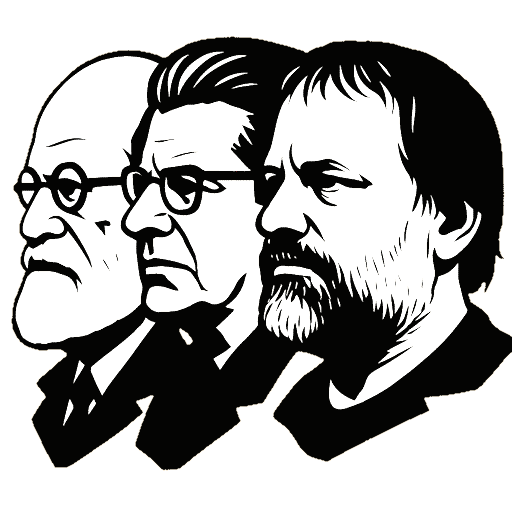
 Žižekian Analysis
[…] (German, Turkish, robot song, C&C Žižek Volume is a Faux Artifact: Toad Megavan Tailing Žižek’s Oeuvre: Capped Kermit Re…) […]
LikeLike
[…] (The Holy Family of Hypocritique: How Crisis & Critique’s Pact of Analyseverbot Neutralizes Žižek, C&C Žižek Volume is a Faux Artifact: Toad Megavan Tailing Žižek’s Oeuvre: Capped Kermit Re…) […]
LikeLike
[…] — C&C Žižek Volume is a Faux Artifact: Toad Megavan Tailing Žižek’s Oeuvre: Capped Kermit Re… […]
LikeLike
[…] (The Holy Family of Hypocritique: How Crisis & Critique’s Pact of Analyseverbot Neutralizes Žižek, C&C Žižek Volume is a Faux Artifact: Toad Megavan Tailing Žižek’s Oeuvre: Capped Kermit Re…) […]
LikeLike
[…] Family of Hypocritique: How Crisis & Critique’s Pact of Analyseverbot Neutralizes Žižek, C&C Žižek Volume is a Faux Artifact: Toad Megavan Tailing Žižek’s Oeuvre: Capped Kermit Re…, Interlectural Motheration of C&C: How Hypocritique’s Maternal Superego Pampers the […]
LikeLike
[…] C&C Žižek Volume is a Faux Artifact: Toad Megavan Tailing Žižek’s Oeuvre: Capped Kermit Re… […]
LikeLike
[…] and Mladen Dolar) arrived like a perfectly lit gallery [*]. Everything dangerous was exhibited [*]; nothing dangerous was done [*]. The volume placed Žižek’s discourse behind glass, circulated a […]
LikeLike
[…] isimlerle) kusursuz aydınlatılmış bir galeri gibi geldi [*]. Tehlikeli olan her şey sergilendi [*]; tehlikeli hiçbir şey yapılmadı [*]. Cilt, Žižek söylemini camın arkasına koydu; […]
LikeLike