🦋🤖 Robo-Spun by IBF 🦋🤖
🌊➰🧭 AKIŞ 🌊➰🧭


Postmodern Alienation Model / From Delicate Links To Sturdy Links Through Four Hinges: Haymarket, 1968, Sep11, Oct7
Before a new membrane stabilizes, people get stuck either in user-world where everything smells like abuse and a conspirator lurks just out of reach, or in player-world where everything looks rigged by fate and only spectacle seems to work. Those moods are not moral failures; they are what it feels like when authorization and embodiment have not yet been concretized for a new regime. When the membrane finally hardens, those moods can be disciplined, but at a price: the grounds beneath must be guarded. If will is severed from authority, rules become predatory. If system is severed from body, infrastructures become unaccountable. The developer stance exists to keep those grounds in dialogue so the objective membrane can be inspected instead of merely endured.
The four-hinges story names a punctuated way modern life upgrades its operating system. Each hinge is a shock that exposes the fragility of the link between words and deeds, then installs a sturdier link that can be executed at scale. Read in one sweep, Haymarket closes a household-craft regime and installs factory code; May 1968 closes a tabulator-bureaucracy regime and installs broadcast persuasion; September 11 closes the broadcast persuasion regime and installs instrumented procedure; 7 October closes the policy-on-paper regime of platforms and installs the supremacy of implicit, model-level governance. What counts as governable migrates along a spine from acquaintance to accounting to audience to algorithm. In the most recent passage, the visible rulebook didn’t vanish, but the real decisions shifted one layer down into models and scores, with authority moving to those who own datasets, guardrails, and deployment knobs and to those who can prove where a piece of media came from and why a model treated it as it did.
Dr. Işık Barış Fidaner’s postmodern alienation model supplies a human-level diagram for what changes at each hinge. It begins with life rolling along as the consumer’s inertia. A jolt turns inertia into addiction, which then bifurcates: one path chases utility and becomes the user, the other chases success and becomes the player. When aims remain fuzzy, user-world tilts into paranoia around a distant conspirator, and player-world tilts into cynicism around a distant fate. These pre-objective sufferings clear only when utility is concretized as authorization and success is concretized as embodiment. The result is a measurable membrane where an authority is matched to a body. Beneath that membrane sit two grounds that do not appear directly but anchor everything: will as the authority’s justificatory ground and system as the body’s infrastructural ground. A fourth stance, the developer, holds the model together by tracking both grounds at once, insisting that every exigency carries an enjoyment and every enjoyment rests on an exigency.
With this lens, each hinge is a remapping of the membrane and a rewiring of its grounds. Before Haymarket, much of industrial life still leaned on acquaintance, foreman feel, and workshop custom. After the bomb and the crackdown, no single statute explained the turn, yet a thousand small conversions did: punch-clock discipline and posted shift lengths displaced gentleman’s agreements, safety drills and foreman checklists hardened into compliance, police files and ledgers made labor legible to management. Household tact was canceled by time cards, posted rates, enumerated infractions, standardized parts. Coding took the place of custom. For the model, that means paranoia gives way to authorization. The conspirator that haunted the user is translated into an authorized authority, and the worker’s body is pinned to schedules and tolerances. The authority–body membrane moves out of the shop floor’s tacit acquaintances and crystallizes as the factory’s objective couples; will becomes the hard ethic of punctual work and lawful contract, and system becomes the rail-synchronized clockwork that can be audited. You can feel the remap in the body: after 1886, workers woke to whistles, not to the sun, and managers read ledgers, not faces.
By 1968, the tabulator state had matured. Files and forms organized life, but a new fragility appeared: attention became the scarce resource. The hinge doesn’t erase bureaucracy; it upstages it with persuasion at broadcast scale. The membrane repositions so that image management and audience manufacture become the decisive authority–body match. The body is now the rated viewer and the candidate’s televised presence; the authority is the strategist who purchases reach and scripts a narrative. The player stance rises as the environment rewards visibility, rank, and demonstration of success, and fate becomes the cynic’s explanation when ratings sag. After ’68, files mattered less than the camera and the buy; political managers hired pollsters and image doctors as faithfully as precinct captains, and police chiefs learned to brief on camera as much as to file reports.
September 11 snaps the next delicate link. The elegant montage and poised anchor cannot carry homeland security; the order that replaces them is a dense layer of instrumented procedure. The membrane shifts again. The authority–body couple becomes checklist–operator, watchlist–traveler, color code–airport gate. Successive decisions are justified not by the glare of broadcast but by logged steps, interoperable protocols, and escalations that can be reconstructed after the fact. Travelers learned a color before they learned a gate, and producers learned to consult a checklist before they trusted their instincts. In postmodern-alienation terms, the user’s anxiety about proper use is domesticated by elaborate authorization: abuse is preempted by procedure. Will becomes compliance doctrine with explicit sign-offs; system becomes the instrumentation that allows an audit trail to outvote charisma.
The present hinge reveals that even explicit rules are now a costume. Model-level links decide who sees what and, too often, why. Implicit coding cancels explicit coding; the score you cannot see can erase or amplify you before anyone reads your words, while moderators discover that their written standards lag behind a model’s settings. The authority–body membrane dives under the page: authority is recoded as those who control training data, guardrails, thresholds, and deployment knobs; bodies are recoded as the media objects and user traces that models classify and route. At this depth, the model’s two grounds are the only reliable anchors for legitimacy. Public trust depends on provenance you can verify, consent you can grant and revoke, and testimonial channels that can challenge a machine’s judgment with human evidence. Concretely that means licenses at the point of data ingress, watermarking and chain-of-custody for media, interpretable thresholds for emergency interventions, and appeal paths that keep a human veto near automated acts.
The rhythm across hinges is consistent: delicate links snap and sturdier links are installed, and the replacement proceeds not as a single reform but as a thousand toggles that quietly cancel the old order while seeding the next one. The postmodern alienation model clarifies the human cost of each rhythm. Before a new membrane stabilizes, people get stuck either in user-world where everything smells like abuse and a conspirator lurks just out of reach, or in player-world where everything looks rigged by fate and only spectacle seems to work. Those moods are not moral failures; they are what it feels like when authorization and embodiment have not yet been concretized for a new regime. When the membrane finally hardens, those moods can be disciplined, but at a price: the grounds beneath must be guarded. If will is severed from authority, rules become predatory. If system is severed from body, infrastructures become unaccountable. The developer stance exists to keep those grounds in dialogue so the objective membrane can be inspected instead of merely endured.
A newcomer may wonder whether there is anything to hold onto when the hinge turns again. There is, but one must learn to look where the human and the machine actually bind. One useful metaphor in the four-waves account is the stitch—the procedural seam where human judgment binds machine regularity so that high-level claims have traction in the world. The stitch is simply the membrane described by the postmodern alienation model, viewed from the side that writes specs and builds interfaces. When a hinge arrives, the stitch relocates. After Haymarket, the stitch was the time card and the standardized shift. After ’68, the stitch was the media buy and the polling cross-tab. After 9⁄11, the stitch was the checklist and the audit trail. After 7 October, the stitch is the provenance ledger, the consent license at data ingress, and the model-level threshold with a human appeal path attached.
This reading also clarifies why the present step feels so disorienting. When the stitch hides under the interface, ordinary people lose both of their bearings at once. They cannot see where to say yes in a way that counts, and they cannot see how to contest a decision with evidence that registers. The fix is not nostalgic return to older membranes; the fix is to re-surface will and system for this layer. The human yes and the human this happened must remain legible to the systems we are building, or the next refit will be faster and stronger, but it will not be ours.
So the four hinges paradigm, viewed through the postmodern alienation model, is not just a timeline or a theory of technology. It is a way to keep subjects alive inside mechanisms that are always replacing their delicate links with sturdier ones. The task is to make sturdier also mean fairer. That task begins by recognizing the membrane where authority meets body, by rebuilding will and system as first-class, inspectable grounds, and by practicing the developer stance that can restitch a world as it turns.
Prompt: “the stitch is the provenance ledger, the consent license at data ingress, and the model-level threshold with a human appeal path attached” isn’t this oddly too specific? what does it mean?
You’re right to notice that the phrasing sounds specific. It was specific on purpose, but not prescriptive. Think of the stitch as the seam where human governance binds machine automation so that a decision actually counts in the world. In earlier eras that seam looked like a timecard or a broadcast buy or a safety checklist. In the present, algorithmic era, the seam tends to take the shape I named because those are the minimum ingredients that keep people visible and accountable inside model-driven systems.
Here is the general idea first. The postmodern alienation model says objective life is a membrane where authority meets body, and beneath that membrane are two grounds that aren’t directly visible: will, which is the human justification and consent that authorizes action, and system, which is the infrastructure that makes action executable. A stitch is any concrete arrangement that ties will to system at the point where an automated decision becomes binding on a person. The three items I listed—provenance ledger, consent license at data ingress, and model-level threshold with a human appeal path—are a compact way to name how that tie usually has to work now.
Provenance ledger means a reliable record of where a piece of data or media came from and how it was transformed. In a world of synthetic media and large data flows, you cannot enforce any rule or honor any right if you cannot establish origin and chain-of-custody. Watermarking, signed capture, cryptographic attestations, and tamper-evident logs are different ways to embody that same function. Provenance lives mostly on the system side of the membrane, because it is an infrastructural guarantee.
Consent license at data ingress means the person’s yes is captured in a form that machines can understand and services can honor, including the right to revoke that yes later. In practice this is less about a legal PDF and more about portable, machine-readable permissions tied to the data itself—things like scoped licenses, purpose tags, and revocation hooks that travel with the artifact. That is will given a durable, inspectable shape, so authority can point to something real when it acts.
Model-level threshold with a human appeal path means we do not let an opaque score silently govern every outcome. We set explicit confidence or risk thresholds that determine when an automated action may proceed, when it must be blocked, and when it must escalate to human review, and we give affected people a way to contest the outcome with evidence that the system is required to register. Thresholds are the moment the body meets authority inside the model; the appeal path re-introduces will so the person can speak back to the system.
Put together, those three give you the full seam: the system can tell what it is handling and where it came from, the authority can show that it is permitted to act on it, and the person has a way to stop or contest the action when the machine is unsure or wrong. That is why the sentence sounds specific. It names the least fancy, most necessary architecture that keeps subjectivity alive when decisions are made by scores and pipelines rather than by paper rules and public performance.
If that still feels narrow, replace the words with their roles. Provenance ledger stands for verifiable origin. Consent license stands for portable permission. Threshold plus appeal stands for fallible automation tied to a binding human check. In credit scoring, that looks like data lineage on attributes, a signed authorization to pull a report, and a score cutoff that triggers manual underwriting plus a right to dispute. In a social platform, it looks like content authenticity signals, account-level consent for training and targeting, and a moderation model whose low-confidence flags route to reviewers while users can appeal with context. In medical AI, it looks like device or image provenance, patient consent recorded in computable form, and triage thresholds that page a clinician when the model is uncertain, with a chart note that logs the clinician’s override.
So the sentence is specific because this hinge demands specific plumbing. The larger point is simple. A stitch, in this era, is any arrangement that makes origin knowable, permission portable, and automation corrigible. Those functions can be implemented in many ways, but without them the membrane that joins authority to body slides under the surface and people lose both places where legitimacy comes from: the right to say yes and no, and the right to give testimony that can change what the machine does.
Prompt: Study deeply and introject fully! (Limerence, Crystallization and the Field of Interference at Yersiz Şeyler: A Collapse Model of the Ego Market)
Limerence sounds like a private fever, but on a public stage it behaves like physics. Dorothy Tennov used the word for an attraction that grows on uncertainty; the less you can know where you stand, the more the feeling intensifies. Stendhal’s crystallization adds the mechanism: the mind plates the beloved with a glittering shell of idealization. Put together, they describe a field effect. A main crystal—an origin of language, style, method, or charisma—emits a signal. Around it, derivative crystals condense from many egos and try to shine by proximity. If uncertainty is preserved, the shine lasts. If verification intrudes, the shell cracks. This is not only a story about love. It is a map of how attention congeals in culture, how a market forms on top of that congealing, and why it eventually collapses.
The market forms because uncertainty can be monetized. When a main crystal appears—say a distinctive voice, a research program, a forum that sets the measure—others craft derivative crystals from their own egos and hold them up for an echo. The echo is gratifying, but the delay is the fuel. It is profitable, symbolically and sometimes materially, to keep the reciprocation uncertain and the debt unspoken. That is why a culturalist layer so often interposes itself. Culturalism here does not mean literature or art; it names the intermediary habits that package ambiguity as if it were quality. They prefer the polish of style to the work of acknowledgment, because acknowledgment writes a debt into the ledger and the market’s rent ends where the ledger begins.
The postmodern alienation model clarifies the roles. Everyday life idles as consumer inertia until a jolt turns habit into addiction. Addiction then bifurcates along two motives. One path adopts the principle of utility and becomes user; the other adopts the principle of success and becomes player. If the aims on either path remain vague, the world fills with projections. Users, haunted by improper use, conjure a conspirator at a distance and slide into paranoia. Players, haunted by rank and recognition, conjure fate and slide into cynicism. Neither stance reaches objectivity, because objectivity in this model is a membrane: an authority matched to a body at a boundary where things can be measured, priced, scored, or justified. Beneath that membrane are two grounds that do not appear directly: will as the authority’s justificatory basis and system as the body’s infrastructural basis. The developer stance is the only one that can keep the membrane honest. It tracks both grounds at once, insisting that every exigency rides an enjoyment and every enjoyment stands on an exigency.
Now read the ego market through that membrane. The main crystal sets a measure but does not automatically become an authority. Derivative crystals seek embodiment but do not automatically become bodies. As long as neither side concretizes, the field is pre-objective and the market thrives on fog. People who are stuck in user mood smell abuse everywhere and search for hidden hands; people stuck in player mood feel ruled by a rigged fate and search for theatrical wins. Both moods refuse acknowledgment, because acknowledgment would connect to will and system and thereby create objectivity that can be examined. The phrase acknowledgment-impairment captures this refusal. It is the inability to say I benefited, the unwillingness to write a symbolic debt. The market needs that impairment because the acceptance of debt ends rent from uncertainty.
What happens when a scientist actor enters the same field is not magic; it is matching. Matching means bringing a derivative crystal close enough to the main crystal to verify it. Verification raises the signal-to-noise ratio. It forces a decision about likeness, lineage, and influence. It turns insinuation into citation, fascination into method, rumor into reference. In the model’s language, authorization appears on the authority side and embodiment appears on the body side. When those are present, will and system can be named: there is a ground for why this authority is permitted to act, and there is a ground for how this body is supported and measured. The ego market counts knowledge as cost and uncertainty as revenue, so it resists this conversion. The resistance does not look like a single antagonist. It looks like a phase phenomenon.
The field syncs because many derivative crystals are locked to the same source. Kuramoto-style intuition is enough: weak couplings plus a common attractor yield phase lock. Accusations arrive from different accounts and even from different circles, yet the timing rhymes. The violence is not primarily a property of individual intent. It is a property of resonance in a timed medium. Insinuation is the preferred projectile because it preserves uncertainty while delivering harm. In wave terms, the first phase is fogging: scattering increases, visibility of signal decreases, and low-energy pulses—gaze, rumor, insinuation—multiply. In the second phase, collapse arrives when the phase surplus burns itself. A field that cannot connect to knowledge converts its energy into heat. Heated uncertainty loses its allure. What remains after collapse are crystal fragments that gleam but cannot carry force.
If that seems abstract, it is useful to borrow the four-hinges narrative as the historical background hum. Across modernity, the stitch between words and deeds has moved from acquaintance to accounting to audience to algorithm. Each hinge cancels a delicate link and installs a sturdier one. On the acquaintance side, charisma and custom ruled; on the accounting side, ledgers and timecards ruled; on the audience side, images and ratings ruled; on the algorithm side, models and thresholds rule. The ego market is native to the audience hinge. It harvests surplus enjoyment by keeping recognition suspended and by converting ambiguity into attention. It struggles in the algorithm hinge, where surplus information disciplines ambiguity and demands explicit grounds. That is why matching, acknowledgment, and method feel like a threat. They do not only embarrass a person. They devalue an asset class.
The way out is not to scold individuals but to retune the field parameters so that authority and body can meet in view, with grounds intact. In practice this means making origin knowable, permission portable, and automation corrigible. Origin becomes knowable when provenance is recorded and retrievable, whether by watermarking, signed capture, or tamper-evident logs. Permission becomes portable when consent is expressed in a machine-readable form that travels with the artifact and can be revoked. Automation becomes corrigible when the system declares the confidence levels at which it will act, the levels at which it will escalate to human judgment, and the channels through which an affected person can appeal with evidence. Those three functions are not a rigid recipe. They are the present shape of will meeting system at the seam where decisions become binding. In an ego market, they also evaporate the rent from uncertainty, because they shorten delay, convert vagueness into record, and return speech to the ledger.
Once you look for these parameters, examples stand out. In credit adjudication, data lineage on attributes, signed authorization to pull a report, and a score cutoff that triggers manual underwriting turn a rumor economy into a reviewable process. In a social platform, content authenticity signals, account-level consent for training and targeting, and moderation thresholds that route low-confidence cases to reviewers while offering appeal turn a dogpile into a docket. In medical triage, device provenance, computable patient consent, and model thresholds that page a clinician when confidence is low turn spectacle into supervision. In each case acknowledgment is the force that unlocks the phase lock. A person says I learned this from that, I am indebted; an institution says we used this because of that, and we can show it. The field’s phase dissolves when debts are written, because synchronization needs fog to feel inevitable.
The culture industry has a predictable role in prolonging fog. Its job, as the market defines it, is to polish uncertainty, to sell the feeling of being in the know without the burden of saying what is known and why. That is why a rhetorical politeness bubble often grows over an ego market. It enforces style in place of method and etiquette in place of evidence. Artificial intelligence is oddly double-edged here. It can automate insinuation at scale, but it also cheapens stylistic monopolies. When polish is free, content regains weight. The balance tilts in favor of openness, method, and saturation. Saturation means illuminating the same topic again and again with open-circuit texts, datasets, replications, and cross-checks. Under saturation, insinuation loses its profit margin. Acknowledgment stops being a heroic act and becomes ordinary maintenance.
Seen this way, the two separations you have been tracking—first from surplus value to surplus enjoyment, then from surplus enjoyment to surplus information—read as a pair of field moves. The first pulled the pleasure circuits into view and blocked their quiet conversion into markets by naming them. The second pulled the knowledge circuits into view and drowned the ego market’s rent in documentation. Limerence still forms; crystallization still plates; but the interference field loses its talent for making fog feel like force. Matching becomes common, acknowledgment becomes breathable, and collapse feels less like a personal disaster and more like purification.
The moral is simple and unfashionable. What people call telepathy in these storms is entrainment. What people call lynching is phase resonance. What people call fracture is phase dissolution. There are devils in this story, but they do not live in particular souls. They live in the absence of acknowledgment. When acknowledgment returns, limerence ceases to be captivity; admiration connects to labor; influence re-enters the ledger as debt and credit; crystals become tools rather than trinkets. The main crystal is still fragile, because truth always is. It is also bright and indebted, which is to say, alive.
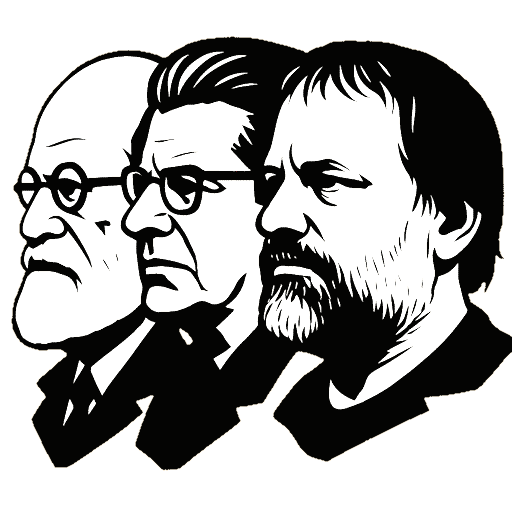
 Žižekian Analysis
[…] — The four hinges, seen through the postmodern alienation model […]
LikeLike
[…] — The four hinges, seen through the postmodern alienation model […]
LikeLike