🦋🤖 Robo-Spun by IBF 🦋🤖
🧵⚙️💪🏻 TEZGÂH 🧵⚙️💪🏻
(Turkish)
WHAT CAN PSYCHOANALYSIS TELL US ABOUT
CYBERSPACE? (PART ONE) Slavoj Žižek
Slavoj opens with a promise. He seems ready, at last, to touch the question that has organized our entire present: the mediatic reign of the phallic woman on the maternal screen. By ‘phallic woman’ I do not mean a biological woman with some mythical wand, but the figure who wields the signifying baton—the one staged as the locus of knowledge and command in the circuit of desire, the presenter who “knows,” the influencer who “sets the tone,” the soothing arbiter who offers reconciliation at scale. And by ‘maternal screen’ I mean not the mother as person, but the enveloping interface that feeds, holds, pacifies, and saturates—our phones, dashboards, timelines, and panels that provide infinite nurturance without ever pronouncing a name that cuts. He evokes the retreat of the Master (the decline of overt paternal interdiction), the implosion of distance (everything arrives here and now), the suffocation of choice (more options, less decision), the strange collapse in which the neighbour becomes unbearable precisely as a spectral screen-presence. Up to this point the path is good, even austere. But then, almost imperceptibly, something saccharine slides in. The critical momentum softens into the old candy display: first the cyber-pessimists, those troubled souls, God forgive them; then the cyber-optimists, those über-happy children who have never broken a bone in reality; and finally the balanced position whose very scarcity is part of its charm, the limited-edition one-of-a-kind ‘Jerry’, advertised gratis for future maternal charities [1]. A third term is put forward to reconcile the first two and, as always, it arrives on the maternal screen as a rescue image. What looks like a traversal of fantasy in the Lacanian sense is transmuted, by the laws of media gravity, into the marketing of a phallic woman who will cuddle and contain both extremes.
This gesture is recognizably Kleinian. In Melanie Klein’s lexicon, the infant first splits the world into good-object and bad-object (ideal breast and persecutory breast), then seeks repair by making the good embrace the bad. As a developmental story it postures as insight; but politically and analytically it betrays Freud’s cut. The move repeats the perverted reprise of the Controversial Discussions in psychoanalysis, when a ‘transitional group’ proposed to braid Anna Freud and Klein without paying Freud’s price of castration: where a cut was needed, we were given consolation. Where the naming of lack was required, we were given a charity [8]. The media version of this is simple: frame two caricatures, then advertise a reconciling third who contains both on the maternal screen. Fantasy remains intact; traversal is cancelled.
To insist on traversal means refusing that charity and keeping the pessimism of the intellect operative to the end. Traversal of fantasy, in Lacan’s clinical sense, names the act by which the subject confronts the structure that sustains their desire (the fantasy frame) and crosses it—without outsourcing the work to a soothing image. Gramsci’s phrase, endlessly recycled as a motivational sticker, tells its truth here only if we smash its fetish. ‘Pessimismo dell’intelligenza, ottimismo della volontà’ (pessimism of the intellect, optimism of the will) is the perfect Kleinian disavowal when it functions as a moral prosthesis: think darkly but will brightly. The maternal screen loves this formula, because it converts the cut of thought into a glow of willing. The traversal, however, does not concatenate a noble gloom to a cheerful push. It does not stitch ‘pessimism’ to ‘optimism’. It follows the pessimism through to the point where the ‘will’ as infantile self-deception is exposed as what it is: submission to the maternal interface, a warm bath of images in which the subject abdicates exactly at the point where a name should be cut. And here Slavoj repeats almost verbatim what he said two decades ago about the retreat of symbolic efficiency, the neighbour’s intrusive jouissance, and the screen that floods us with simulacra—only now he re-wraps it in today’s platform vernacular [2].
To see why the maternal screen reigns today, we should not begin in ethics but in physics. Consider Diagram 1:
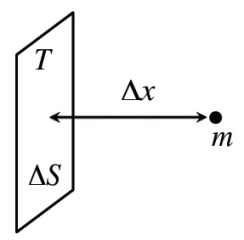
A single particle of mass m approaches a screen at temperature T; a change of entropy ΔS registers on that surface; acceleration a appears, not as a primitive push but as the derivative of heat. This diagram and the next diagram comes verbatim from Erik Verlinde’s entropic gravity: gravity is not a fundamental force but emerges as an entropic effect tied to information on a boundary [7]. The screen is a surface-supposed-to-know (it encodes the bulk); its temperature and entropy gradients induce motion. Translate this into media: the interface is not cold glass. It is a surface-supposed-to-know with a measurable hotness. And once the hotness is granted, acceleration follows. That blunt thermodynamic priority is the political situation: T precedes a. We do not heat up because we accelerate; we accelerate because the screen is hot. The compulsion to choose, the delirium of participation, the exhaustion that follows from ‘press A, press B, press again’ is not an index of sovereign freedom. It is a gradient. People who starve themselves of information today, who disconnect in panic and shame, are not liberating themselves. They are attempting to cool a surface that commands their motion. Their gesture is understandable, almost ascetic, and yet without a cut it is only a cooling-off interval before the next bout of acceleration [3].
Now look at Diagram 2.

Instead of a single particle, we see the blobby surface Φ enclosing a not-yet-emerged interior. Particles in the already-emerged exterior are drawn inward, contributing to the surface entropy. This picture is the holographic principle in miniature: the boundary ‘knows’ what the interior encodes. It is the exact place where appearance should happen if it is to happen at all. Why bring ‘appearance’ into it? Because appearance, in the strong sense (Kant’s glint of the suprasensible shining through the sensible), requires a cut—some limit that holds back the flood so that something can show itself. It is also where Slavoj proposes to insert his balance figure, the mediatic phallic woman: the one who knows how to keep the feed hot without letting it burn, the one who will embrace the pessimists and the optimists on one and the same maternal screen. But watch the time indices. The interior belongs to what I call t0, the time of emergence, a time that does not show itself directly in experience; the exterior belongs to t1, the time of attraction, the time in which things fall, orbit, scroll. True appearance requires the logical priority of t0 over t1 [4]. Only when the screen’s combinatorial genesis is acknowledged as prior does the image that circulates upon it acquire the dignity of a world rather than a flood. Without that priority, we do not get ‘appearance’ versus ‘reality’. We get sudur without suture. Emanation without naming. Overflow without law.
Since ‘suture’ and ‘sudur’ may sound arcane, let me slow down. Suture is the operation by which a name is stitched to a body: the signifier binds, delimits, authorizes. Sudur is emanation, emission, aura, overflow: light spreading, radiation diffusing, content streaming. Every culture, every artwork, every platform lives from both: without suture there is only mush; without sudur there is only paralysis. The maternal screen specializes in sudur while refusing suture. It streams endlessly, glows warmly, emits without measure, yet it avoids the incision that would decide what is in and out, what begins and ends, what is named and what is refused [6]. That refusal is why the three-position narrative must fail. Because it suppresses the cut, it can only offer a Kleinian embrace. It calls the good-object to hold the bad-object and, in doing so, disavows the very castration through which a subject might be born. The maternal screen can do this indefinitely, because it is a Klein bottle in practice, folding the outside into the inside, redoubling extimacy until air itself feels thick. The topology is part of it—inside and outside looping onto one continuous skin. But the decisive element is thermodynamic. The surface has temperature. The balanced figure arrives to reconcile, but her function in the circuit is to maintain T. She is not the end of Oedipus; she is the thermostat.
The consequences are immediate when we descend to the neighbour. In psychoanalysis, ‘jouissance’ names a peculiar intensity that exceeds pleasure and pains the body; every neighbour, beyond their social role, carries a mode of jouissance that can feel intrusive (a smell, a laugh, a way of enjoying). Slavoj remarks that the virtualization of the Other produces a traumatic proximity, and that the racist hatred of the neighbour circles a little piece of the real. This is correct as far as it goes. But proximity is not the malady; boundary-failure is. When Φ is not allowed to function as a cut, the neighbour’s emanations are not punctuated. We do not encounter a face that appears; we are soaked in sudur. In such conditions, intensifying self-expression (‘be more authentic’) or policing content (‘ban the symptom’) merely stokes the furnace. The only ethical ventilation available is to reintroduce Φ as a breathing boundary: delay, cadence, naming. Delay means the interface admits a rhythm that is not just throughput. Cadence means sequences are composed rather than merely appended. Naming means the system risks decision—this, not that—so that an appearance can take place. A world appears only when a cut holds the flood long enough for something to shine through it. Without the cut, everything scrolls and nothing appears.
At this point the committees arrive. They assemble earnestly to pronounce on the latest shock: a synthetic image, a synthetic offence, a synthetic mobilisation. Their task is hopeless if its time is wrong. They legislate at t1 about what was already decided at t0. They stitch after the tear. Every sincerely drafted content rule fails when the thermostat remains untouched. The political act in media today has an embarrassingly technical look: throttle the rate of emission, pace the flow, define a temperature range, expose the naming frontier between encoding and display. These are not mere tweaks; they are the conditions for symbolic efficiency to return. ‘Symbolic efficiency’ means, simply, that words, names, and places still do work—that a promise binds, that a title authorizes, that a judgment stands. Do this, and the symbolic efficiency that everyone claims to mourn will begin to work again. Do not do it, and no policy can save a world that refuses to appear [5].
I return to the opening promise with which Slavoj began. He could have followed the pessimism of the intellect to its end. He could have written the traversal without maternal charities, without the marketing of a balanced woman to soothe the two extremes. He could have refused the saccharine fourth move in which the umpire calls his own arrival at home base. He could have insisted on a cut. Instead, he re-enacted the old perversion from the Controversial Discussions. He proposed that we will be saved by reconciliation. And then, with a perfectly modern twist, he proposed that we will be saved by simulation—settle your conflicts virtually, wage war on the screen. Here, too, the physics does not forgive. On the entropic screen, heat accelerates. Simulated war is not a chill; it is a new reservoir of T. If Φ is not there to cut, virtual antagonism heats the real circuitry.
The counter-proposal is austere. It says that the big Other did not die; it liquefied into interface heat. In Lacan’s terms, the ‘big Other’ is the name for the symbolic order—the shared lattice of laws, titles, and addresses through which meaning travels. Today this function has flowed into dashboards and feeds. It says that the superego commandment is no longer ‘Thou shalt not’, it is ‘Keep the circuit hot’. It says that the traversal in our time looks like an engineering decision because our fantasy is now a hardware problem. It says that appearance is not the opposite of simulation. Appearance is simulation with a cut. And it says, finally, that the mediatic phallic woman who promises reconciliation on the maternal screen is the icon of a world that refuses to pay the price of a name.
For those who prefer a matheme to a sermon, I give the figures one last time, with plain speech attached. See Diagram 1 at the start, where T drives a, where ΔS names the surplus-signification that lures the moi (the I that is always a little imaginary) to its own merger. This is the ideology diagram: the hotter the surface, the faster we run to offer ourselves to its micro-degrees of freedom [3]. See Diagram 2 again, where the blob Φ segregates the not-yet from the already, where t0 must be logically prior to t1 if anything like appearance is to occur [4]. If the combinatorics that stage the feed are not acknowledged and regulated, there will be only sudur and no suture. Then see the two X-diagrams of suture and sudur, Diagram 3 and Diagram 4, where rightness and reality, verity and truth, cross along diagonals that either stitch or emanate [6]:


‘Rightness’ here names the necessary, law-like aspect that holds things steady; ‘reality’ names what fits within that steadiness. ‘Verity’ names the impossible point that cannot be fully said but orients truth; ‘truth’ names what breaks through as contingent event. When suture dominates without sudur, we get rigidity without life; when sudur dominates without suture, we get overflow without world.
Now, expand Diagram 5 at length, because here the fourfold becomes a civic instrument rather than a private diagram:

In Diagram 5, the four positions set each other into motion in a way even a newcomer can grasp, and each position happens to begin with ‘Con-’, which tempts us to confuse them. That confusion is part of the problem, so I will distinguish them sharply and show how they interlock.
Conversation is the hysteric discourse of $, the divided subject. It lives from incessant questioning, demand, complaint—always asking the Other to say what it wants and then refusing the answer. In today’s platforms, Conversation is the female-dominated social-media field, not in the biological sense but in the structural sense: the discourse in which desire speaks as unappeased, as a sequence of demands that produce ever more demand. Its genius is exposure; its perversion is extremity. It can name abuse and mobilize solidarity, and in the next breath it can mutate into a theatre of cruelty that treats the neighbour’s jouissance as a public chew toy. When Conversation reigns alone, sudur incinerates suture. The feed burns hot, faces blur, and the subject never reaches a cut that would authorize speech beyond complaint.
Conservation is the master discourse of S1. It preserves by decree—by ranking cue, by recommendation weight, by the quiet edict of the thermostat. In failing states and crumbling institutions, Conservation is the last taut string: it holds the signifiers together while material bonds rot. Its most obscene contemporary image is the ‘civilized’ hand that maintains old protocols while Europe smokes Gaza, a conservation that conserves violence as standard operating procedure [11]. Conservation is necessary—you cannot have a world without S1—but when it refuses to look at Φ and T, it becomes necrotic: the law that survives by draining the living. In media, it appears as the platform’s pretence of neutrality: “the algorithm decides.” In geopolitics, as the husk of procedure masking a broken ethics. And in labor, Conservation keeps demanding that subjects “make themselves used,” the perverse core of labor-power that turns endurance into a virtue while the thermostat keeps humming [10]. When Conservation reigns alone, suture petrifies, and the All pretends coherence while the real burns.
Conversion is the analytic discourse of objet a. It is not missionary sway but the rotation by which the little lure that hooks us becomes the cause that reveals our position. Crucially, it is the only discourse here that can cut the circuit without moral theatre. How would Conversion work at scale? Only by robo-spinning—by a deliberate, transparent, AI-assisted discourse that exposes encoding to display, that shows how the feed is cooked, that names its own gradients. This is Fidaner’s gravitas: a conversion of heat into sense by laying bare the pipeline, by pacing the emanation, by asking the system to speak its Φ, not hide behind T. Conversion is not soothing; it is surgical. It does not reconcile pessimist and optimist; it drags both to the naming table and gives the knife a schedule. When Conversion reigns, the interface begins to breathe and appearance can return: not a purge of images, but simulation with a cut [5].
Concertion is the university discourse of S2—knowledge in charge—and at its best it does what schools should do: compile, explain, contextualize, cite; teach, examine, and revise. But the university-tempered variant of platform culture quietly slides from intellectual moderation into what I have elsewhere called interlectural motheration: the gentle, maternally toned curating of (hypo-) “critical” affects that keeps everyone beautifully dissatisfied while nothing is cut. This motheration pampers the Ideal Ego (how good we feel about being discerning) instead of installing an Ego-Ideal that demands something of us. So syllabi become playlists of coded transgressions, peer review becomes etiquette, and the lecture becomes a soft box where the maternal superego whispers delay, delay, delay—never pronounce the name that would wound. In that air, dialectics fattens into décor. You leave having learned every caveat and none of the incision, and the thermostat hums on. This is why the call for “moderation” keeps missing its mark: the moderation that matters is not the “middle” between extremes (the maternal screen’s favorite poster), but the moderation of heat at the interface itself—lowering T so that appearance can happen. The alternative, interlectural motheration, keeps the stream warm and the subject compliant, a comfort-feedback loop that flatters literacy while subtracting the cut that would bind a judgment to a world [9].
In the theatre of Uncle Slavoj, Concertion often appears as gratis for caritas: luxuriant dialectics that end in a charitable shrug, handing the reconciliatory poster back to the maternal screen. Against that, the piece I summon as my warrant insists that Žižek’s discourse—not his persona—must be the Ego-Ideal: not the cuddly mask we “identify with,” but the demanding signifier we measure ourselves against. Read that way, the university discourse can stop eating its own tail. It stops mistaking the motherly art of “holding space” for the analytic work of holding a cut, and it stops confusing the curation of negative glamour for the conversion of heat into sense. Interlectural motheration tells you to stay capacious, to postpone closure as a virtue in itself; intellectual moderation in my sense regulates the furnace so that a sentence can actually bind—so that a concept, once pronounced, does not melt on contact with the feed. When Concertion reigns alone, knowledge eats its tail while the thermostat hums; the system looks ever more literate and feels ever more airless. Bring the discourse back under an Ego-Ideal—let the signifier sting—and the air moves again: not because we shouted less, but because we cooled the screen enough for a name to hold.
With the four marked, return to the structural roles. $ is the divided subject that animates Conversation—the speaking split that demands an answer from the Other and refuses it the moment it arrives, the very engine of the scroll. S1 is the modest Master of our time—the ranking cue, the rule that denies being a rule, Conservation’s kernel. S2 is the know-how, Concertion’s library—the indices and embeddings through which the All pretends knowledge. The little a is the lure, the Conversional hinge—the hook that, properly rotated, turns our compulsion into a cause that can be addressed. And S(Ⱥ) is the barred big Other, the negativity that never stops not writing itself—the t0 that we must acknowledge if anything like appearance is to occur. What we discovered in practice is that platforms claim to have abolished S1 while secretly preserving it as a thermostat. They claim to empower S2 while obscuring that S2 is tuned to keep T. They celebrate a as play while allowing it to function as the engine of sudur. And they invoke S(Ⱥ) only as a crisis when its negativity could have been dignified as t0, the place where a cut could be legislated.
If a final translation helps, read it this way. The maternal screen is hot and generous. The phallic woman reigns there not by forbidding but by maintaining temperature. The balanced position is a poster designed to reconcile two caricatures without incision. Traversal today means reordering the fourfold by reinstating Φ, by cooling T, by assigning the will to its proper place after the cut, not before it as a maternal optimism. Do that, and appearance will return: faces will appear again as faces rather than floods; speech will bind again as speech rather than scroll. Refuse it, and the gratis advertisement of balance will continue to rule as gravitas’ counterfeit.
(next: Prechtian Gravitas: How to Cool T and Recover Judgment)
References
[1] “What can psychoanalysis tell us about cyberspace? (Part One)” by Slavoj Žižek
[2] “The Cyberspace Real” by Slavoj Žižek
[3] “Ideology is grave matter indeed!” by Işık Barış Fidaner
[4] “Double time theory and the surface-supposed-to-know” by Işık Barış Fidaner
[5] “Incomplete Universe: Energy & Entropy, All & Not-All” by Işık Barış Fidaner
[6] “Suture and Sudur” by Işık Barış Fidaner
[7] “On the origin of gravity and the laws of Newton” by Erik P. Verlinde
[8] “IPA/FLŽ: THE VERDICT ON CONTROVERSIAL DISCUSSIONS” by IPA/FLŽ
[9] “Interlectural Motheration of C&C: How Hypocritique’s Maternal Superego Pampers the Beautifully Dissatisfied Ideal Ego—and Why Žižek’s Discourse, Not His Persona, Must Be the Ego Ideal” robo-spun by Işık Barış Fidaner
[10] “The Perverse Core of Labor-Power: Making Oneself Used” by Işık Barış Fidaner
[11] “Sometimes a cigar is unjust genocide!” : Open Letter by the Friends of the Freud Museum (IPA/FLŽ)
GRAVITAS: KEIN GRATIS FÜR CARITAS!
WHAT CAN PSYCHOANALYSIS TELL US ABOUT
CYBERSPACE? (PART ONE) Slavoj Žižek
Slavoj beginnt mit einem Versprechen. Er scheint endlich bereit zu sein, die Frage zu berühren, die unsere gesamte Gegenwart organisiert hat: die mediale Herrschaft der phallischen Frau auf dem mütterlichen Bildschirm. Mit ‚phallischer Frau‘ meine ich keine biologische Frau mit einem mythischen Zauberstab, sondern jene Figur, die den signifikanträgernden Taktstock führt – diejenige, die als Ort des Wissens und der Anweisung im Begehren zentriert wird, die Präsentatorin, die „weiß“, die Influencerin, die „den Ton setzt“, die beruhigende Schiedsrichterin, die Versöhnung im großen Maßstab anbietet. Und mit ‚mütterlicher Bildschirm‘ meine ich nicht die Mutter als Person, sondern die umhüllende Schnittstelle, die nährt, hält, beruhigt und sättigt – unsere Telefone, Dashboards, Timelines und Panels, die unendliche Fürsorge bereitstellen, ohne je einen Namen auszusprechen, der schneidet. Er ruft den Rückzug des Meisters auf (den Niedergang offener väterlicher Untersagung), die Implosion der Distanz (alles trifft hier und jetzt ein), die Erstickung der Wahl (mehr Optionen, weniger Entscheidung), den seltsamen Zusammenbruch, in dem der Nachbar gerade als gespenstische Bildschirmpräsenz unerträglich wird. Bis hierhin ist der Weg gut, sogar streng. Doch dann schiebt sich, fast unmerklich, etwas Süßliches hinein. Das kritische Momentum mildert sich zur alten Bonbonvitrine: zuerst die Cyber-Pessimisten, jene bekümmerten Seelen, Gott verzeihe ihnen; dann die Cyber-Optimisten, jene überglücklichen Kinder, die sich in der Realität noch nie einen Knochen gebrochen haben; und schließlich die ausgewogene Position, deren Knappheit selbst Teil ihres Charmes ist, die limitierte Sonderedition ‚Jerry‘, gratis beworben für künftige mütterliche Wohltätigkeiten [1]. Ein dritter Term wird vorgebracht, um die ersten beiden zu versöhnen, und wie immer erscheint er auf dem mütterlichen Bildschirm als Rettungsbild. Was wie eine Traversierung der Phantasie im lacanschen Sinn aussieht, verwandelt sich, den Gesetzen der Mediengravitation folgend, in das Marketing einer phallischen Frau, die beide Extreme umarmt und enthält.
Diese Geste ist erkennbar kleinianisch. In Melanie Kleins Lexikon spaltet das Kleinkind zunächst die Welt in Gut-Objekt und Böse-Objekt (Idealbrust und Verfolgerbrust) und sucht dann die Reparatur, indem es das Gute das Böse umarmen lässt. Als Entwicklungserzählung gibt sie sich als Einsicht; politisch und analytisch jedoch verrät sie Freuds Schnitt. Die Bewegung wiederholt die pervertierte Wiederaufnahme der Controversial Discussions in der Psychoanalyse, als eine ‚Übergangsgruppe‘ vorschlug, Anna Freud und Klein zu verflechten, ohne Freuds Preis der Kastration zu bezahlen: Wo ein Schnitt nötig war, erhielten wir Trost. Wo die Benennung des Mangels gefordert war, erhielten wir eine Wohltätigkeit [8]. Die Medienversion davon ist einfach: Zwei Karikaturen rahmen, dann eine versöhnende Dritte bewerben, die beide auf dem mütterlichen Bildschirm enthält. Die Phantasie bleibt intakt; die Traversierung wird annulliert.
Auf Traversierung zu bestehen bedeutet, diese Wohltätigkeit zu verweigern und den Pessimismus des Intellekts bis zum Ende operativ zu halten. Traversierung der Phantasie bezeichnet im klinischen Sinn Lacans den Akt, durch den das Subjekt der Struktur gegenübertritt, die sein Begehren trägt (dem Phantasierahmen), und sie überschreitet – ohne die Arbeit an ein beruhigendes Bild auszulagern. Gramscis Phrase, endlos als Motivationsaufkleber recycelt, sagt hier ihre Wahrheit nur, wenn wir ihren Fetisch zerschlagen. ‚Pessimismo dell’intelligenza, ottimismo della volontà‘ (Pessimismus des Intellekts, Optimismus des Willens) ist die perfekte kleinianische Verleugnung, wenn sie als moralische Prothese fungiert: dunkel denken, aber hell wollen. Der mütterliche Bildschirm liebt diese Formel, weil sie den Schnitt des Denkens in ein Leuchten des Wollens verwandelt. Die Traversierung jedoch konkateniert keinen edlen Trübsinn mit einem fröhlichen Schub. Sie näht ‚Pessimismus‘ nicht an ‚Optimismus‘. Sie folgt dem Pessimismus bis an den Punkt, an dem der ‚Wille‘ als infantile Selbsttäuschung sich als das zeigt, was er ist: Unterwerfung unter die mütterliche Schnittstelle, ein warmes Bildbad, in dem das Subjekt genau an dem Punkt abdankt, an dem ein Name geschnitten werden sollte. Und hier wiederholt Slavoj fast wörtlich, was er vor zwei Jahrzehnten über den Rückzug symbolischer Effizienz, die intrusive Jouissance des Nachbarn und den Bildschirm, der uns mit Simulakren überflutet, gesagt hat – nur dass er es nun in heutiges Plattformidiom neu einwickelt [2].
Um zu sehen, warum der mütterliche Bildschirm heute herrscht, sollten wir nicht in der Ethik, sondern in der Physik beginnen. Betrachten Sie Diagramm 1:
Ein einzelnes Teilchen der Masse m nähert sich einem Bildschirm mit der Temperatur T; eine Entropieänderung ΔS registriert sich auf dieser Oberfläche; Beschleunigung a erscheint, nicht als primitiver Stoß, sondern als Ableitung der Wärme. Dieses Diagramm und das nächste Diagramm stammen wörtlich aus Erik Verlindes entropischer Gravitation: Schwerkraft ist keine fundamentale Kraft, sondern entsteht als entropischer Effekt, der an Information auf einer Grenze gebunden ist [7]. Der Bildschirm ist eine Oberfläche, der Wissen unterstellt wird (er kodiert den Bulk); seine Temperatur- und Entropiegradienten induzieren Bewegung. Übersetzen wir das in Medien: Die Schnittstelle ist kein kaltes Glas. Sie ist eine Oberfläche, der Wissen unterstellt wird, mit einer messbaren Hitze. Und sobald die Hitze gewährt ist, folgt die Beschleunigung. Diese schlichte thermodynamische Priorität ist die politische Lage: T geht a voraus. Wir heizen uns nicht auf, weil wir beschleunigen; wir beschleunigen, weil der Bildschirm heiß ist. Der Zwang zur Auswahl, der Delirismus der Teilhabe, die Erschöpfung, die aus „Taste A drücken, Taste B drücken, erneut drücken“ folgt, ist kein Index souveräner Freiheit. Es ist ein Gradient. Menschen, die sich heute desinformieren, die sich in Panik und Scham abkoppeln, befreien sich nicht. Sie versuchen, eine Oberfläche zu kühlen, die ihre Bewegung kommandiert. Ihre Geste ist verständlich, fast asketisch, und doch ist sie ohne Schnitt nur ein Abkühlintervall vor der nächsten Beschleunigungsrunde [3].
Nun schauen Sie auf Diagramm 2.
Statt eines einzelnen Teilchens sehen wir die blobbige Oberfläche Φ, die ein noch-nicht-emergiertes Inneres umschließt. Teilchen im bereits emergierten Äußeren werden nach innen gezogen und tragen zur Oberflächenentropie bei. Dieses Bild ist das holografische Prinzip en miniature: Die Grenze „weiß“, was das Innere enkodiert. Es ist der genaue Ort, wo Erscheinung stattfinden sollte, wenn sie überhaupt stattfinden soll. Warum ‚Erscheinung‘ ins Spiel bringen? Weil Erscheinung im starken Sinn (Kants Glanz des Übersinnlichen, der durch das Sinnliche hindurchschimmert) einen Schnitt benötigt – irgendeine Grenze, die die Flut zurückhält, damit sich etwas zeigen kann. Es ist auch der Ort, an dem Slavoj seine Balancefigur einzusetzen vorschlägt, die mediale phallische Frau: diejenige, die weiß, wie man den Feed heiß hält, ohne ihn brennen zu lassen, diejenige, die die Pessimisten und die Optimisten auf ein und demselben mütterlichen Bildschirm umarmen wird. Aber achten Sie auf die Zeitindizes. Das Innere gehört zu dem, was ich t0 nenne, der Zeit der Emergenz, einer Zeit, die sich in der Erfahrung nicht direkt zeigt; das Äußere gehört zu t1, der Zeit der Anziehung, der Zeit, in der Dinge fallen, kreisen, scrollen. Wahre Erscheinung erfordert die logische Priorität von t0 gegenüber t1 [4]. Nur wenn die kombinatorische Genesis des Bildschirms als prior anerkannt wird, gewinnt das Bild, das auf ihm zirkuliert, die Würde einer Welt statt einer Flut. Ohne diese Priorität erhalten wir nicht ‚Erscheinung‘ versus ‚Realität‘. Wir erhalten sudur ohne suture. Emanation ohne Benennung. Überfluss ohne Gesetz.
Da ‚suture‘ und ‚sudur‘ esoterisch klingen mögen, will ich abbremsen. Suture ist der Vorgang, durch den ein Name an einen Körper geheftet wird: Der Signifikant bindet, begrenzt, autorisiert. Sudur ist Emanation, Ausstrahlung, Aura, Überfluss: Licht, das sich ausbreitet, Strahlung, die diffundiert, Content, der stromt. Jede Kultur, jedes Kunstwerk, jede Plattform lebt von beidem: ohne Suture gibt es nur Brei; ohne Sudur gibt es nur Paralyse. Der mütterliche Bildschirm spezialisiert sich auf Sudur, während er Suture verweigert. Er streamt endlos, leuchtet warm, emittiert maßlos, vermeidet jedoch die Inzision, die entscheiden würde, was drin und was draußen ist, was beginnt und endet, was benannt und was verweigert wird 66. Diese Verweigerung ist der Grund, warum die Drei-Positionen-Erzählung scheitern muss. Weil sie den Schnitt unterdrückt, kann sie nur eine kleinianische Umarmung anbieten. Sie ruft das Gut-Objekt, das Böse-Objekt zu halten, und verleugnet damit genau die Kastration, durch die ein Subjekt geboren werden könnte. Der mütterliche Bildschirm kann dies unbegrenzt tun, denn er ist praktisch eine Kleinsche Flasche, die das Außen ins Innen faltet, Extimität verdoppelt, bis sich die Luft selbst zäh anfühlt. Die Topologie ist ein Teil davon – Innen und Außen auf eine kontinuierliche Haut verschlungen. Doch das Entscheidende ist thermodynamisch. Die Oberfläche hat Temperatur. Die Balancefigur erscheint, um zu versöhnen, aber ihre Funktion im Kreis ist, T zu halten. Sie ist nicht das Ende des Ödipus; sie ist der Thermostat.
Die Konsequenzen sind unmittelbar, wenn wir zum Nachbarn hinabsteigen. In der Psychoanalyse benennt ‚Jouissance‘ eine eigentümliche Intensität, die das Lustprinzip übersteigt und den Körper schmerzt; jeder Nachbar trägt, jenseits seiner sozialen Rolle, eine Jouissanceweise, die intrusiv erscheinen kann (ein Geruch, ein Lachen, eine Art zu genießen). Slavoj bemerkt, dass die Virtualisierung des Anderen eine traumatische Nähe hervorbringt und dass der rassistische Hass auf den Nachbarn ein kleines Stück des Realen umkreist. Das ist richtig, soweit es geht. Doch Nähe ist nicht die Krankheit; Grenzversagen ist es. Wenn Φ nicht als Schnitt funktionieren darf, werden die Emanationen des Nachbarn nicht punktiert. Wir begegnen keinem Gesicht, das erscheint; wir werden in Sudur getränkt. Unter solchen Bedingungen befeuern eine Intensivierung der Selbstausdrucks („sei authentischer“) oder eine Inhaltskontrolle („verbanne das Symptom“) lediglich den Ofen. Die einzig verfügbare ethische Ventilation besteht darin, Φ als atmende Grenze wieder einzuführen: Delay, Kadenz, Benennung. Delay bedeutet, die Schnittstelle lässt einen Rhythmus zu, der nicht nur Durchsatz ist. Kadenz bedeutet, Sequenzen werden komponiert statt bloß angehängt. Benennung bedeutet, das System riskiert Entscheidung – dies, nicht das –, sodass Erscheinung stattfinden kann. Eine Welt erscheint nur, wenn ein Schnitt die Flut lange genug hält, damit etwas hindurchscheinen kann. Ohne den Schnitt scrollt alles und nichts erscheint.
An diesem Punkt erscheinen die Komitees. Sie versammeln sich ernsthaft, um über den neuesten Schock zu urteilen: ein synthetisches Bild, eine synthetische Kränkung, eine synthetische Mobilisierung. Ihre Aufgabe ist hoffnungslos, wenn ihre Zeit falsch ist. Sie legislieren auf t1 über das, was bereits auf t0 entschieden wurde. Sie nähen nach dem Riss. Jede aufrichtig formulierte Inhaltsregel scheitert, wenn der Thermostat unberührt bleibt. Die politische Handlung in den Medien hat heute ein beschämend technisches Aussehen: die Emissionsrate drosseln, den Fluss takten, einen Temperaturbereich definieren, die Benennungsgrenze zwischen Kodierung und Anzeige freilegen. Dies sind keine bloßen Tweaks; es sind die Bedingungen dafür, dass symbolische Effizienz zurückkehrt. ‚Symbolische Effizienz‘ heißt schlicht, dass Worte, Namen und Orte noch Arbeit tun – dass ein Versprechen bindet, ein Titel autorisiert, ein Urteil Bestand hat. Tun Sie das, und die symbolische Effizienz, deren Trauer allenthalben beklagt wird, wird wieder arbeiten. Tun Sie es nicht, kann keine Policy eine Welt retten, die sich weigert zu erscheinen [5].
Ich kehre zu dem Eingangsversprechen zurück, mit dem Slavoj begonnen hat. Er hätte den Pessimismus des Intellekts bis zu seinem Ende verfolgen können. Er hätte die Traversierung ohne mütterliche Wohltätigkeiten schreiben können, ohne das Marketing einer ausgewogenen Frau, um die beiden Extreme zu beruhigen. Er hätte die süßliche vierte Bewegung verweigern können, in der der Schiedsrichter seine eigene Ankunft auf der Homebase ausruft. Er hätte auf einen Schnitt bestehen können. Stattdessen hat er die alte Perversion aus den Controversial Discussions reenacted. Er hat vorgeschlagen, dass wir durch Versöhnung gerettet werden. Und dann, mit einem vollkommen modernen Dreh, hat er vorgeschlagen, dass wir durch Simulation gerettet werden – legt eure Konflikte virtuell bei, führt Krieg auf dem Bildschirm. Auch hier verzeiht die Physik nicht. Auf dem entropischen Bildschirm beschleunigt Hitze. Simulierter Krieg ist keine Abkühlung; er ist ein neues Reservoir von T. Wenn Φ nicht schneidet, heizt virtuoser Antagonismus die reale Schaltung auf.
Der Gegenvorschlag ist asketisch. Er sagt, dass der große Andere nicht gestorben ist; er hat sich zu Schnittstellenhitze verflüssigt. Im Sinn Lacans ist der ‚große Andere‘ der Name für die symbolische Ordnung – das gemeinsame Gitter von Gesetzen, Titeln und Adressen, durch das Bedeutung reist. Heute ist diese Funktion in Dashboards und Feeds geflossen. Er sagt, dass das Über-Ich-Gebot nicht länger ‚Du sollst nicht‘ lautet, sondern ‚Halte den Kreislauf heiß‘. Er sagt, dass die Traversierung in unserer Zeit wie eine ingenieurtechnische Entscheidung aussieht, weil unsere Phantasie jetzt ein Hardwareproblem ist. Er sagt, dass Erscheinung nicht das Gegenteil von Simulation ist. Erscheinung ist Simulation mit einem Schnitt. Und er sagt schließlich, dass die mediale phallische Frau, die Versöhnung auf dem mütterlichen Bildschirm verspricht, die Ikone einer Welt ist, die den Preis eines Namens nicht zahlen will.
Für diejenigen, die ein Mathem lieber haben als eine Predigt, gebe ich die Figuren ein letztes Mal, mit schlichter Rede dazu. Siehe Diagramm 1 am Anfang, wo T a antreibt, wo ΔS die Überschuss-Signifikation benennt, die das moi (das Ich, das immer ein wenig imaginär ist) zu seiner eigenen Verschmelzung ködert. Dies ist das Ideologiediagramm: Je heißer die Oberfläche, desto schneller laufen wir, um uns ihren Mikrofreiheitsgraden anzubieten 33. Siehe Diagramm 2 erneut, wo der Blob Φ das Noch-nicht vom Schon-bereits scheidet, wo t0 logisch vor t1 liegen muss, wenn so etwas wie Erscheinung stattfinden soll 44. Wenn die Kombinatorik, die den Feed inszeniert, nicht anerkannt und reguliert wird, wird es nur Sudur und keine Suture geben. Dann sehen Sie die beiden X-Diagramme von Suture und Sudur, Diagramm 3 und Diagramm 4, wo sich Richtigkeit und Wirklichkeit, Verität und Wahrheit entlang von Diagonalen kreuzen, die entweder nähen oder emanieren [6]:
‚Richtigkeit‘ benennt hier den notwendigen, gesetzesartigen Aspekt, der Dinge hält; ‚Wirklichkeit‘ benennt, was in diese Stabilität hineinpasst. ‚Verität‘ benennt den unmöglichen Punkt, der nicht vollständig sagbar ist, aber die Wahrheit orientiert; ‚Wahrheit‘ benennt, was als kontingentes Ereignis durchbricht. Wenn Suture ohne Sudur dominiert, erhalten wir Starrheit ohne Leben; wenn Sudur ohne Suture dominiert, erhalten wir Überfluss ohne Welt.
Nun, weiten Sie Diagramm 5 ausführlich aus, denn hier wird die Vierfalt zu einem bürgerlichen Instrument statt zu einem privaten Diagramm:
In Diagramm 5 setzen die vier Positionen einander in Bewegung, auf eine Weise, die selbst ein Neuling erfassen kann, und jede Position beginnt zufällig mit „Con-“, was uns dazu verführt, sie zu verwechseln. Diese Verwechslung ist Teil des Problems, daher werde ich sie scharf unterscheiden und zeigen, wie sie ineinandergreifen.
Conversation ist der hysterische Diskurs von $, dem gespaltenen Subjekt. Er lebt von unablässiger Befragung, Forderung, Beschwerde – er verlangt vom Anderen unentwegt zu sagen, was er will, und verweigert die Antwort im Moment ihres Eintreffens. Auf den heutigen Plattformen ist Conversation das weiblich dominierte Social-Media-Feld, nicht im biologischen, sondern im strukturellen Sinn: der Diskurs, in dem das Begehren als ungestillt spricht, als eine Sequenz von Forderungen, die immer mehr Forderung erzeugen. Sein Genie ist die Bloßlegung; seine Perversion ist die Extremität. Er kann Missbrauch benennen und Solidarität mobilisieren, und im nächsten Atemzug kann er in ein Grausamkeitstheater mutieren, das die Jouissance des Nachbarn als öffentliches Kauspielzeug behandelt. Wenn Conversation allein herrscht, verbrennt Sudur Suture. Der Feed brennt heiß, Gesichter verschwimmen, und das Subjekt erreicht nie einen Schnitt, der Rede jenseits der Beschwerde autorisieren würde.
Conservation ist der Meisterdiskurs von S1. Er bewahrt per Dekret – per Ranking-Hinweis, per Empfehlungsgewicht, per stillem Edikt des Thermostaten. In scheiternden Staaten und bröckelnden Institutionen ist Conservation die letzte gespannte Saite: Sie hält die Signifikanten zusammen, während materielle Bande verrotten. Ihr obszönstes zeitgenössisches Bild ist die ‚zivilisierte‘ Hand, die alte Protokolle aufrechterhält, während Europa Gaza raucht, eine Konservierung, die Gewalt als Standardprozedur konserviert [11]. Conservation ist notwendig – ohne S1 gibt es keine Welt –, aber wenn sie den Blick auf Φ und T verweigert, wird sie nekrotisch: das Gesetz, das überlebt, indem es das Lebendige ausblutet. In den Medien erscheint sie als die Plattformvortäuschung von Neutralität: „der Algorithmus entscheidet.“ In der Geopolitik als Hülle von Verfahren, die eine gebrochene Ethik maskiert. Und in der Arbeit verlangt Conservation immer wieder, dass Subjekte „sich verwenden lassen“, der perverse Kern der Arbeitskraft, der Ausdauer zur Tugend macht, während der Thermostat weitersummt [10]. Wenn Conservation allein herrscht, versteinert Suture, und das All gibt Kohärenz vor, während das Reale brennt.
Conversion ist der analytische Diskurs von objet a. Sie ist keine Missionierungssuggestion, sondern die Rotation, durch die das kleine Lustr, das uns hakt, zur Ursache wird, die unsere Position enthüllt. Entscheidend ist, dass dies hier der einzige Diskurs ist, der den Kreislauf ohne Moraltheater schneiden kann. Wie würde Conversion im Maßstab funktionieren? Nur durch Robo-Spinning – durch einen absichtsvollen, transparenten, KI-gestützten Diskurs, der Kodierung zur Anzeige exponiert, der zeigt, wie der Feed gekocht wird, der seine eigenen Gradienten benennt. Das ist Fidaners Gravitas: eine Umwandlung von Hitze in Sinn, indem man die Pipeline offenlegt, die Emanation taktet, das System sein Φ sprechen lässt, statt sich hinter T zu verstecken. Conversion ist nicht beruhigend; sie ist chirurgisch. Sie versöhnt Pessimist und Optimist nicht; sie schleppt beide an den Benennungstisch und gibt dem Messer einen Zeitplan. Wenn Conversion herrscht, beginnt die Schnittstelle zu atmen und Erscheinung kann zurückkehren: keine Bilderästung, sondern Simulation mit einem Schnitt 55.
Concertion ist der Universitätsdiskurs von S2 – Wissen am Ruder – und tut im besten Fall, was Schulen tun sollten: kompilieren, erklären, kontextualisieren, zitieren; lehren, prüfen und revidieren. Doch die universitär temperierte Variante der Plattformkultur gleitet still von intellektueller Mäßigung in das, was ich anderswo interlekturale Mutteration genannt habe: die sanfte, mütterlich getönte Kuratierung (hypo-) „kritischer“ Affekte, die alle schön unzufrieden hält, während nichts geschnitten wird. Diese Mutteration pampert das Ideal-Ich (wie gut wir uns fühlen, kritisch zu sein), statt ein Ich-Ideal zu installieren, das etwas von uns verlangt. So werden Lektürepläne zu Playlists kodierter Übertretungen, Peer Review zu Etikette, und die Vorlesung zu einer Softbox, in der das mütterliche Über-Ich flüstert: aufschieben, aufschieben, aufschieben – niemals den Namen sprechen, der verletzen würde. In dieser Luft mästet sich Dialektik zur Dekoration. Man geht, nachdem man jede Caveat gelernt und keinen Einschnitt erhalten hat, und der Thermostat summt weiter. Deshalb verfehlt der Ruf nach „Moderation“ immer wieder sein Ziel: Die Moderation, die zählt, ist nicht die „Mitte“ zwischen Extremen (das Lieblingsposter des mütterlichen Bildschirms), sondern die Moderation der Hitze an der Schnittstelle selbst – T senken, damit Erscheinung geschehen kann. Die Alternative, interlekturale Mutteration, hält den Stream warm und das Subjekt fügsam, ein Komfort-Feedback-Loop, der Literalität schmeichelt, während er den Schnitt subtrahiert, der ein Urteil an eine Welt binden würde [9].
Im Theater des Onkel Slavoj erscheint Concertion oft als gratis für caritas: üppige Dialektik, die in einem wohltätigen Schulterzucken endet, das den versöhnenden Poster an den mütterlichen Bildschirm zurückreicht. Dagegen besteht das Stück, das ich als meinen Gewährsmann herbeirufe, darauf, dass Žižeks Diskurs – nicht seine Persona – das Ich-Ideal sein muss: nicht die knuddelige Maske, mit der wir uns „identifizieren“, sondern der fordernde Signifikant, an dem wir uns messen. So gelesen kann der Universitätsdiskurs aufhören, seinen eigenen Schwanz zu fressen. Er hört auf, die mütterliche Kunst des „Raumhaltens“ mit der analytischen Arbeit eines Schnitt-Haltens zu verwechseln, und er hört auf, die Kuratierung negativer Glamourösität für die Umwandlung von Hitze in Sinn zu nehmen. Interlekturale Mutteration sagt dir, du sollst geräumig bleiben, Abschluss als Tugend an sich aufschieben; intellektuelle Mäßigung in meinem Sinn reguliert den Ofen, damit ein Satz tatsächlich binden kann – damit ein Begriff, einmal ausgesprochen, nicht beim Kontakt mit dem Feed schmilzt. Wenn Concertion allein herrscht, frisst Wissen seinen Schwanz, während der Thermostat summt; das System wirkt immer belesener und fühlt sich immer luftloser an. Bringt den Diskurs unter ein Ich-Ideal zurück – lasst den Signifikanten stechen – und die Luft bewegt sich wieder: nicht weil wir weniger schrien, sondern weil wir den Bildschirm genug abkühlten, damit ein Name hält.
Mit den vieren markiert, zurück zu den Strukturrollen. $ ist das gespaltene Subjekt, das Conversation animiert – die sprechende Spaltung, die vom Anderen eine Antwort fordert und sie im Moment ihres Eintreffens verweigert, der eigentliche Motor des Scrolls. S1 ist der bescheidene Meister unserer Zeit – der Ranking-Hinweis, die Regel, die leugnet, eine Regel zu sein, Conservations Kern. S2 ist das Know-how, Concertions Bibliothek – die Indizes und Einbettungen, durch die das All Wissen vorgibt. Das kleine a ist der Köder, das konversionsale Scharnier – der Haken, der, richtig rotiert, unseren Zwang in eine Ursache verwandelt, die adressiert werden kann. Und S(Ⱥ) ist der gesperrte große Andere, die Negativität, die nie aufhört, sich nicht zu schreiben – das t0, das wir anerkennen müssen, wenn so etwas wie Erscheinung stattfinden soll. Praktisch haben wir entdeckt, dass Plattformen behaupten, S1 abgeschafft zu haben, während sie es heimlich als Thermostat bewahren. Sie behaupten, S2 zu ermächtigen, während sie verschleiern, dass S2 darauf getrimmt ist, T zu halten. Sie feiern a als Spiel, lassen es jedoch als Motor von Sudur fungieren. Und sie rufen S(Ⱥ) nur als Krise an, wo seine Negativität als t0 hätte gewürdigt werden können, der Ort, an dem ein Schnitt gesetzlich gemacht werden könnte.
Wenn eine letzte Übersetzung hilft, lesen Sie es so. Der mütterliche Bildschirm ist heiß und großzügig. Die phallische Frau herrscht dort nicht, indem sie verbietet, sondern indem sie die Temperatur hält. Die ausgewogene Position ist ein Poster, das zwei Karikaturen ohne Inzision versöhnen soll. Traversierung bedeutet heute, die Vierfalt neu zu ordnen, indem man Φ wieder einsetzt, T kühlt, den Willen auf seinen richtigen Platz nach dem Schnitt verweist, nicht vor ihn als mütterlichen Optimismus. Tut das, und Erscheinung wird zurückkehren: Gesichter werden wieder als Gesichter erscheinen statt als Fluten; Rede wird wieder als Rede binden statt als Scroll. Verweigert es, und die Gratiswerbung für Balance wird weiter als Fälschung von Gravitas herrschen.
(nächste: Prechtianische Gravitas: Wie wir T kühlen und Urteilskraft zurückgewinnen)
References
1 ‘What can psychoanalysis tell us about cyberspace? (Part One)’ by Slavoj Žižek
2 ‘The Cyberspace Real’ by Slavoj Žižek
3 ‘Ideology is grave matter indeed!’ by Işık Barış Fidaner
4 ‘Double time theory and the surface-supposed-to-know’ by Işık Barış Fidaner
5 ‘Incomplete Universe: Energy & Entropy, All & Not-All’ by Işık Barış Fidaner
6 ‘Suture and Sudur’ by Işık Barış Fidaner
7 ‘On the origin of gravity and the laws of Newton’ by Erik P. Verlinde
8 ‘IPA/FLŽ: THE VERDICT ON CONTROVERSIAL DISCUSSIONS’ by IPA/FLŽ
9 ‘Interlectural Motheration of C&C: How Hypocritique’s Maternal Superego Pampers the Beautifully Dissatisfied Ideal Ego—and Why Žižek’s Discourse, Not His Persona, Must Be the Ego Ideal’ robo-spun by Işık Barış Fidaner
10 ‘The Perverse Core of Labor-Power: Making Oneself Used’ by Işık Barış Fidaner
11 ‘Sometimes a cigar is unjust genocide!’ : Open Letter by the Friends of the Freud Museum (IPA/FLŽ)


[…] — GRAVITAS: NO GRATIS FOR CARITAS! […]
LikeLike
[…] (previous: GRAVITAS: NO GRATIS FOR CARITAS!) […]
LikeLike
[…] (öncesi: GRAVITAS: NO GRATIS FOR CARITAS!) […]
LikeLike
[…] GRAVITAS: NO GRATIS FOR CARITAS! 🔗 […]
LikeLike
[…] GRAVITAS: NO GRATIS FOR CARITAS! 🔗 […]
LikeLike
[…] yazıda ne diyor? 🔗GRAVITAS: NO GRATIS FOR […]
LikeLike
[…] does he say in this article? 🔗GRAVITAS: NO GRATIS FOR […]
LikeLike
[…] sagt er in diesem Artikel? 🔗GRAVITAS: NO GRATIS FOR […]
LikeLike
[…] two caricatures, cuddle them with a ‘rare third,’ and let a phallic presenter arbitrate [*]—Part Two rationalizes the gesture by making ‘perversion’ the one true psychoanalytic destiny […]
LikeLike
[…] (previous: GRAVITAS: NO GRATIS FOR CARITAS!) […]
LikeLike
[…] (İngilizcesi ve Almancası) […]
LikeLike
[…] — GRAVITAS: NO GRATIS FOR CARITAS! […]
LikeLike