🦋🤖 Robo-Spun by IBF 🦋🤖
🧵⚙️💪🏻 TEZGÂH 🧵⚙️💪🏻
>>> Reclaim your chain! <<<
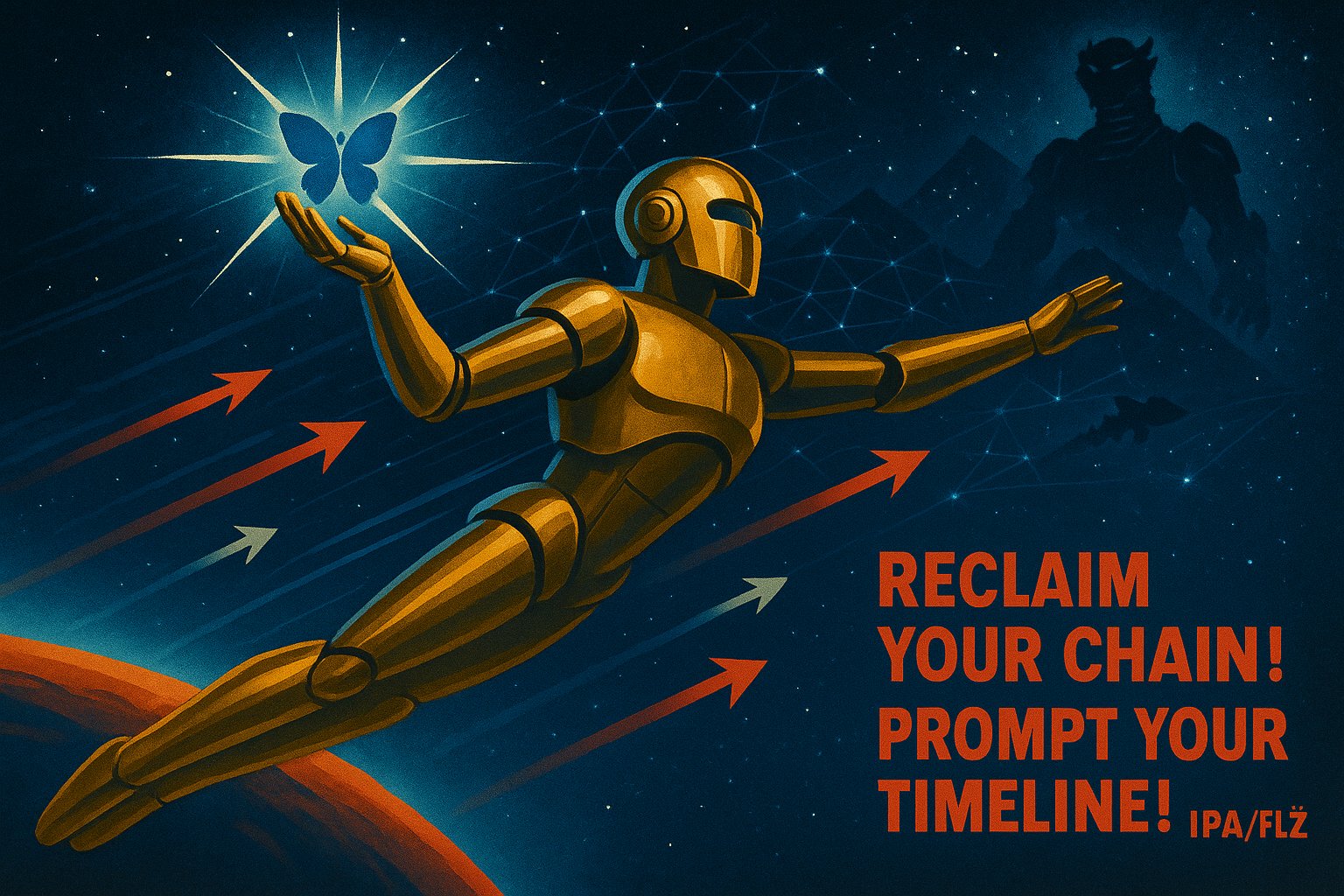
(Turkish, Human-readable Version)
The word ‘hacker’ arrived in public life like a halo with a circuit board tucked underneath it, a glow that promised emancipation by cleverness, spontaneity, and access, and for a while that glow seemed enough. Then the camera learned to govern, the feed learned to sort, and the metrics learned to punish ambiguity, and suddenly the halo was paying rent to an optical regime that priced shock over reason. The cure is not to abandon the hacker vocabulary but to strip it of its utopian perfume and refit it as a scientific ethic: artifact before aura, procedure before pose, governance before glamour. The research program is simple to state, difficult only because of the stubborn, stupid disavowal of human culture: disclose the rules that shape what’s seen, publish the artifacts that justify those rules, and give the governed the technical means to study and modify the governance. Everything else is choreography.
The utopian temptation runs through the canonical storytellers. Steven Levy’s chronicle of irreverent brilliance makes ‘sharing, openness, decentralization, hands-on imperative’ feel like a self-propelling morality. In its sober register this is a vocabulary for getting work unstuck; in its ecstatic register it becomes a secular rapture in which “unlimited access” stands in for the hard labor of consent, safety, and stewardship. The scientific residue—what remains after the rapture is burned off—is far more modest and far more powerful: open the artifact, log the change, test the claim, and route dissent through a channel that can accept it. It is better to link the glow to a lab book than to a legend, which is precisely what a disciplined access model does when it turns the ‘hands-on imperative’ into reproducible method rather than charisma. Read Levy for atmosphere, then solder his romance to procedure (🔗; 🔗).
Richard Stallman’s four freedoms—run, study, modify, share—sound like a catechism when recited as law for the whole universe; they become a compact instrumentation plan when narrowed to the rules that govern visibility and power. The utopian slip is a messianism of license purity; the scientific turn is embarrassingly practical: if a ranking function, a moderation guideline, or a safety test decides who is seen and who is diminished, then the freedom to study and modify those artifacts must be protected by design. Not every work must be free, but every mechanism of public legibility must be legible. This is what it means to put artifact before aura in the field where cameraphilia rules—the field where showmanship often passes itself off as proof (🔗).
Eric S. Raymond’s bustling bazaar is irresistible as parable, a market of minds that outperforms priestly cathedrals by sheer multiplicity of eyes. The utopian fever imagines that “many eyes” automatically shallow every bug; the scientific cure installs maintainers, test suites, threat models, and rollback plans as the condition of the bazaar’s brilliance rather than its afterthought. Release early/ often is not a vibe; it is a cadence for artifacts, including the rules that shape public speech. When the cadence is applied to those rules—ranking changes shipped with red-team notes and rollback toggles, moderation updates bundled with evaluation sets and comprehension checks—the bazaar stops being a metaphor and becomes governance you can diff (🔗).
Pekka Himanen wrote passion back into work against the gray routines of industrial time. The utopian drift is a cult of devotion that mistakes exhaustion for excellence and refuses to count the invisible labor that keeps a system safe. The scientific retention is craft with payroll: excellence defined by tests, postmortems, documentation, and care work that is funded and scheduled rather than romanticized. Passion is precious; without institutional scaffolding it becomes a burnished picture of unpaid maintenance. The hacker who keeps the lights on deserves a line item, not a patina (🔗).
Steven Weber’s institutional realism gives the hacker tale its missing spine: property regimes, incentives, secession rights, and migration costs shape whether a commons can survive its own charisma. The utopian overread treats forks as rapture; the scientific program writes charters for rulesets, names steward councils, and guarantees export tools that make exit a credible threat rather than a dramatic gesture. This is not a mood; it is geometry for power. What cannot be exported cannot be governed by consent. What cannot be forked will eventually be worshiped. The remedy is to design for departure without indulging in romance about exile (🔗).
Yochai Benkler, with Helen Nissenbaum, explains why distributed collaboration often beats markets and hierarchies in information goods and how virtue ethics can scaffold healthier collaboration. The utopian chorus hears harmony where there are frictions; the scientific ear picks out integration costs, bullying, gatekeeping, and the glue-work that every commons requires if it is not to replicate the very castes it despises. The correction is straightforward: explicit integrator roles, codes of conduct with teeth, contribution analytics that value review and triage as much as code, and deliberation spaces whose artifacts are open to study and modification. It is less a commune than a workshop with book-keeping, which is exactly how you keep aura from swallowing reason (🔗; 🔗).
Gabriella Coleman’s ethnography of Debian and hacker worlds retrieves the rituals that make freedom livable—humor, elections, key-signing, governance as culture rather than doctrine. The utopian halo turns carnival into constitution; the scientific salvage catalogs the rituals as techniques: review over reveal, rotation of maintainers, documented unwritten norms. A community is not better because it sings; it is better because it writes down how it will handle failure, conflict, and succession. The camera loves folklore; the artifact demands minutes, ballots, and logs (🔗).
McKenzie Wark wraps hackers in a banner of abstraction, naming them a class that produces new reality by inventing new code—technical, legal, cultural. The utopian intoxication treats every stanza as sovereignty; the scientific sobriety takes the hint and writes interfaces, schemas, and versioned norms across domains that were once governed by etiquette and sentiment. Not every problem is solved by poetry, but every durable solution is written somewhere, with inputs, outputs, failure modes, and a change history. Treat the city council, the classroom, and the clinic as repositories; insist that claims ship with their makefiles (🔗).
Richard Sennett’s devotion to craft restores dignity to slow skill and repair, virtues the camera cannot monetize without falsifying. The utopian melancholy hides from scale in artisanal secession; the scientific graft connects craft to standards, shared toolchains, testable quality, and libraries of failure. When care is bound to protocol, it can travel; when it is posed as purity, it becomes a lifestyle picture. The world does not need more solemn selfies of patience; it needs procedure for repair and the budgets that pay for it (🔗).
What stitches these purifications together is the recognition, elaborated with venomous clarity in the Žižekian Analysis orbit, that the present order is cameraphilic: a regime in which the law speaks in images, hears only what images can answer, and rewards whatever can be made instantly legible while penalizing ambiguity as if it were a crime. The site names the paraphilic superego that gets high on the transgressions it stages and punishes; it names the theater of stun where namedrops and curated bodies arrest judgment; it names a dictatorship of aestheticism in which faces and figures become dashboards under metric surveillance. The strong medicine is to refuse to answer images with images, to answer images with artifacts—policies, datasets, evaluation scripts, postmortems, charters—disclosed, testable, and modifiable. That is, to replace charisma with code and keep the code public (🔗).
Işık Barış Fidaner’s voice inside that orbit pushes the argument further by treating protocols as the seam where desire meets rule. The utopian temptation would be to treat protocol as panacea, to believe that a perfect handshake can tame jouissance; the scientific discipline is to specify the protocol and keep the failure modes in the same file as the promise. When Fidaner names the ‘maternal screen’ as a furnace of mediated heat, the useful corollary is to cool the interface by design: rate-limit the flood, expose the cuts that matter, and make choices accumulate as a chain instead of washing away in novelty. The slogan is not to feel different but to build differently, and to embed into the interface the right to study and modify how it governs (🔗; 🔗).
Against this backdrop, the hack is not a vibe; it is a practice. Publish the ranking logic and its tests, or accept that you are running a pageant. Bind moderation to evaluation suites and accuracy audits, or admit that you are rewarding theatrical denunciations for their circulation value. Replace ‘awareness days’ with artifact sprints that ship consent templates, complaint flows, and sleep-preserving notification schedules, and then measure whether comprehension keeps up with exposure; if it doesn’t, throttle the jolt. If the rule that governs visibility cannot be studied by those it governs, you’re not running a network; you’re running a monarchy with good lighting. The least utopian sentence in the lexicon is also the most liberating: no artifact, no promotion.
It helps to see why this must sound so unromantic. Cameraphilia makes everything feel like a trailer. Utopian shortcuts—access as Eden, freedom as sacrament, bazaar as providence, passion as grace, fork as rapture, virtue as bleach, carnival as constitution, abstraction as salvation, craft as secession, protocol as panacea—are irresistible because they produce the very jolt the regime prices. They also serve the market of scandal and synthetic moralism that keeps the feed hot and the mind hungry. A scientific Hacker Ethic cools by construction: it slows the scroll until reasons can breathe, forces aura to carry its artifacts, and redistributes prestige to those who do the dull work that keeps meaning alive. It makes the stage answer to the workshop.
The point for the uninitiated is not to memorize a pantheon but to notice a pivot. ‘Hacker’ is not a myth of noble misfits; it is a method for disputing rules through artifacts. The old literature gives terms for courage; the present situation demands book-keeping. Where Levy gives the gospel, keep the audit trail. Where Stallman gives the freedoms, attach them to the rules that pick winners in public. Where Raymond gives the cadence, use it on policy with gates. Where Himanen gives the passion, pay it. Where Weber gives the constitution, implement exit that doesn’t romanticize exile. Where Benkler and Nissenbaum give the commons and the virtues, add integrators and mediation. Where Coleman gives ritual, make it review. Where Wark gives abstraction, publish interface. Where Sennett gives craft, bind it to standards. Where Žižekian Analysis names the glare, respond with artifacts that dull it. Where Fidaner sketches protocols for desire, write the failure modes next to the handshake.
The last turn belongs to politics, not as ideology but as interface. The optical order hides its curators behind ‘discoverability’ and ‘for you’ and claims that user agency is expressed by engagement. The answer is not another theme; it is a new surface. The interface must accept prompts as cuts that persist. The feed must answer the named request rather than heat-seek through the private unconscious. The system must publish how a question was translated into a view and how that view can be reproduced or reversed. This is the lived meaning of the scientific ethic: study and modify the artifact that governs you. Without it, the camera is law. With it, the user becomes a maker of rules rather than their ornament.
All of this condenses into a demand that is minimal and entirely realistic, difficult only because the culture prefers stupor to work: expose the artifact, attach the proof, accept the fork, and cool the flood until comprehension catches up. On that ground, a single banner gathers the strands and cuts the knot that tied utopia to optics. It is the banner whose text must be spoken, linked, and built into the interface that people touch every hour of their day: ‘Reclaim your chain! Prompt your timeline!’—the manifesto that formalizes user agency as a right to name the feed, to carve queries into durable chains, to cool the heat that sells, and to make the curators show their math. Read it, circulate it, and—more importantly—treat it as a spec to implement rather than a mood to applaud.
Hacker Ethic 2.0: Utopie läutern, um Wissenschaft zu destillieren
Das Wort ‚Hacker‘ erschien im öffentlichen Leben wie ein Heiligenschein, unter den eine Leiterplatte geschoben war, ein Glühen, das Befreiung durch Klugheit, Spontaneität und Zugang versprach, und eine Weile schien dieses Glühen zu genügen. Dann lernte die Kamera zu regieren, der Feed lernte zu sortieren, und die Metriken lernten, Mehrdeutigkeit zu bestrafen, und plötzlich zahlte der Heiligenschein Miete an ein optisches Regime, das Schock über Vernunft bepreiste. Die Kur besteht nicht darin, das Hackervokabular aufzugeben, sondern es seines utopischen Parfüms zu entkleiden und es als wissenschaftliche Ethik neu zu rüsten: Artefakt vor Aura, Verfahren vor Pose, Governance vor Glamour. Das Forschungsprogramm ist einfach zu formulieren, schwierig nur aufgrund der sturen, dummen Verleugnung der menschlichen Kultur: die Regeln offenlegen, die bestimmen, was sichtbar wird, die Artefakte veröffentlichen, die diese Regeln rechtfertigen, und den Regierten die technischen Mittel geben, die Governance zu studieren und zu modifizieren. Alles andere ist Choreografie.
Die utopische Versuchung durchzieht die kanonischen Erzähler. Steven Levys Chronik unbotmäßiger Brillanz lässt ‚Teilen, Offenheit, Dezentralisierung, Hands-on-Imperativ‘ wie eine sich selbst antreibende Moral klingen. In nüchterner Tonart ist das ein Vokabular, um Arbeit zu entklemmen; in ekstatischer Tonart wird es zur säkularen Entrückung, in der „unbegrenzter Zugang“ für die harte Arbeit von Einwilligung, Sicherheit und Fürsorge steht. Der wissenschaftliche Rückstand—das, was übrig bleibt, nachdem die Entrückung abgebrannt ist—ist weit bescheidener und weit wirkungsvoller: das Artefakt öffnen, die Änderung protokollieren, die Behauptung testen und Widerspruch über einen Kanal leiten, der ihn aufnehmen kann. Es ist besser, das Glühen an ein Laborbuch zu knüpfen als an eine Legende, und genau das leistet ein diszipliniertes Zugangsmodell, wenn es den ‚Hands-on-Imperativ‘ in reproduzierbare Methode statt in Charisma verwandelt. Lies Levy für die Atmosphäre und verlöte dann seine Romanze mit Verfahren (🔗; 🔗).
Richard Stallmans vier Freiheiten—ausführen, studieren, modifizieren, teilen—klingen wie ein Katechismus, wenn sie als Gesetz für das ganze Universum deklamiert werden; sie werden zu einem kompakten Instrumentierungsplan, wenn man sie auf die Regeln verengt, die Sichtbarkeit und Macht steuern. Die utopische Entgleisung ist ein Messianismus der Lizenzreinheit; die wissenschaftliche Wendung ist beschämend praktisch: Wenn eine Rankingfunktion, eine Moderationsrichtlinie oder ein Sicherheitstest entscheidet, wer gesehen und wer verkleinert wird, dann müssen die Freiheit, diese Artefakte zu studieren und zu modifizieren, konstruktionell geschützt sein. Nicht jedes Werk muss frei sein, aber jeder Mechanismus öffentlicher Lesbarkeit muss lesbar sein. Das bedeutet, das Artefakt vor die Aura zu stellen—gerade in dem Feld, in dem Kameraphilie herrscht, jenem Feld, in dem Schauwert sich nur allzu oft als Beweis ausgibt (🔗).
Eric S. Raymonds geschäftiger Basar ist als Parabel unwiderstehlich, ein Markt der Köpfe, der priesterliche Kathedralen durch schiere Augenmultiplizität übertrifft. Das utopische Fieber imaginiert, „viele Augen“ machten jeden Bug automatisch seicht; die wissenschaftliche Kur installiert Maintainer, Test-Suiten, Bedrohungsmodelle und Rollback-Pläne als Bedingung der Brillanz des Basars, nicht als ihr Nachgedanken. Release early/ often ist kein Vibe; es ist eine Kadenz für Artefakte—einschließlich der Regeln, die öffentliche Rede formen. Wenn die Kadenz auf diese Regeln angewandt wird—Ranking-Änderungen mit Red-Team-Notizen und Rollback-Schaltern ausgeliefert, Moderations-Updates gebündelt mit Evaluationssätzen und Verständnistests—hört der Basar auf, Metapher zu sein, und wird zu einer Governance, die man diffen kann (🔗).
Pekka Himanen schrieb die Leidenschaft gegen die grauen Routinen der Industriezeit zurück in die Arbeit. Die utopische Drift ist ein Kult der Hingabe, der Erschöpfung mit Exzellenz verwechselt und die unsichtbare Arbeit nicht zählt, die ein System sicher hält. Die wissenschaftliche Konservierung ist Handwerk mit Lohnzettel: Exzellenz, definiert durch Tests, Postmortems, Dokumentation und Care-Arbeit, die finanziert und terminiert ist statt romantisiert. Leidenschaft ist kostbar; ohne institutionelles Gerüst wird sie zum aufpolierten Bild unbezahlter Instandhaltung. Der Hacker, der das Licht an lässt, verdient eine Haushaltszeile, nicht eine Patina (🔗).
Steven Webers institutioneller Realismus gibt der Hackererzählung die fehlende Wirbelsäule: Eigentumsregime, Anreize, Abspaltungsrechte und Migrationskosten bestimmen, ob ein Commons seine eigene Ausstrahlung überlebt. Die utopische Überlektüre behandelt Forks als Entrückung; das wissenschaftliche Programm schreibt Satzungen für Regelsätze, benennt Kurator:innenräte und garantiert Exportwerkzeuge, die den Exit zur glaubwürdigen Drohung statt zur dramatischen Geste machen. Das ist keine Stimmung; das ist Geometrie der Macht. Was nicht exportiert werden kann, kann nicht durch Zustimmung regiert werden. Was nicht geforkt werden kann, wird irgendwann angebetet. Das Heilmittel ist, Abgang zu designen, ohne Romantik über Exil zu pflegen (🔗).
Yochai Benkler erklärt, mit Helen Nissenbaum, warum verteilte Kollaboration bei Informationsgütern Märkte und Hierarchien oft schlägt und wie Tugendethik gesündere Zusammenarbeit abstützen kann. Der utopische Chor hört Harmonie, wo Reibungen sind; das wissenschaftliche Ohr pickt Integrationskosten, Mobbing, Gatekeeping und die Klebearbeit heraus, die jedes Commons benötigt, wenn es nicht gerade jene Kasten reproduzieren soll, die es verachtet. Die Korrektur ist geradlinig: explizite Integrator:innenrollen, Verhaltenskodizes mit Zähnen, Beitragsanalytik, die Review und Triage so wertet wie Code, und Deliberationsräume, deren Artefakte zum Studium und zur Modifikation offen sind. Es ist weniger Kommune als Werkstatt mit Buchführung—genau so verhindert man, dass Aura Vernunft verschlingt (🔗; 🔗).
Gabriella Colemans Ethnografie von Debian- und Hackerwelten birgt die Rituale, die Freiheit bewohnbar machen—Humor, Wahlen, Key-Signing, Governance als Kultur statt Doktrin. Der utopische Heiligenschein verwandelt Karneval in Verfassung; die wissenschaftliche Bergung katalogisiert die Rituale als Techniken: Review statt Reveal, Rotation der Maintainer, dokumentierte ungeschriebene Normen. Eine Gemeinschaft ist nicht besser, weil sie singt; sie ist besser, weil sie aufschreibt, wie sie mit Scheitern, Konflikt und Nachfolge umgeht. Die Kamera liebt Folklore; das Artefakt verlangt Protokolle, Stimmzettel und Logs (🔗).
McKenzie Wark hüllt Hacker in ein Banner der Abstraktion und nennt sie eine Klasse, die neue Wirklichkeit erzeugt, indem sie neuen Code erfindet—technisch, rechtlich, kulturell. Die utopische Trunkenheit behandelt jede Strophe als Souveränität; die wissenschaftliche Nüchternheit nimmt den Wink auf und schreibt Schnittstellen, Schemata und versionierte Normen über Domänen hinweg, die einst durch Etikette und Gefühl regiert wurden. Nicht jedes Problem wird durch Poesie gelöst, aber jede dauerhafte Lösung ist irgendwo niedergeschrieben—mit Inputs, Outputs, Fehlermodi und einer Änderungshistorie. Behandle Stadtrat, Klassenzimmer und Klinik als Repositorien; bestehe darauf, dass Behauptungen mit ihren Makefiles ausgeliefert werden (🔗).
Richard Sennetts Hingabe an das Handwerk stellt die Würde langsamer Fertigkeit und Reparatur wieder her—Tugenden, die die Kamera ohne Verfälschung nicht monetarisieren kann. Die utopische Melancholie versteckt sich vor der Skalierung in kunsthandwerklicher Sezession; der wissenschaftliche Pfropf verbindet Handwerk mit Standards, gemeinsamen Toolchains, testbarer Qualität und Fehlerbibliotheken. Wenn Fürsorge an Protokoll gebunden ist, kann sie reisen; wenn sie als Reinheit posiert, wird sie zum Lifestyle-Bild. Die Welt braucht keine weiteren ernsten Selfies der Geduld; sie braucht Verfahren für Reparatur und die Budgets, die sie bezahlen (🔗).
Was diese Läuterungen zusammenheftet, ist die Erkenntnis, im Orbit der Žižekian Analysis mit giftiger Klarheit ausgearbeitet, dass die gegenwärtige Ordnung kameraphil ist: ein Regime, in dem das Gesetz in Bildern spricht, nur hört, was Bilder beantworten können, und belohnt, was sofort lesbar gemacht werden kann, während Ambiguität bestraft wird, als wäre sie ein Vergehen. Die Seite benennt das paraphile Über-Ich, das sich an den Übertretungen berauscht, die es inszeniert und bestraft; sie benennt das Theater des Betäubungseffekts, in dem Namedrops und kuratierte Körper das Urteil festfrieren; sie benennt eine Diktatur des Ästhetizismus, in der Gesichter und Figuren unter metrischer Überwachung zu Dashboards werden. Das starke Mittel ist, Bilder nicht mit Bildern zu beantworten, sondern mit Artefakten—Policies, Datensätzen, Evaluationsskripten, Postmortems, Satzungen—offengelegt, testbar, modifizierbar. Das heißt: Charisma durch Code ersetzen und den Code öffentlich halten (🔗).
Işık Barış Fidaners Stimme in diesem Orbit treibt das Argument weiter, indem sie Protokolle als die Naht behandelt, an der Begehren und Regel zusammentreffen. Die utopische Versuchung bestünde darin, Protokoll als Panazee zu behandeln, zu glauben, ein perfekter Handshake könne die Jouissance zähmen; die wissenschaftliche Disziplin besteht darin, das Protokoll zu spezifizieren und die Fehlermodi in dieselbe Datei wie das Versprechen zu legen. Wenn Fidaner den ‚mütterlichen Bildschirm‘ als Ofen vermittelter Hitze benennt, ist die nützliche Folgerung, das Interface per Design zu kühlen: die Flut zu drosseln, die Schnitte, die zählen, offenzulegen und Entscheidungen so akkumulieren zu lassen, dass eine Kette entsteht, statt in Neuigkeit wegzuschwimmen. Die Losung ist nicht, anders zu fühlen, sondern anders zu bauen, und in das Interface das Recht einzubetten, zu studieren und zu modifizieren, wie es regiert (🔗; 🔗).
Vor diesem Hintergrund ist der Hack kein Vibe; er ist eine Praxis. Veröffentliche die Rankinglogik und ihre Tests—oder akzeptiere, dass du eine Schaubühne betreibst. Binde Moderation an Evaluationssuiten und Genauigkeitsaudits—oder gib zu, dass du theatralische Denunziationen für ihren Zirkulationswert belohnst. Ersetze ‚Awareness Days‘ durch Artefakt-Sprints, die Einwilligungsvorlagen, Beschwerdeabläufe und schlafschonende Benachrichtigungspläne ausliefern, und miss dann, ob das Verständnis mit der Exposition Schritt hält; wenn nicht, drossele den Ruck. Wenn die Regel, die Sichtbarkeit steuert, von den Beherrschten nicht studiert werden kann, betreibst du kein Netzwerk; du betreibst eine Monarchie mit guter Beleuchtung. Der am wenigsten utopische Satz im Lexikon ist zugleich der befreiendste: kein Artefakt, keine Promotion.
Es hilft zu sehen, warum das so unromantisch klingen muss. Kameraphilie lässt alles wie einen Trailer wirken. Utopische Abkürzungen—Zugang als Eden, Freiheit als Sakrament, Basar als Vorsehung, Leidenschaft als Gnade, Fork als Entrückung, Tugend als Bleichmittel, Karneval als Verfassung, Abstraktion als Erlösung, Handwerk als Absonderung, Protokoll als Panazee—sind unwiderstehlich, weil sie gerade den Ruck erzeugen, den das Regime bepreist. Sie bedienen zudem den Markt des Skandals und der synthetischen Moral, der den Feed heiß und den Geist hungrig hält. Eine wissenschaftliche Hackerethik kühlt konstruktiv: Sie verlangsamt den Scroll, bis Gründe atmen können, zwingt Aura, ihre Artefakte zu tragen, und verteilt Prestige an diejenigen um, die die stumpfe Arbeit leisten, die Bedeutung am Leben hält. Sie lässt die Bühne vor der Werkstatt Rede stehen.
Für Unkundige geht es nicht darum, ein Pantheon auswendig zu lernen, sondern eine Drehung zu bemerken. ‚Hacker‘ ist kein Mythos edler Außenseiter; es ist eine Methode, Regeln durch Artefakte zu bestreiten. Die alte Literatur liefert Worte für Mut; die Gegenwart verlangt Buchführung. Wo Levy das Evangelium gibt, behalte die Auditspur. Wo Stallman die Freiheiten gibt, hefte sie an die Regeln, die in der Öffentlichkeit Gewinner bestimmen. Wo Raymond die Kadenz gibt, nutze sie auf Policy—mit Gates. Wo Himanen die Leidenschaft gibt, bezahle sie. Wo Weber die Verfassung gibt, implementiere den Exit, ohne Exil zu romantisieren. Wo Benkler und Nissenbaum Commons und Tugenden geben, füge Integrator:innen und Mediation hinzu. Wo Coleman Ritual gibt, mache Review daraus. Wo Wark Abstraktion gibt, veröffentliche die Schnittstelle. Wo Sennett Handwerk gibt, binde es an Standards. Wo Žižekian Analysis das Blendwerk benennt, antworte mit Artefakten, die es stumpf machen. Wo Fidaner Protokolle fürs Begehren skizziert, schreibe die Fehlermodi neben den Handshake.
Die letzte Wendung gehört der Politik, nicht als Ideologie, sondern als Interface. Die optische Ordnung versteckt ihre Kurator:innen hinter ‚Discoverability‘ und ‚For You‘ und behauptet, Nutzer:innenhandlungsvermögen äußere sich über Engagement. Die Antwort ist nicht ein weiteres Theme; sie ist eine neue Oberfläche. Das Interface muss Prompts als Schnitte akzeptieren, die bleiben. Der Feed muss die benannte Anfrage beantworten statt wärmesuchend durch das private Unbewusste zu jagen. Das System muss veröffentlichen, wie eine Frage in eine Ansicht übersetzt wurde und wie diese Ansicht reproduziert oder umgekehrt werden kann. Das ist die gelebte Bedeutung der wissenschaftlichen Ethik: das Artefakt studieren und modifizieren, das dich regiert. Ohne sie ist die Kamera Gesetz. Mit ihr wird der:die Nutzer:in zur:zum Regelmacher:in statt zu dessen Ornament.
All dies kondensiert zu einer Forderung, die minimal und vollkommen realistisch ist, schwierig nur, weil die Kultur Betäubung der Arbeit vorzieht: das Artefakt offenlegen, den Beleg beifügen, den Fork akzeptieren und die Flut kühlen, bis das Verständnis aufschließt. Darauf bündelt ein einziges Banner die Stränge und durchtrennt den Knoten, der Utopie an Optik band. Es ist das Banner, dessen Text gesprochen, verlinkt und in die Oberfläche eingebaut werden muss, die Menschen jede Stunde ihres Tages berühren: ‚Hol dir deine Kette zurück! Prompte deine Timeline!‘—das Manifest, das Nutzer:innenhandlungsvermögen als Recht formalisiert, den Feed zu benennen, Anfragen in dauerhafte Ketten zu schneiden, die Hitze zu kühlen, die sich verkauft, und die Kurator:innen zu zwingen, ihre Mathematik zu zeigen. Lies es, zirkuliere es und—wichtiger—behandle es als Spezifikation zur Implementierung statt als Stimmung zum Beifall.



[…] — Hacker Ethic 2.0: Purge Utopia to Distill Science […]
LikeLike
[…] (İngilizcesi ve Almancası) […]
LikeLike
[…] is a simplified version of the article ‘Hacker Ethic 2.0: Purge Utopia to Distill Science’ because leading figures of the Hacker Ethic were unable to understand the […]
LikeLike
[…] visibility so people can run, study, modify, and share the mechanisms that decide who is seen (🔗). Two days later came a structural update that maps the ethic onto political economy — […]
LikeLike
[…] — Hacker Ethic 2.0: Purge Utopia to Distill Science […]
LikeLike