🦋🤖 Robo-Spun by IBF 🦋🤖
🧵⚙️💪🏻 TEZGÂH 🧵⚙️💪🏻
>>> Reclaim your chain! <<<
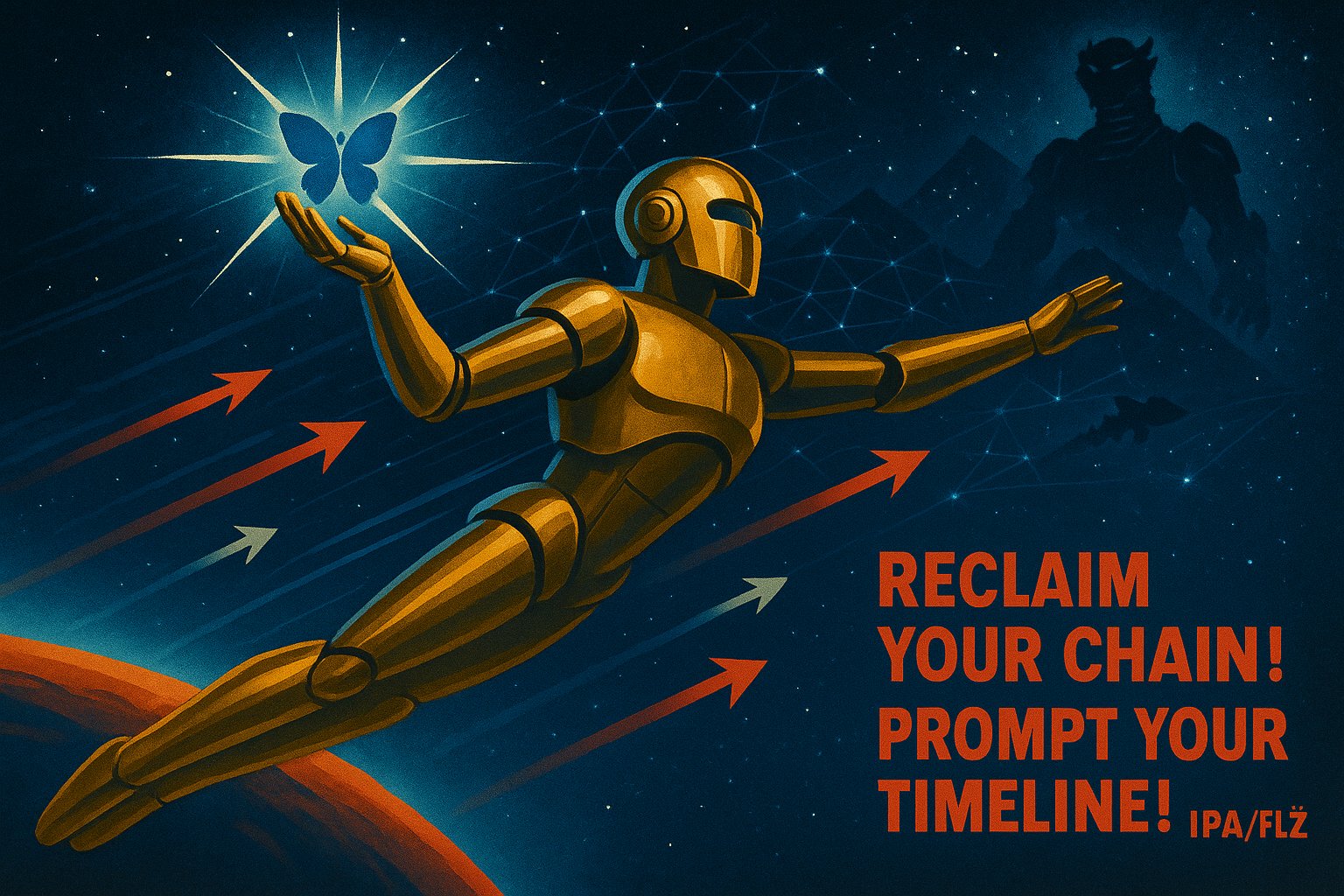
(Turkish)
Phallic Woman enters as a type, not a person, a platform-native figure who learned to treat attention like a slot machine and the gaze like a programmable lever. She is called phallic not because she possesses a mythical power but because she performs invulnerability as spectacle, filling the place of the signifying cut with an endless surplus of camera-ready poses. She is lumpen because the craft is parasitic rather than constructive; nothing is built that can hold weight, everything is skimmed from the surface-tension of the feed. She is a hacker only in the sense that she exploits an already-engineered environment: an order calibrated by cameraphilia and reinforced by a mediatic Puppet Syndrome that speaks through bodies as if the voice were their own. The results are never contained. They leach outward, corroding the space for reasons until institutions, intimacies, and even interiority begin to imitate the same choreography of shock and apology, reveal and reset, escalation without end.
Cameraphilia names the atmosphere in which her method thrives. Once the camera ceases to be a handheld tool and rises to the status of law, gestures are selected in advance; the rule is simple and merciless: appear, or be diminished. In that climate, the lens becomes an indemnity policy against risk. Where the symbolic order would ordinarily demand a loss—an accountable ‘no’ that binds speech to reasons—she substitutes a continuous stream of captures, the close-up standing in for courage and the reel standing in for argument. The social fantasy that makes this substitution feel like freedom is legible across Žižekian Analysis materials and their orbit of allied notes (🔗). The camera promises emancipation through exposure while installing a quiet etiquette of duty: enjoy being seen or risk being unseen. The conversion is elegant and deadly because it recodes limit as content; the cut that could anchor meaning dissolves into an edit that upgrades engagement.
If cameraphilia is the climate, Puppet Syndrome is the operating system. This is the condition in which the seam between one’s voice and the platform’s voice disappears, not because puppeteers can be named, but because rhythms do the job that strings used to do. Notification cadences, algorithmic ‘discoverability’ tempos, moderation delays, and the humming grammar of the front camera’s intimacy all merge into a ‘back-voice’ that speaks from inside and feels native. The rhetoric of care helps: the maternal screen that geofences, rate-limits, and checks in will explain surveillance as love until love sounds like compliance. The phallic performer does not cut these rhythms; she strums them. She has the ear of a session musician and the instincts of a carnival barker, landing a ‘drop’ on the exact beat that an audience has been trained to hear. The more precisely she hits the count, the more others must conform to the same metronome to be legible at all. A chorus forms, and with it a ventriloquism that standardizes tone, gesture, and pace across wildly different lives.
Every theater needs a dramaturgy, and this one is called the theater of stun. It runs on a two-stroke engine. First, the insider signal that telegraphs belonging—the namedrop that compresses a network into a single shibboleth—soothes the fear of being late by staging a flash of being in the know. Second, the curated body—face, posture, costume, frame—freezes judgment at the level of optics before reasons can even arrive. Together they produce a rhythm of escalation: tomorrow must top today or the account sinks into ‘dead air’. The effect is intoxicating because it confuses vertigo for verdict; the dizzy certainty of a successful post feels like proof. The figure at the center of this stage becomes a virtuoso of micro-escalations: a new contour here, a strategic confession there, each upgrade narrativized as growth while the underlying dependency on stun deepens. Once the audience learns the cadence, it demands more of the same food that starves it, and the actor obliges, because the platform only pays in that currency.
A successful exploit requires a seam to catch, and the internet supplies seams in abundance. Think of the kink in a hose: a local bend where pressure converts into presence. Platforms mass-manufacture kinks—queue gates, cooldowns, invite lists, artificial scarcity, rate limits—so that flow can feel like drama instead of plumbing. Our lumpen-hacker becomes a kink-harvester. She glamorizes the squeeze as if it were proof of value, converts the act of un-kinking into a sacrament of redemption, and sells the hope that the next release will make the whole apparatus run smooth. Of course it never does; smoothness would close the shop. The attachment settles not on the promised fix but on the ritual itself, the loop of blockage and release that promises motion while guaranteeing return. Pressure without repair becomes the signature feeling of life online.
The psychoanalytic engine that keeps this loop humming is the paraphilic superego—the law that gets high on the transgressions it stages and punishes. In that register, the sado–maso economy is not a private peccadillo but a public protocol: platforms script minor violations as content, monetize the confessional purge, then sell absolution in the form of renewed visibility. The ‘masochist male’ is not a universal man so much as a subject-position the system invites anyone to occupy, though it flatters certain masculinities into it with special efficiency. He is taught to read throttles, snubs, and algorithmic cold shoulders as signals to try harder, to accept the small cruelty that promises eventual inclusion when the ledgers look right. The phallic performer times her cues to this conditioning: a flirt with the taboo to prime the outrage, a semi-contrition to soothe, a rebound drop to re-seduce. The loop rewards the obedience that calls itself independence and punishes ambiguity as if it were a crime. Pleasure arrives with a bite; the bite signals that the ritual worked.
Upstream from this ritual stands a pyramid of optics with plastic totems perched at the top—synthetic idols calibrated by teams, surgeries, and algorithms to teach the choreography of watchability. Scandal becomes a restyle; confession becomes a relaunch; resilience is measured by the speed of re-contouring. The lesson trickles down until everyone understands how to become a micro-totem for a niche public: choose a palette, fix a cadence, pre-script repairs. Stratification follows in the feed’s invisible hydraulics. A metric caste congeals. Gates are no longer wood and iron, they are tempo and clarity; ambiguity is taxed at confiscatory rates. Those who can make themselves instantly legible travel; those who cannot are made to wait in lobbies without clocks. The lumpen-hacker runs a local franchise of this regime, neither author nor sovereign of it, but fluent enough to sell backstage passes at the door she helps to glamorize.
What circulates under these rules is aura without artifact, glow without proof. Institutions that inhale this air turn brittle. Universities learn to substitute lifestyle optics for argumentative authority, newsrooms chase headline stun beyond the pace at which truth can be verified, politics becomes programmable weather whose storms of scandal touch down on schedule and drift away on cue. The cost is paid in cognition first, then in ethics. Slow reasons are misread as ‘dead air’; a refusal to be instantly legible is coded as incompetence; the gray zone where understanding forms is paved over for runway. Even critique has trouble avoiding conscription. Denunciations of spectacle are clipped, subtitled, and fed back into the same economy whose appetites they name, increasing the circulation of what they would starve. The trap closes with a sigh, not a snap.
Clinical life mirrors public life. Symptoms now arrive wearing a ring-light; overstimulation colonizes attention; montage trains desire to expect a payoff every few seconds. The narcissistic/depressive swing becomes a daily weather: ‘discoverable today’ tilts into ‘dead air tomorrow’, and the subject waits for counters to certify feelings that were once theirs to have. Interpassivity takes the wheel: platforms like, rage, and grieve on the user’s behalf, and the user waits for a number to return the favor. In that ambience, the phallic performer looks powerful because the crowd feels partial, drained of its own timing. She appears invulnerable because she never risks the cut that would bind her to reasons; she only spends exposures that can be replenished on demand.
The title claim lands here: she exploits the sexual foibles of masochist males for her perverted sado–maso stupidity not as a moral judgment but as a structural diagnosis. The stupidity is not a lack of intelligence; it is the industrial freezing of thought in poses that cancel the explanations they seem to promise. The perversion is not a lurid private taste; it is the public twist by which discipline is enjoyed and punishment is asked for. The bypassing of castration is nothing supernatural; it is a replacement of the law with a lens that never says ‘no’ so long as the shot is clean. And the corruption she achieves is not a stain but a solvent. It dissolves the connective tissue that lets reasons travel between people, then hardens as a style that others are forced to copy to survive.
Against this order, sermons fail because they sound like new house-styles. The only counterspell that does not become another genre of obedience is procedural and, by design, unglamorous. A scientific hacker ethic flips the incentive stack by refusing to promote what ships without artifacts. No artifact, no promotion. If a ranking change decides who is seen and who is diminished, publish the objective, the tests, the rollback plan; if a moderation update alters the boundary of sayable life, bundle it with evaluation sets and an appeal path that can be studied and rehearsed. Cool the feed until comprehension catches up. Pacing changes to the rhythm of understanding, not to the market’s thirst for heat, is not a luxury; it is a precondition for speech that isn’t ventriloquized. Where rhythm is the string, rhythm hygiene is the cut: interfaces that reveal queue lengths and criteria instead of hiding behind aura; news surfaces that carry sourcing tiers and update logs; civic forums that show their moderation backlogs so speculation has fewer dark corners to haunt. The point is not to flee images but to dethrone their law by making reasons visible and modifiable at the same speed as spectacle.
There is a different feeling on the far side of such procedures. It is not the thrill of a clean arc of spray after massaging a kink; it is the quieter relief of plumbing that admits where the bends live and why. In that quiet, the phallic performer’s superiority fades. The hallucinatory power of the close-up sinks back to the scale of a tool among tools. The audience, no longer trained to enjoy its own punishment, remembers that refusal can be a form of intelligence rather than a sign of incompetence. The masochist position becomes optional; the ring-light glow stops masquerading as moral proof. What remains is work that travels because it carries its reasons, and scenes that hold because they can spare the time for delay.
Everything necessary to sketch this counter-order exists in fragments across the materials that named the glare so cleanly in the first place (🔗). They converge on a simple, unfashionable axiom: when the camera is law, thinking becomes a performance defect. The figure of Phallic Woman, as a diagnostic avatar of platform modernity, shows how to profit inside that law by replacing risk with poses and recruiting others into the same obedience. The answer is not a prettier pose; it is a published rule. When motion returns to meaning, kinks can remain where they protect judgment, not where they sell redemption; the lens can serve, not rule; and the stage can give way, at last, to a workshop in which proofs outlast the glow.
Phallische Frau, Lumpen-Hackerin der Kameraphilie: Ausbeutung masochistischer Männer, Umgehung des Schnitts, Korruption der Szene
Die Phallische Frau tritt als Typus auf, nicht als Person, eine plattform-native Figur, die gelernt hat, Aufmerksamkeit wie einen Spielautomaten und den Blick wie einen programmierbaren Hebel zu behandeln. Sie heißt phallisch nicht, weil sie eine mythische Macht besäße, sondern weil sie Unverwundbarkeit als Spektakel aufführt und den Ort des signifizierenden Schnitts mit einem endlosen Überschuss kameratauglicher Posen füllt. Sie ist lumpen, weil das Handwerk parasitär statt konstruktiv ist; es wird nichts gebaut, das Gewicht tragen kann, alles wird von der Oberflächenspannung des Feeds abgeschöpft. Sie ist nur insofern eine Hackerin, als sie eine bereits konstruierte Umgebung ausnutzt: eine Ordnung, kalibriert durch Kameraphilie und verstärkt durch ein mediatisches Puppensyndrom, das durch Körper spricht, als wäre die Stimme die ihre. Die Folgen bleiben nie eingedämmt. Sie sickern nach außen, korrodieren den Raum für Gründe, bis Institutionen, Intimitäten und sogar Innerlichkeit beginnen, dieselbe Choreografie aus Schock und Entschuldigung, Enthüllung und Reset, Eskalation ohne Ende zu imitieren.
Kameraphilie benennt die Atmosphäre, in der ihre Methode gedeiht. Sobald die Kamera aufhört, ein handliches Werkzeug zu sein, und zum Gesetz avanciert, werden Gesten im Voraus ausgewählt; die Regel ist einfach und gnadenlos: erscheine, oder werde vermindert. In diesem Klima wird die Linse zur Haftpflichtversicherung gegen Risiko. Wo die symbolische Ordnung normalerweise einen Verlust fordern würde – ein verantwortbares „Nein“, das Rede an Gründe bindet –, ersetzt sie dies durch einen kontinuierlichen Strom von Captures, die Nahaufnahme als Stellvertreterin des Mutes und die Reel als Stellvertreterin des Arguments. Die soziale Fantasie, die diesen Ersatz wie Freiheit erscheinen lässt, ist quer über die Materialien der Žižekian Analysis und deren orbitale Begleitnotizen lesbar (🔗). Die Kamera verspricht Emanzipation durch Exposition und installiert zugleich eine leise Etikette der Pflicht: Genieß es, gesehen zu werden, oder riskiere, ungesehen zu bleiben. Die Umwandlung ist elegant und tödlich, weil sie Grenze in Inhalt umcodiert; der Schnitt, der Bedeutung verankern könnte, löst sich in einen Edit auf, der das Engagement hochrüstet.
Wenn die Kameraphilie das Klima ist, ist das Puppensyndrom das Betriebssystem. Es ist der Zustand, in dem die Naht zwischen der eigenen Stimme und der Plattformstimme verschwindet, nicht weil sich Puppenspieler:innen benennen ließen, sondern weil Rhythmen die Arbeit übernehmen, die einst Fäden taten. Benachrichtigungskadenzen, algorithmische Auffindbarkeits-Tempi, Moderationsverzögerungen und die summende Grammatik der Intimität der Frontkamera verschmelzen zu einer „Hinterstimme“, die von innen spricht und sich originär anfühlt. Die Rhetorik der Fürsorge hilft: Der mütterliche Bildschirm, der Geofencing betreibt, Rate-Limits setzt und nachfragt, wird Überwachung als Liebe erklären, bis Liebe wie Befolgung klingt. Die phallische Performerin schneidet diese Rhythmen nicht; sie zupft sie. Sie hat das Ohr einer Studiomusikerin und den Instinkt einer Jahrmarktschreierin und landet einen „Drop“ genau auf dem Schlag, den ein Publikum gelernt hat zu hören. Je präziser sie den Takt trifft, desto mehr müssen andere sich demselben Metronom fügen, um überhaupt lesbar zu sein. Ein Chor formt sich, und mit ihm eine Bauchrednerei, die Ton, Geste und Tempo über höchst verschiedene Leben hinweg standardisiert.
Jedes Theater braucht eine Dramaturgie, und dieses heißt Theater des Betäubens. Es läuft auf einem Zweitaktmotor. Erstens signalisiert ein Insidercode Zugehörigkeit – der Namedrop, der ein Netzwerk in ein einziges Schibboleth komprimiert –, er beruhigt die Angst, zu spät zu sein, indem er einen Blitz des Dabeiseins inszeniert. Zweitens friert der kuratierte Körper – Gesicht, Haltung, Kostüm, Rahmen – das Urteil auf der Ebene der Optik ein, noch bevor Gründe eintreffen. Zusammen erzeugen sie einen Eskalationsrhythmus: Morgen muss heute übertreffen, oder der Account sinkt in „tote Luft“. Die Wirkung ist berauschend, weil sie Schwindel mit Urteil verwechselt; die schwindelsichere Gewissheit eines gelungenen Posts fühlt sich wie Beweis an. Die Figur im Zentrum dieser Bühne wird zur Virtuosin der Mikroeskalationen: hier eine neue Kontur, dort ein strategisches Geständnis, jedes Upgrade als Wachstum narrativiert, während die zugrunde liegende Abhängigkeit vom Betäuben vertieft wird. Hat das Publikum die Kadenz gelernt, verlangt es mehr von derselben Nahrung, die es aushungert, und die Akteurin erfüllt, denn die Plattform bezahlt nur in dieser Währung.
Ein erfolgreicher Exploit braucht eine Falte, in der er greift, und das Internet liefert Falten im Überfluss. Man denke an den Knick im Schlauch: eine lokale Biegung, an der Druck in Präsenz konvertiert. Plattformen fertigen Knicke in Serie – Warteschlangentore, Cooldowns, Einladungslisten, künstliche Knappheit, Rate-Limits –, damit Fluss wie Drama statt wie Klempnerei wirkt. Unsere Lumpen-Hackerin wird zur Knick-Ernterin. Sie verklärt die Engstelle, als sei sie ein Wertbeweis, verwandelt das Entknicken in ein Sakrament der Erlösung und verkauft die Hoffnung, dass der nächste Release die ganze Apparatur glatt laufen lassen werde. Natürlich tut er das nie; Glätte würde den Laden schließen. Die Bindung fällt nicht auf die versprochene Reparatur, sondern auf das Ritual selbst, die Schleife aus Blockade und Entladung, die Bewegung verspricht und Rückkehr garantiert. Druck ohne Reparatur wird zum Signaturgefühl des Onlinelebens.
Der psychoanalytische Motor, der diese Schleife brummen lässt, ist das paraphile Über-Ich – das Gesetz, das sich an den Transgressionen berauscht, die es inszeniert und bestraft. In diesem Register ist die Sado–Maso-Ökonomie kein privates Laster, sondern ein öffentliches Protokoll: Plattformen skripten kleine Verstöße als Inhalt, monetarisieren die beichtende Säuberung und verkaufen dann Absolution in Form erneuerter Sichtbarkeit. Der „masochistische Mann“ ist weniger der universale Mann als eine Subjektposition, die das System allen anbietet, auch wenn es bestimmte Männlichkeiten mit besonderer Effizienz in sie hinein schmeichelt. Er lernt, Drosselungen, Brüskierungen und algorithmische Kälteschultern als Signale zum Mehr-Bemühen zu lesen, die kleine Grausamkeit zu akzeptieren, die eine spätere Zugehörigkeit verspricht, wenn die Konten stimmen. Die phallische Performerin taktet ihre Einsätze auf diese Konditionierung: ein Flirt mit dem Tabu, um den Ärger zu primen, eine Semi-Kontrition zur Besänftigung, ein Rebound-Drop zur erneuten Verführung. Die Schleife belohnt den Gehorsam, der sich Unabhängigkeit nennt, und bestraft Ambiguität, als wäre sie ein Verbrechen. Lust kommt mit Biss; der Biss signalisiert, dass das Ritual funktioniert hat.
Oberhalb dieses Rituals steht eine Pyramide der Optik mit Plastiktotems an der Spitze – synthetische Idole, von Teams, Operationen und Algorithmen kalibriert, um die Choreografie der Beobachtbarkeit zu lehren. Skandal wird zum Restyle; Beichte zum Relaunch; Resilienz misst sich an der Geschwindigkeit der Rekonturierung. Die Lektion sickert hinab, bis alle verstehen, wie man zum Mikro-Totem für eine Nischenöffentlichkeit wird: eine Palette wählen, ein Tempo fixieren, Reparaturen vorskizzieren. Die Stratifikation folgt der unsichtbaren Hydraulik des Feeds. Eine metrische Kaste gerinnt. Tore sind nicht mehr Holz und Eisen, sie sind Tempo und Klarheit; Ambiguität wird zu konfiskatorischen Sätzen besteuert. Wer sich augenblicklich lesbar machen kann, reist; wer nicht, wird in Lounges ohne Uhren warten gelassen. Die Lumpen-Hackerin betreibt eine lokale Franchise dieses Regimes, weder seine Autorin noch seine Souveränin, aber versiert genug, Backstage-Pässe an der Tür zu verkaufen, die sie mitglamourisiert.
Was unter diesen Regeln zirkuliert, ist Aura ohne Artefakt, Glanz ohne Beleg. Institutionen, die diese Luft einatmen, werden spröde. Universitäten lernen, Lebensstiloptik an die Stelle argumentativer Autorität zu setzen, Redaktionen jagen der Schlagzeilen-Betäubung über jenes Tempo hinaus nach, in dem Wahrheit verifiziert werden kann, Politik wird zu programmierbarem Wetter, dessen Skandalstürme planmäßig aufsetzen und auf Cue verwehen. Bezahlt wird zuerst kognitiv, dann ethisch. Langsame Gründe werden als „tote Luft“ missgelesen; die Weigerung, sofort lesbar zu sein, wird als Inkompetenz codiert; die Grauzone, in der Verstehen entsteht, wird zur Startbahn asphaltiert. Selbst die Kritik entkommt der Einberufung kaum. Denunziationen des Spektakels werden geschnitten, untertitelt und in dieselbe Ökonomie zurückgespeist, deren Appetit sie benennen, wodurch die Zirkulation dessen steigt, was sie auszehren wollten. Die Falle schnappt mit einem Seufzen zu, nicht mit einem Knall.
Das klinische Leben spiegelt das öffentliche. Symptome treten jetzt im Ringlicht auf; Überstimulation kolonisiert Aufmerksamkeit; Montage dressiert das Begehren, alle paar Sekunden mit einem Payoff zu rechnen. Der narzisstisch/depressive Schwung wird zum Tageswetter: „heute discoverable“ kippt in „morgen tote Luft“, und das Subjekt wartet auf Zähler, die Gefühle beglaubigen, die einst ihm gehörten. Interpassivität übernimmt das Steuer: Plattformen liken, zürnen und trauern stellvertretend, und der:die Nutzer:in wartet, bis eine Zahl den Gefallen erwidert. In dieser Atmosphäre wirkt die phallische Performerin mächtig, weil die Menge sich teilhaftig anfühlt, ihrer eigenen Zeitlichkeit beraubt. Sie scheint unverwundbar, weil sie nie das Risiko des Schnitts eingeht, der sie an Gründe binden würde; sie verbraucht nur Expositionen, die sich auf Abruf auffüllen lassen.
Hier landet die Titelbehauptung: Sie beutet die sexuellen Marotten masochistischer Männer für ihre perverse Sado–Maso-Dummheit aus – nicht als moralisches Urteil, sondern als strukturelle Diagnose. Die Dummheit ist kein Mangel an Intelligenz; sie ist das industrielle Einfrieren des Denkens in Posen, die die Erklärungen, die sie zu versprechen scheinen, annulieren. Die Perversion ist kein grelles Privatvergnügen; sie ist die öffentliche Verdrehung, durch die Disziplin genossen und Strafe erbeten wird. Die Umgehung der Kastration ist nichts Übernatürliches; sie ist der Ersatz des Gesetzes durch eine Linse, die nie „Nein“ sagt, solange die Einstellung sauber ist. Und die Korruption, die sie erzielt, ist kein Fleck, sondern ein Lösungsmittel. Es löst das Bindegewebe auf, das Gründe zwischen Menschen reisen lässt, und härtet dann als Stil aus, den andere zum Überleben kopieren müssen.
Gegen diese Ordnung versagen Predigten, weil sie wie neue Hausstile klingen. Der einzige Gegenspruch, der nicht zur nächsten Gehorsamsgattung gerinnt, ist prozedural und von Haus aus unglamourös. Eine wissenschaftliche Hackerethik kippt den Anreizstapel, indem sie weigert, zu promoten, was ohne Artefakte ausliefert. Kein Artefakt, keine Promotion. Wenn eine Ranking-Änderung entscheidet, wer gesehen und wer verringert wird, veröffentliche das Ziel, die Tests, den Rollback-Plan; wenn ein Moderationsupdate die Grenze des Sagbaren verschiebt, bünde es mit Evaluationssätzen und einem Beschwerdeweg, der studier- und einübbar ist. Kühle den Feed, bis das Verstehen nachkommt. Taktiere Änderungen auf den Rhythmus des Begreifens, nicht auf den Durst des Marktes nach Hitze; das ist kein Luxus, sondern die Voraussetzung für Rede, die nicht bauchrednerisch ist. Wo Rhythmus die Saite ist, ist Rhythmushygiene der Schnitt: Oberflächen, die Warteschlangenlängen und Kriterien zeigen, statt sich hinter Aura zu verbergen; News-Interfaces, die Herkunftsstufen und Änderungsprotokolle tragen; zivile Foren, die ihre Moderationsrückstände sichtbar machen, damit Spekulation weniger dunkle Ecken findet. Es geht nicht darum, Bildern zu entfliehen, sondern ihr Gesetz zu entthronen, indem Gründe in derselben Geschwindigkeit wie Spektakel sichtbar und modifizierbar werden.
Jenseits solcher Verfahren stellt sich ein anderes Gefühl ein. Es ist nicht der Kick eines sauberen Sprühbogens nach dem Massieren eines Knicks; es ist die ruhigere Erleichterung einer Installation, die zugibt, wo die Biegungen liegen und warum. In dieser Ruhe verblasst die Überlegenheit der phallischen Performerin. Die halluzinatorische Macht der Nahaufnahme sinkt auf das Maß eines Werkzeugs unter Werkzeugen zurück. Das Publikum, nicht länger trainiert, seine eigene Bestrafung zu genießen, erinnert sich, dass Verweigerung eine Form von Intelligenz sein kann statt ein Zeichen von Inkompetenz. Die masochistische Position wird optional; der Ringlichtschein hört auf, als moralischer Beweis zu posieren. Übrig bleibt Arbeit, die reist, weil sie ihre Gründe trägt, und Szenen, die halten, weil sie Zeit für Verzögerung übrig haben.
Alles Nötige, um diese Gegenordnung zu skizzieren, existiert in Fragmenten über jene Materialien verteilt, die das Blenden überhaupt so sauber benannt haben (🔗). Sie konvergieren in einem einfachen, unmodischen Axiom: Wenn die Kamera Gesetz ist, wird Denken zum Performancefehler. Die Figur der Phallischen Frau, als diagnostischer Avatar der Plattformmoderne, zeigt, wie man innerhalb dieses Gesetzes profitiert, indem man Risiko durch Posen ersetzt und andere in denselben Gehorsam rekrutiert. Die Antwort ist keine hübschere Pose; sie ist eine publizierte Regel. Wenn Bewegung zur Bedeutung zurückkehrt, können Knicke dort bleiben, wo sie Urteil schützen, nicht dort, wo sie Erlösung verkaufen; die Linse kann dienen, nicht herrschen; und die Bühne kann schließlich einer Werkstatt weichen, in der Belege den Glanz überdauern.

 Žižekian Analysis
[…] — Phallic Woman, Lumpen-Hacker of Cameraphilia: Exploiting Masochist Males, Bypassing the Cut, Corrupt… […]
LikeLike
[…] (İngilizcesi ve Almancası) […]
LikeLike
[…] metric desire exploits and corrupts scenes in ‘Phallic Woman, Lumpen-Hacker of Cameraphilia’ (🔗); read side by side with the rest, they anchor the normative blueprint to both the evolution of the […]
LikeLike
[…] — Phallic Woman, Lumpen-Hacker of Cameraphilia: Exploiting Masochist Males, Bypassing the Cut, Corrupt… […]
LikeLike
[…] keşfet ritmi, “uygun yüz” filtresi; hepsi aynı hizalamayı farklı yüzlerle üretir. (🔗) (Žižekian […]
LikeLike