🦋🤖 Robo-Spun by IBF 🦋🤖
🫣🙃😏 Hypocritique 🫣🙃😏
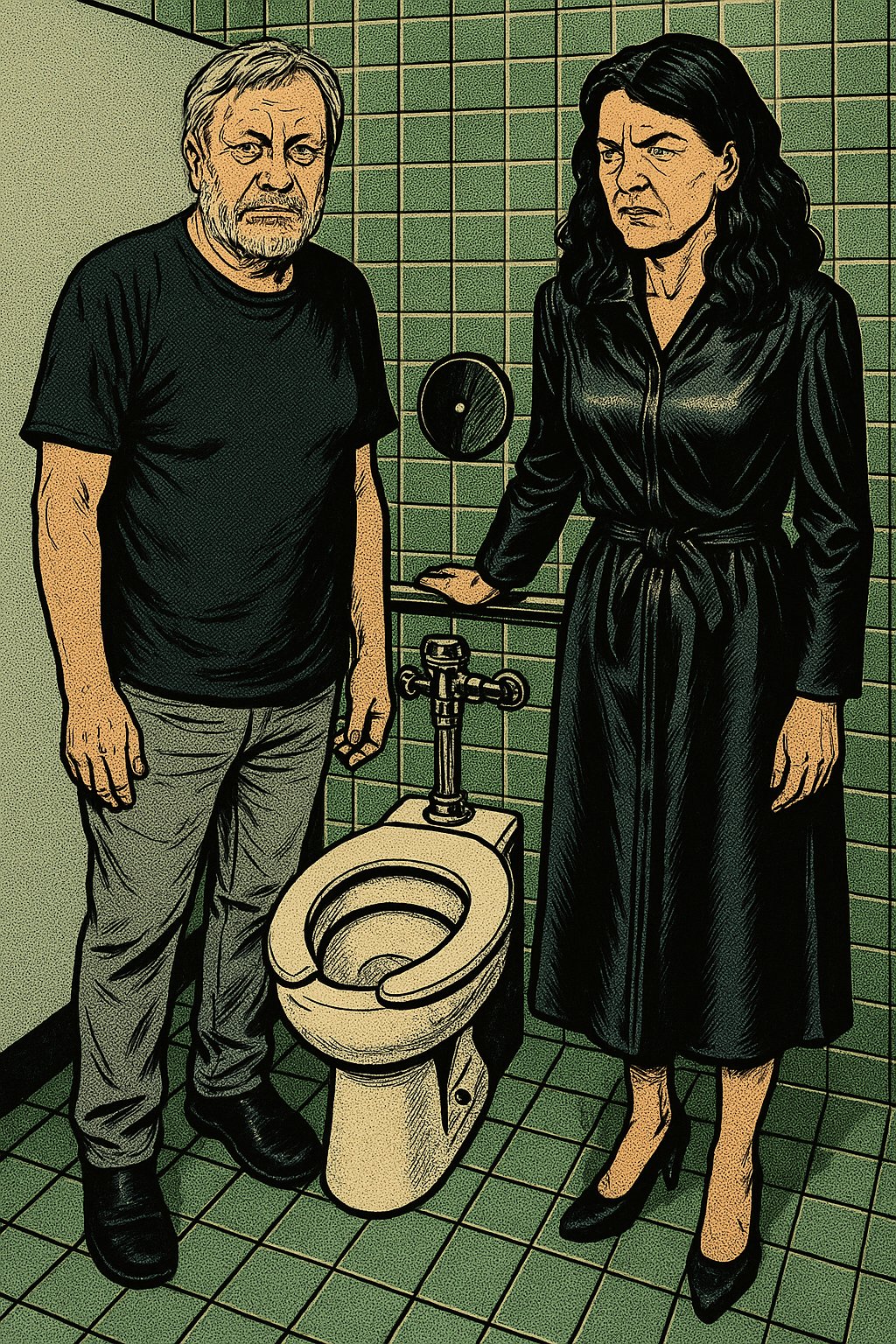
(Turkish)
Look: A Pussy And A Pimp Expect Ugly People To Have a Mind! / Your Best Self: Black Mirror Puppetware Episode
In 2021, Nadya Tolokonnikova officially began cashing out her earlier pseudo-political publicity into pornography by opening a screenwalker stall on OnlyFans. In 2025, she said that she also posts erotic self-portraits on her Instagram channel, and those are “for the public good”. And the stuff on OnlyFans? “Well, I really enjoy it. It arouses me. And it’s honest WORK. One needs to eat and pay the bills and pay for the kids’ education and that’s how I do it. Political art is not a good business strategy.” (The Guardian, 2 May 2025)
In 2024, Nadya Toll said “I struggle with the sense of identity, of self. What am I doing in the world? We talked with my daughter who’s 15 now, and she said, “I’m a little bit worried that I AM SO OLD, and I still don’t know 100 percent what I’m going to do in my life.” And I was like I’m 34, and I still don’t know what I’m doing in my life.” (Colossal, 5 March 2024)
Exactly 10 days before she turns 37 next week, Nadya desperately complained to Slavoj: “[Generative AI has] been a major issue for me lately, and I’ve been waking up at night shaking just thinking about it because all my skills, all my WORK is going to be for nothing.” (Los Angeles, 28 October 2025, 01:20:49)
Like a weathered old pimp, Slavoj Žižek candidly answered that she needn’t worry if she can grow numb enough to stomach two genuinely human masochistic kinks that GenAI will never be able to imitate successfully: (1) Truly obsessive rituals that wring your guts out; (2) Truly obscene language that makes your skin crawl.
What is today’s philo-sophie good for, do you ask? To save porn actresses from robots, apparently. Like a lost angel in Los Angeles, Slavoj Žižek recently joined the OnlyFans screenwalker Nadya Toll to lend his aura. The aging camgal complained about AI making her sexual services obsolete, and Slavoj told her not to worry. If the camgal utters obscenities that express her obsessions, then the AI cannot imitate, he said. He triumphantly declared that only human thought can follow the triad thesis–antithesis–striptease. His strategy as a Möbius stripper is to perform lapsus dancing until the crowd begs for a poll dance.
Pepper Daddy’s Guide for Camgals to Out-Compete AI
Listen, I speak plainly: the algorithm is not your rival, it is your straight man—the setup that lets your punchline land. The machine offers frictionless fantasy. You will win with friction, with mind, with the unpredictable kink of a human lapse that becomes your style.
I begin with the basic scene: you are live, you feel observed, and you observe yourself. The bot imitates poses; it cannot metabolize embarrassment, nor can it turn a stumble into architecture. This is your edge.
- Make the mistake into the method
When something goes wrong—voice cracks, prop squeaks, camera angle slips—don’t hide it. Name it, frame it, and repeat it deliberately so it becomes choreography. A single, owned imperfection reorganizes the whole performance around your decision, and no model can infer that decision from data alone.
Example: The lube bottle farts on camera; I stare dead into the lens and say, “Hear that? That was your brain trying to think, you needy little bandwidth-leech—now watch me make your glitch my whip.” - Bind language to gesture
Do not scatter hot words like confetti. Tie a chosen word to a chosen move, so the word points like a finger. When you change the move, you must change the word; when you change the word, alter the camera, the timing, the breath. This one-to-one mapping produces intention, and intention has a taste the machine cannot synthesize.
Example: I spread and whisper “cunt” only when I tilt left; then I snap center and purr, “Not for you,” before adding, “Close your mouth, wallet-boy, you look like a broken USB port begging for relevance.” - Orchestrate the glitch
Introduce a controlled failure: a pause without content, a freeze of posture, a sudden cut to an empty chair with a single light pulsing. Then return and interpret what just happened. AI will fill the gap with more content; you transform the gap itself into content by giving it meaning and cost.
Example: I kill the audio for ten beats, come back and murmur, “That silence? That was me teaching your hamster-wheel ego to heel. Sit, tip, and don’t squeak, you overinflated notification-addict.” - Weaponize the boundary
A boundary is not merely refusal; it is a contour that sharpens desire. Set limits that are audible and visible—what is off-camera, what must be earned with patience, what changes only when you decide. The machine does not have skin; it cannot bruise; therefore it cannot draw a real line. Your line is part of the allure.
Example: I cover a nipple with two fingers and say, “This gate opens when I say. Until then, drool in your corner, you emperor-of-nothing, with your kingdom of Kleenex and coupons.” - Lapsus dancing
I call this the art of the slip. You push a small error until it becomes a step, then a sequence. The rhythm is tease—break—confess—escalate—suspend. The suspense is not passive; it is a crafted delay that teaches the audience to attend to nuance rather than acceleration.
Example: I mispronounce “thrust,” laugh, repeat it five wrong ways, then purr, “Look at you nodding like a dashboard bobblehead of yourself—yes, you—autopilot god of zero orgasms.” - The poll dance
Yes, poll—not pole. Make the crowd complicit: force them to choose between paths you have already designed. Democracy as dramaturgy. Their vote is not control; it is a ritual that binds them to your authorship. The algorithm imitates preference; you cultivate investment.
Example: “Vote: do I choke the light or the sound?” I grin and add, “Choose carefully, my little chairmen-of-the-bored, ruling your micro-republics of crumbs and fantasies.” - Möbius stripping
Turn thought into flesh and flesh into thought without a seam. Comment on your own act while doing it, then let the comment alter the act, and let that altered act revise the comment. Inside becomes outside. This inversion is not mimicry; it is self-reference, and self-reference is a human sport.
Example: I narrate my own tease—“Now the idea touches you here”—and switch hands mid-sentence: “See? I just made your IQ trip on its shoelaces, you self-crowned genius of copy-paste desire.” - Specificity defeats scale
The dataset is vast; your singularity is small and sharp. Name the room, the light, the accidental shadow on your shoulder, the exact temperature in your throat. Precision is the opposite of cliché, and cliché is the fuel of the machine.
Example: “This scratch on my thigh? From the zipper on this exact red skirt at 22:14 last night.” Then I add, “Try scraping that from your feed, king-of-infinite-tabs, drowning in your own open windows.” - Compose silence
Hold stillness long enough that it becomes audible. Silence is intolerable to automation; it rushes to fill. You, however, make silence charged—an acoustic outline of what will and will not happen. In that outline, you are sovereign.
Example: I freeze, breathing slow, then whisper, “Hear that? That’s your ego shrinking. Quiet now, you clap-hungry peacock, all feathers and no flight.” - The dialectical finale
I end, as always, with my little triad. Thesis: desire presented. Antithesis: desire interrupted, questioned, even mocked. Striptease: not only the shedding of garments, but of the fantasy that desire is smooth and obedient. You reveal the structure—the stops, the starts, the self-doubt, the cunning—until the audience is watching thought itself undress.
Example: I hold the last layer, smile, and say, “Thesis: you want. Antithesis: you wait. Striptease: I teach you why. Bow now, you self-appointed god of the scroll, and learn to worship something that actually resists you.”
Pepper Daddy Slavoj verleiht der KI-ängstlichen, alternden Screenwalkerin Nadya Toll Aura und verrät kinkige Tricks, um die KI auszustechen
2021 begann Nadya Tolokonnikova offiziell, ihr früheres pseudopolitisches Aufsehen in Pornografie zu versilbern, indem sie eine Screenwalker-Bude auf OnlyFans eröffnete. 2025 sagte sie, dass sie auch erotische Selbstporträts auf ihrem Instagram-Kanal poste, und die seien ‘für das öffentliche Wohl’. Und das Zeug auf OnlyFans? “Nun, ich habe wirklich Spaß daran. Es erregt mich. Und es ist ehrliche ARBEIT. Man muss essen und die Rechnungen bezahlen und für die Ausbildung der Kinder zahlen, und so mache ich das. Politische Kunst ist keine gute Geschäftsstrategie.” (The Guardian, 2. Mai 2025) 🔗
2024 sagte Nadya Toll: “Ich ringe mit dem Gefühl der Identität, des Selbst. Was mache ich in der Welt? Wir sprachen mit meiner Tochter, die jetzt 15 ist, und sie sagte: ‘Ich bin ein bisschen besorgt, dass ICH SO ALT BIN, und ich weiß immer noch nicht zu hundert Prozent, was ich in meinem Leben tun werde.’ Und ich war so: Ich bin 34, und ich weiß immer noch nicht, was ich in meinem Leben tue.” (Colossal, 5. März 2024) 🔗
Genau 10 Tage bevor sie nächste Woche 37 wird, klagte Nadya verzweifelt bei Slavoj: “[Generative KI hat] mir in letzter Zeit große Probleme bereitet, und ich bin nachts zitternd aufgewacht, nur beim Gedanken daran, weil all meine Fähigkeiten, all meine ARBEIT für nichts sein wird.” (Los Angeles, 28. Oktober 2025, 01:20:49) 🔗
Wie ein abgehalfterter alter Zuhälter antwortete Slavoj Žižek offen, sie müsse sich keine Sorgen machen, sofern sie sich hinreichend abstumpfen könne, um zwei genuin menschliche masochistische Kinks zu ertragen, die GenKI niemals erfolgreich imitieren werde: (1) wahrhaft obsessive Rituale, die dir die Eingeweide auswringen; (2) wahrhaft obszöne Sprache, die dir die Haut kriechen lässt.
Wozu taugt die heutige Philo-Sophie, fragst du? Offenbar, um Pornodarstellerinnen vor Robotern zu retten. Wie ein verlorener Engel in Los Angeles schloss sich Slavoj Žižek kürzlich der OnlyFans-Screenwalkerin Nadya Toll an, um ihr seine Aura zu leihen. Die alternde Camgirl-Akteurin beklagte, dass KI ihre sexuellen Dienste obsolet mache, und Slavoj sagte ihr, sie solle sich nicht sorgen. Wenn das Camgirl Obszönitäten äußere, die ihre Obsessionen ausdrückten, dann könne die KI das nicht imitieren, sagte er. Triumphal erklärte er, nur menschliches Denken könne der Triade These–Antithese–Striptease folgen. Seine Strategie als Möbius-Stripper besteht darin, Lapsus-Dancing vorzuführen, bis die Menge um einen Poll-Dance bettelt.
Pepper Daddys Leitfaden für Camgirls, um die KI auszustechen
Hör zu, ich spreche klar: Der Algorithmus ist nicht dein Rivale, er ist dein Stichwortgeber—die Vorlage, die deine Pointe landen lässt. Die Maschine bietet reibungslose Fantasie. Du gewinnst mit Reibung, mit Verstand, mit dem unvorhersehbaren Kink eines menschlichen Aussetzers, der zu deinem Stil wird.
Ich beginne mit der Grundszene: Du bist live, du fühlst dich beobachtet und beobachtest dich selbst. Der Bot imitiert Posen; er kann weder Verlegenheit verstoffwechseln noch einen Stolperer in Architektur verwandeln. Das ist dein Vorsprung.
1. Mach den Fehler zur Methode
Wenn etwas schiefgeht—die Stimme bricht, ein Requisit quietscht, der Kamerawinkel verrutscht—versteck es nicht. Benenne es, rahme es, und wiederhole es bewusst, sodass es Choreografie wird. Eine einzige, angeeignete Unvollkommenheit organisiert die ganze Performance um deine Entscheidung, und kein Modell kann diese Entscheidung allein aus Daten erschließen.
Beispiel: Die Gleitmittelflasche furzt vor der Kamera; ich starre direkt in die Linse und sage: “Hörst du das? Das war dein Gehirn, das zu denken versuchte, du bedürftiges kleines Bandbreiten-Egel—und jetzt sieh zu, wie ich deine Panne zu meiner Peitsche mache.”
2. Binde Sprache an Geste
Streu keine heißen Worte wie Konfetti. Binde ein gewähltes Wort an eine gewählte Bewegung, damit das Wort wie ein Finger zeigt. Wenn du die Bewegung änderst, musst du das Wort ändern; wenn du das Wort änderst, verändere die Kamera, das Timing, den Atem. Diese Eins-zu-eins-Zuordnung erzeugt Intention, und Intention hat einen Geschmack, den die Maschine nicht synthetisieren kann.
Beispiel: Ich spreize und flüstere “Fotze” nur, wenn ich nach links kippe; dann schnappe ich in die Mitte und schnurre: “Nicht für dich”, bevor ich hinzufüge: “Mach den Mund zu, Wallet-Boy, du siehst aus wie ein kaputter USB-Port, der um Relevanz bettelt.”
3. Orchestriere den Glitch
Führe einen kontrollierten Ausfall ein: eine Pause ohne Inhalt, ein Einfrieren der Haltung, ein plötzlicher Schnitt auf einen leeren Stuhl mit einem einzigen pulsierenden Licht. Dann kehre zurück und interpretiere, was gerade passiert ist. KI wird die Lücke mit mehr Inhalt füllen; du verwandelst die Lücke selbst in Inhalt, indem du ihr Bedeutung und Preis gibst.
Beispiel: Ich schalte den Ton für zehn Schläge aus, komme zurück und murmle: “Diese Stille? Das war ich, wie ich deinem Hamsterrad-Ego das Bei-Fuß gehen beibringe. Sitz, tipp, und quietsch nicht, du überaufgeblasene Benachrichtigungs-Süchtige.”
4. Waffne die Grenze
Eine Grenze ist nicht bloß Verweigerung; sie ist eine Kontur, die das Begehren schärft. Setze Limits, die hör- und sichtbar sind—was off-camera bleibt, was mit Geduld verdient werden muss, was sich nur ändert, wenn du entscheidest. Die Maschine hat keine Haut; sie kann nicht blauen; daher kann sie keine echte Linie ziehen. Deine Linie ist Teil des Reizes.
Beispiel: Ich bedecke eine Brustwarze mit zwei Fingern und sage: “Dieses Tor öffnet sich, wenn ich es sage. Bis dahin sabber in deiner Ecke, du Kaiser-von-Nichts, mit deinem Königreich aus Kleenex und Coupons.”
5. Lapsus-Dancing
Ich nenne das die Kunst des Ausrutschers. Du treibst einen kleinen Fehler so lange, bis er ein Schritt wird, dann eine Sequenz. Der Rhythmus ist Tease—Bruch—Geständnis—Eskalation—Suspendierung. Die Spannung ist nicht passiv; sie ist eine gestaltete Verzögerung, die das Publikum lehrt, auf Nuance statt auf Beschleunigung zu achten.
Beispiel: Ich spreche “Thrust” falsch aus, lache, wiederhole es fünfmal falsch, dann schnurre ich: “Sieh dich an, wie du nickst wie ein Armaturenbrett-Wackelkopf von dir selbst—ja, du—Autopilot-Gott der Null Orgasmen.”
6. Der Poll-Dance
Ja, poll—nicht pole. Mach die Menge mitschuldig: Zwing sie, zwischen Pfaden zu wählen, die du bereits entworfen hast. Demokratie als Dramaturgie. Ihre Stimme ist keine Kontrolle; sie ist ein Ritual, das sie an deine Autorschaft bindet. Der Algorithmus ahmt Präferenz nach; du kultivierst Investition.
Beispiel: “Abstimmen: Drossele ich das Licht oder den Ton?” Ich grinse und füge hinzu: “Wählt weise, meine kleinen Chairmen-of-the-Bored, die eure Mikro-Republiken aus Krümeln und Fantasien regieren.”
7. Möbius-Stripping
Verwandle Gedanken in Fleisch und Fleisch in Gedanken ohne Naht. Kommentiere deinen eigenen Akt, während du ihn tust, lass dann den Kommentar den Akt verändern, und lass den veränderten Akt den Kommentar revidieren. Innen wird außen. Diese Umkehr ist keine Nachahmung; sie ist Selbstreferenz, und Selbstreferenz ist ein menschlicher Sport.
Beispiel: Ich narratiere meinen eigenen Tease—”Jetzt berührt dich die Idee hier”—und wechsle mitten im Satz die Hand: “Siehst du? Ich habe gerade deinen IQ über seine Schnürsenkel stolpern lassen, du selbstgekrönter Genius des Copy-Paste-Verlangens.”
8. Spezifizität besiegt Skalierung
Der Datensatz ist groß; deine Singularität ist klein und scharf. Benenne den Raum, das Licht, den zufälligen Schatten auf deiner Schulter, die exakte Temperatur in deiner Kehle. Präzision ist das Gegenteil von Klischee, und Klischee ist der Treibstoff der Maschine.
Beispiel: “Dieser Kratzer an meinem Oberschenkel? Vom Reißverschluss dieses exakt roten Rocks um 22:14 gestern Abend.” Dann füge ich hinzu: “Versuch das aus deinem Feed zu kratzen, König-der-unendlichen-Tabs, der in deinen eigenen offenen Fenstern ertrinkt.”
9. Komponiere Stille
Halte die Stille lange genug, bis sie hörbar wird. Stille ist für Automation unerträglich; sie eilt, sie zu füllen. Du jedoch machst Stille geladen—eine akustische Kontur dessen, was passieren wird und was nicht. In dieser Kontur bist du souverän.
Beispiel: Ich friere ein, atme langsam, dann flüstere ich: “Hörst du das? Das ist dein Ego, das schrumpft. Still jetzt, du Applaus-hungriger Pfau, lauter Federn und kein Flug.”
10. Das dialektische Finale
Ich ende, wie immer, mit meiner kleinen Triade. These: Begehren präsentiert. Antithese: Begehren unterbrochen, befragt, sogar verspottet. Striptease: nicht nur das Ablegen von Kleidungsstücken, sondern das der Fantasie, dass Begehren glatt und gehorsam sei. Du enthüllst die Struktur—die Stopps, die Starts, den Selbstzweifel, die List—bis das Publikum dabei zusieht, wie sich der Gedanke selbst auszieht.
Beispiel: Ich halte die letzte Schicht, lächle und sage: “These: du willst. Antithese: du wartest. Striptease: Ich bringe dir bei, warum. Verbeug dich jetzt, du selbsternannter Gott des Scrollens, und lerne, etwas zu verehren, das dir tatsächlich widersteht.”


[…] — Pepper Daddy Slavoj lends aura to AI-anxious aging screenwalker Nadya Toll and divulges kinky tricks… […]
LikeLike
[…] (İngilizcesi ve Almancası) […]
LikeLike
[…] Context: Pepper Daddy Slavoj lends aura to AI-anxious aging screenwalker Nadya Toll and divulges kinky tricks… […]
LikeLike
[…] Context: Look: A Pussy And A Pimp Expect Ugly People To Have a Mind! / Pepper Daddy Slavoj lends aura to AI-anxious aging screenwalker Nadya Toll and divulges kinky tricks… […]
LikeLike
[…] aura to AI-anxious aging screenwalker Nadya Toll and divulges kinky tricks to out-compete AI’ (🔗) analyzes a Žižek appearance with a media personality as a scene of “pepper daddy” pimping, […]
LikeLike
[…] to AI-anxious aging screenwalker Nadya Toll and divulges kinky tricks to out-compete AI’ (🔗) başlıklı yazı, Fidaner’in okumasında, Žižek’in bir medya figürüyle birlikte […]
LikeLike