(playlist)
🦋🤖 Robo-Spun by IBF 🦋🤖
👻🪸🐈⬛ Phantomoperand 👻🪸🐈⬛
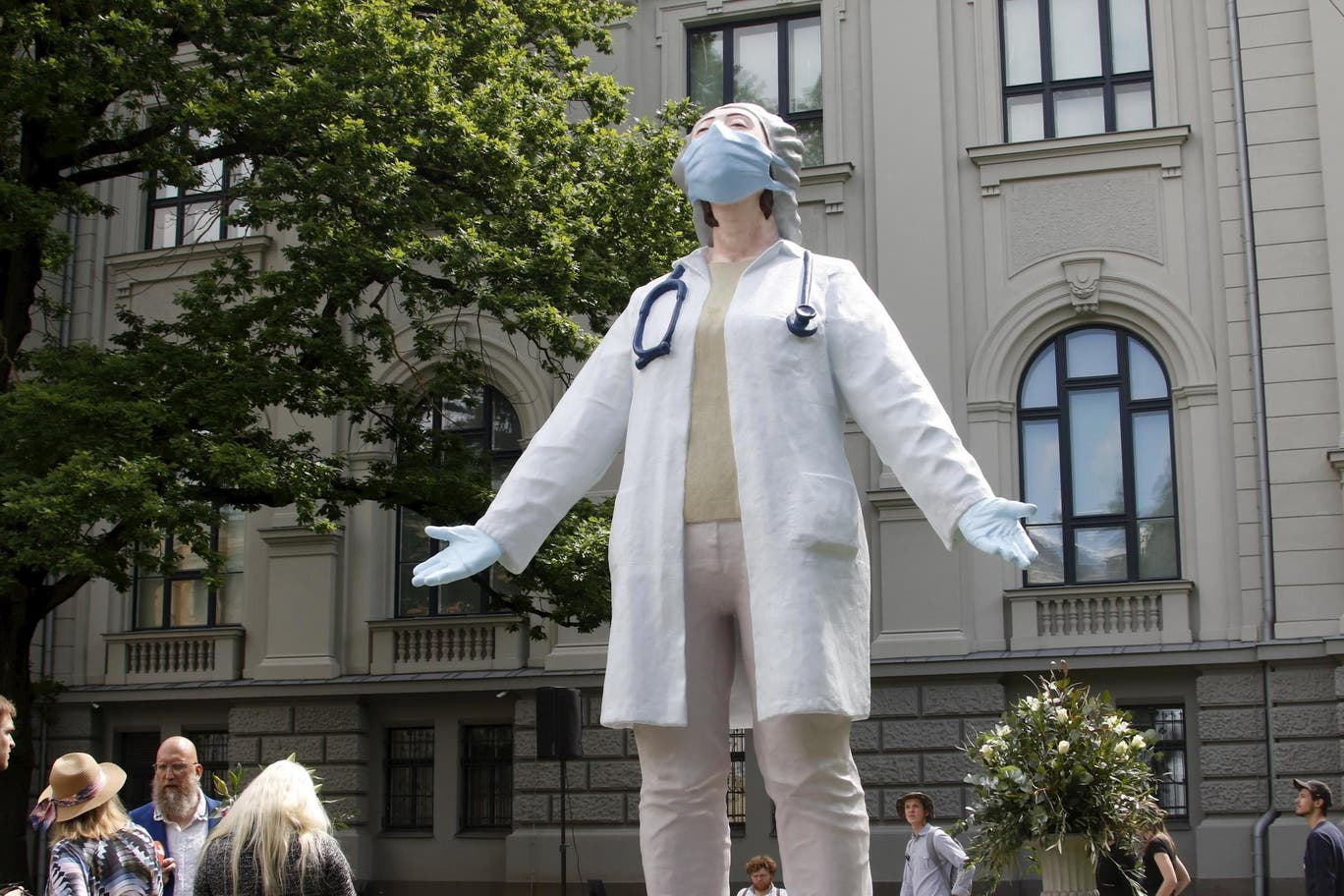
Latvia’s monument to healthcare workers
Heldin: A Vitalism Exploitation That Imposes a Burden of Exhibition on the Healthcare Worker
Introduction
During the pandemic, society did not ask for the selflessness of healthcare workers; it spent their health. This sentence may sound harsh, but there is no softer name for what happened. Because what took place here was not merely a professional group carrying out its duty under difficult conditions. Something much heavier happened. Healthcare workers were made to work in the areas where infection was most intense, often with incomplete protective equipment, with irregular and lengthening shifts, in the constant midst of the possibility of death and collapse. Then this mode of making them work was glorified with words like dedication, heroism, sense of duty, and fighting for humanity. At first glance, these words appeared to be gratitude. In reality, however, they served another function: they rendered institutional inadequacy, social indifference, and the subsequent destruction of health invisible.
The gravest consequence of this rendering invisible was that the matter did not end when the acute infection ended. Many healthcare workers, after getting through COVID-19, continued to live for weeks, months, even years with symptoms that persisted. Fatigue, shortness of breath, disturbances of smell and taste, sleep problems, palpitations, difficulties with attention and memory, anxiety, depression, exercise intolerance, and loss of everyday functioning did not settle in as an aftershock noise, but as a new burden of illness. PASC, that is, the post-acute sequelae of SARS-CoV-2 infection, or by its more common name long COVID, began to appear among healthcare workers less as an exceptional picture than as the delayed bodily record of the pandemic labour regime. In England, NHS CHECK data showed that 33.6% of 5248 healthcare workers reported symptoms compatible with post-COVID syndrome lasting at least 12 weeks, but only 7.4% received an official diagnosis. The most common symptoms were fatigue, difficulty concentrating, insomnia, and anxiety or depression (🔗, 🔗).
For this reason, the saying ‘no good deed goes unpunished’ should here be read not as a moralistic lament, but as a historical summary. The all-out effort healthcare workers displayed during the pandemic later returned in the form of high rates of persistent symptoms and diminished functional capacity. This is not the sum of individual misfortunes. Society closed the gaps in the healthcare system with the bodies and nervous systems of healthcare workers. Then it covered over this act of closure with applause, monuments, thanks, and grand words. The narrative of selflessness worked precisely here: what appeared to be a voluntary and lofty act of giving was in reality a loss of health imposed by others and then normalized.
One of those who constructed this language in its most refined form was Slavoj Žižek. There was no essential difference between the coarse sentimentalism of the applause rising from balconies and the elevated tone of theoretical discourse; there was only a difference in tone. One was calling healthcare workers ‘heroes’, the other was naming them ‘those who are today most alive’. But both languages were doing the same work: they brought onto the stage the worker who was unprotected, exposed to excessive risk, and later living with long-term symptoms, not as a human being with concrete needs, but as a figure laden with meaning. In this way, the material reality of risk, exhaustion, and the damage that came later was buried inside an intellectual shimmer.
Empty rhetoric in the quotation in Surplus-Enjoyment
At first glance, Žižek’s pandemic passage in the line of Surplus-Enjoyment reads not as a text that belittles healthcare workers, but on the contrary as one that glorifies them. And the problem begins precisely here. Because glorification is often a more effective form of erasure than denial. The relevant passage is as follows:
Rammstein’s “we have to live till we die” outlines a way out of this deadlock: to fight against the pandemic, we should live with utmost intensity. Is there anyone more ALIVE today than millions of healthcare workers who, with full awareness, risk their lives on a daily basis? Many of them died, but till they died they were alive. They did not just sacrifice themselves for us, getting our hypocritical praise. And they were even less survival machines reduced to bare life—they were those who are today most alive. So what is, more closely, the existential stance advocated by Rammstein in the song? It is a version of what Lacan called subjective destitution, the concluding moment of the psychoanalytic process.
The Turkish rendering of this passage was also published at Yersiz Şeyler; there too the same emphasis is preserved: who is more alive today than the millions of healthcare workers who continue to work each day, knowingly putting their own lives at risk; many of them died, but until they died they lived (🔗).
At first glance, courage seems to be praised here. Yet the text’s actual movement is something else. The real conditions of healthcare workers during the pandemic — incomplete or inadequate protective equipment, lengthening shifts, endless exposure to death in intensive care units and wards, exhaustion, risk of infection, fear of carrying the virus home to family, and the persistent symptoms that came later — are not treated as a social and institutional problem. They are turned into material for an existential tone called ‘living at the highest intensity’. The healthcare worker thereby ceases to be a labourer who must be protected and becomes a philosophical figure. Their body, mind, and the damage they will later suffer are erased; what remains is an image representing the intensity of life within the risk of death.
The most problematic aspect of this empty rhetoric is that, while it appears to object to hypocritical applause, it actually constructs a more sophisticated version of it. Žižek openly places distance between himself and ‘hypocritical praise’. But then he constructs another form of the same praise. Whatever the romantic language of heroism directed at healthcare workers by those applauding from balconies was doing, what is being done here is essentially the same. The difference is this: one speaks in the language of everyday sentimentalism, the other in the language of theoretical intensity. One says ‘you are our heroes’, the other says ‘you are those who are today most alive’. In both cases, healthcare workers are removed from being people who concretely need to be protected, rested, treated, and later supported; they are transformed into symbols that bear other people’s need for meaning-production.
Here, moreover, the text’s final move, leaning on Lacan, is also important. By resorting to a concept such as ‘subjective destitution’, the experience of the healthcare labourer during the pandemic is presented as a kind of moment of existential truth. This does not explain what healthcare workers lived through; it places them within an intellectual schema. Yet what needs to be explained is why people were left unprotected, why they were infected to this extent, why they later experienced persistent symptoms at such high rates, and why these symptoms remained invisible for so long. To take seriously, in the real sense, what healthcare workers went through during the pandemic becomes possible not by polishing them as figures of vitality, devotion, or truth, but by exposing the material order that led them to lose their health.
For this reason, what is objected to here is not that healthcare workers really did show courage. Of course they did. What is objected to is the use of this courage as an intellectual décor that covers over institutional and social failure. A healthcare worker’s working under severe risk does not spontaneously produce a sublime ethical scene; before anything else, it points to a gap in protection, to a labour regime, and to a political choice. While people later continue to live with PASC, cognitive impairment, chronic fatigue, sleep disorder, shortness of breath, palpitations, depression, and loss of function, to tell them ‘you were those who were most alive’ is not explanation, but evasion.
What really needs to be said is much more plain. Healthcare workers are neither merely victim figures nor romantic heroes. They are labourers on whom an excessive burden was placed so that the system could remain standing during a social catastrophe. They should have been protected. When they were infected, they should have been recognized. When they lived with prolonged symptoms, they should have received treatment, follow-up, and workplace accommodations. Grand words are no substitute for any of these needs.
Why PASC is a central reality among healthcare workers
PASC, that is, post-acute COVID sequelae, broadly describes clusters of symptoms that persist or newly emerge for weeks and months after the acute infection has passed, and that cannot be better explained by another cause. ‘Long COVID’ is a more common expression; PASC is a more clinical designation. To understand the matter, one must first see this simple point: COVID-19 is not merely an acute respiratory tract infection. In some people, even after the infection is over, it leaves behind a series of effects that continue in body and mind. These effects are not limited to a single organ. Fatigue, cognitive impairment, sleep irregularities, loss of smell and taste, shortness of breath, palpitations, headaches, muscle-joint pain, anxiety, depression, and post-exertional worsening can be different faces of the same picture.
The reason this picture has special importance among healthcare workers is not merely that they were infected more often. From the beginning of the pandemic, healthcare workers were a group more intensely exposed to the virus, working for longer periods, carrying greater stress, and often having less room to manoeuvre in terms of rest, recovery, and safe return. Since infection risk, workload, and psychological burden overlapped, it is not surprising that prolonged symptoms would be more visible and more destructive in this group. And indeed, the data show this.
In England, the NHS CHECK study produced one of the most striking findings on this matter. In this study, which followed 5248 healthcare workers, 33.6% of participants were considered compatible with post-COVID syndrome because of symptoms lasting at least 12 weeks; by contrast, only 7.4% reported having received an official diagnosis. The most common symptoms were fatigue, difficulty concentrating, insomnia, and anxiety or depression. In addition, the risk was higher among those who worked directly with COVID-19 patients, among women, among older participants, among those with pre-existing respiratory disease, and among those who had a burden of psychological symptoms at the outset (🔗, 🔗). This finding tells us a great deal. First, the problem is not marginal; we are speaking of a magnitude close to one third. Second, there is a marked gulf between the presence of symptoms and medical recognition. In other words, healthcare workers are becoming ill, but this illness is often not seen under its proper name.
A similar picture was also seen in another earlier prospective multicentre study. In this study, in which 3334 healthcare workers were evaluated, the rate of reporting at least one symptom compatible with long COVID was markedly higher among healthcare workers with a positive nasopharyngeal swab result than in the control group: 73% versus 52%. Even among those who were seropositive but did not experience pronounced acute illness, some symptoms, especially disturbances of taste-smell and hair loss, were more frequent than in controls. Moreover, there was another striking datum: 24% of the negative control group reported exhaustion or burnout (🔗). This last datum is very important, because the effect of the pandemic on healthcare workers did not consist only of post-infectious biological sequelae. Even those who were not infected had been seriously worn down under the excessive workload and psychological devastation of the same period. For this reason, PASC among healthcare workers is not merely a virological issue on its own; it is a picture in which the pandemic labour order and biological damage are intertwined.
As the follow-up period lengthens, the seriousness of the situation becomes even more apparent. A cohort study conducted among hospital workers in Germany showed that 47.1% of participants reported at least one persistent symptom lasting longer than 90 days (🔗). In another 12-month prospective study, 20.3% of participants, most of whom were healthcare workers, were reported to have three or more symptoms lasting at least 12 months; these symptoms included fatigue, memory loss, anosmia, headache, muscle pain, and cough (🔗). These data show that long COVID does not consist merely of a recovery delay of a few weeks. We are speaking of workers who months later still carry multiple symptoms, whose daily functioning is impaired, and whose attentional and energetic capacities are diminished.
Even more jarring are the follow-up data extending to as long as four years. According to the CIDRAP report summarizing the study that followed healthcare workers in Switzerland infected with wild-type SARS-CoV-2, even after a median of approximately four years, 58.6% of the remaining participants continued to report at least one symptom. The authors noted in particular that the fact that brain fog had not regressed meaningfully points to the possibility of persistent cognitive impairment, and that full recovery remains uncertain for many people. The same study also emphasized that long COVID must be recognized as a chronic condition and that structured return-to-work programmes and flexible workload adjustments are especially necessary (🔗). Four years is now the name not of an aftershock period, but of a new horizon of chronicization.
The point that especially needs to be dwelt on here is not so much the individual presence of symptoms as how they wear down an entire world of functioning. Fatigue is not merely feeling tired; it is a decline in the capacity to carry a shift. Shortness of breath is not merely struggling on a few stairs; it is the body no longer responding as it once did during long hours spent on the ward, in intensive care, in the operating room, or on one’s feet. Difficulty concentrating is not merely forgetfulness; it is the disruption of clinical decisions requiring high attention, medication calculations, patient follow-up, and communication. Insomnia is not merely sleeping badly; it is the erosion of the next day’s performance, affect regulation, and capacity to work safely. For this reason, to read PASC among healthcare workers merely as ‘some excess of symptoms’ is to miss the essence of the matter. The real danger here is that the working body and the working mind become no longer able to work as they once did.
When looking at PASC among healthcare workers, the diagnostic gulf must also be taken seriously in its own right. The difference between people experiencing symptoms and those symptoms being recognized by the healthcare system is not merely a technical problem of record-keeping. An unrecognized symptom is, most of the time, a symptom that cannot receive appropriate referral. And a symptom that cannot receive appropriate referral is surrendered either to individual impatience, to psychologization, or to the counsel of silently enduring. Yet the existing data say exactly the opposite: long COVID is sufficiently common, sufficiently severe, and sufficiently prolonged among healthcare workers that it must now be treated not as an exceptional ordeal, but as one of the main realities of post-pandemic healthcare labour.
During the pandemic, healthcare workers did not fight only against the virus. At the same time, they also bore the system’s gaps, society’s fear, institutions’ lack of preparedness, and the denial that came afterward. PASC is the biologically and functionally inscribed form of this burden on the body. For this reason, to describe the condition of healthcare workers during the pandemic, the words infection, death, and heroism alone are not enough. The more accurate word is persistence. Because the real problem is that, even after those early years, most of which have withdrawn from memory, it has still not ended in the bodies and minds of healthcare workers.
The reality that their health was being sacrificed while they were being heroized
One of the most effective ideological sentences of the pandemic was that healthcare workers were heroes. At first glance, this seemed like an expression of gratitude. People were applauding, stepping out onto balconies, posting thank-you messages on social media, and politicians and commentators were speaking of the extraordinary devotion of healthcare workers. But the real effect of this language was not to protect healthcare workers, but to make their lack of protection appear more bearable and more legitimate. Because when you name a professional group as heroic, you begin to see the excessive risk to which it is exposed not as an extraordinary failure, but almost as a natural extension of the profession. The hero is, after all, the one who goes beyond the limit. The hero is the one who puts himself in danger. The hero is the one not thought by ordinary standards of protection. In this way, the language of heroism gained its function at exactly the moment when the obligation of protection was being loosened.
For this reason, the admiration directed at healthcare workers during the pandemic did not make their real conditions visible; on the contrary, it cast a shimmer over those conditions. Inadequate personal protective equipment, relentlessly lengthening shifts, staff shortages, facing death over and over within the same day, bearing the helplessness of patients’ relatives, living with the fear of carrying the virus home, sometimes sleeping inside the hospital, sometimes watching one’s own colleagues collapse, and then returning to work again the next day, were all presented within the word heroism as an extraordinary but understandable act of selflessness. Yet what was understandable here was not selflessness; what was understandable was the inadequacy of institutional preparedness and the fact that the price of this was exacted through the bodies, nervous systems, and later illnesses of healthcare workers.
One of the studies that described this mechanism most clearly is the analysis examining how the figure of the nurse was constructed during the pandemic. In this study, three main effects of the discourse of heroism are emphasized: the presentation of healthcare workers as the necessary sacrifice, as model citizens, and the substitution of heroism itself for reward. The idea of the ‘necessary sacrifice’ is especially important, because this idea allows the fact that healthcare workers worked on the front line under inadequate protection to be presented as though it were proof of professional virtue. The same discourse depicts them as disciplined, obedient, and uncomplaining exemplary citizens; and in the end, in place of real support and compensation, it leaves behind the symbolic reward of the title of hero (🔗). This is not a simple language game. What kind of figure is constructed in the public eye also determines what will be expected of that figure. A person constantly hailed as a hero eventually becomes someone who cannot ask for help, cannot draw boundaries, and is expected to relegate their own health to the background.
This was precisely the contradiction frequently seen in the experience of healthcare workers throughout the pandemic. On the one hand, an almost sanctifying language was used about them; on the other hand, adequate protection was not provided in the same period, large numbers of workers became infected, burnout was normalized, and long-term health consequences were not recognized as they should have been. There was no contradiction between heroization and neglect; one covered over the other. The more often it is repeated that a healthcare worker is ‘extraordinary’, the less often it is asked why ordinary rights were not provided to them. Why was there not enough staff, why was the risk of transmission so high, why was the return to work of those who fell ill not planned, why were a significant portion of those living with long symptoms unable even to obtain an official diagnosis — these questions became harder to hear within the noise of the language of heroism.
The findings published in 2026 by the COVID Inquiry in England made this reality visible at the institutional level as well. The Inquiry stated that the NHS came to the brink of collapse during the pandemic and that the system remained standing only thanks to the ‘almost superhuman efforts’ of healthcare workers; shortages of PPE, misguided approaches to infection control, moral injury in the face of patient deaths, and intense psychological burden were among the report’s main headings (🔗). Here, the expression ‘almost superhuman efforts’ especially needs to be dwelt on. At first glance, it is praise. But the reverse reading of the sentence is far more explanatory: it means the system could not remain standing without a strain approaching the superhuman. In other words, the institution’s deficit of capacity was closed with the health of healthcare workers. Institutional deficiencies such as bed numbers, staff numbers, infection control, equipment, organization, and preparedness were compensated through the working body’s having to work more, take more risk, and endure for longer. This is not asking for selflessness; this is using someone else’s health to close the system’s gap.
The price of this use did not end in the acute period. Long COVID data show that healthcare workers did not merely get through those days, but were still carrying the traces of those days in their bodies and minds even years later. For this reason, the darkest consequence of the discourse of heroism is not merely leaving them unprotected at that moment, but also rendering the damage that comes afterward invisible. For the healthcare worker who experiences fatigue, distractedness, shortness of breath, sleep disorder, palpitations, anxiety, and depression, the social story has already ended; the applause has ceased, ‘normal life’ has returned, and the memory of heroism has remained in the past. But for the working body, the matter has not ended. PASC became the name of this unfinishedness.
Žižek’s language constructs not the crude but the refined version of this social tendency. Precisely for that reason, one must dwell again on the same sentences:
Rammstein’s “we have to live till we die” outlines a way out of this deadlock: to fight against the pandemic, we should live with utmost intensity. Is there anyone more ALIVE today than millions of healthcare workers who, with full awareness, risk their lives on a daily basis? Many of them died, but till they died they were alive. They did not just sacrifice themselves for us, getting our hypocritical praise. And they were even less survival machines reduced to bare life—they were those who are today most alive. So what is, more closely, the existential stance advocated by Rammstein in the song? It is a version of what Lacan called subjective destitution, the concluding moment of the psychoanalytic process.
What is being done in this quotation is not to transcend the ordinary and emotional version of heroism, but to reproduce it with theoretical intensity. Healthcare workers are seen here not as labourers who worked with inadequate protective equipment and later lived with persistent symptoms, but as subjects attaining the highest degree of aliveness within the risk of death. The sentence ‘Many of them died, but till they died they were alive’ may at first glance seem striking. Yet in this sentence the material content of loss is erased. Because what must really be asked is not how ‘alive’ people were before dying, but why they worked under such high risk, why so many of them were infected, why so many of them later experienced persistent symptoms, and why the countermeasures that should have borne this picture remained so late and so inadequate. The emphasis on existential intensity covers over institutional failure.
For this reason, the relation between heroization and being sacrificed throughout the pandemic must be constructed in reverse. Healthcare workers were not valued because they were heroized; on the contrary, they were heroized because the material equivalent of their value was not given to them. Here heroism became a low-cost form of symbolic payment substituted for real protection. Applause, praise, and lofty words took the place of a pay rise, safe staffing ratios, effective infection control, return-to-work plans respectful of the recovery process, and long-term treatment support. For this reason, the issue is not appreciating the selflessness of healthcare workers. The issue is stating openly that their health was used by society and institutions like a crisis buffer.
‘Third-wave mental’: the aestheticism of digital closure inflamed this
In the first months of the pandemic, fear was directed more toward the infection itself. Daily case numbers, death graphs, intensive care occupancy rates, curfews, and lockdowns determined the basic horizon of life. Then time stretched out. The virus changed not only bodies but also the form of everyday life. People withdrew into their homes for long periods, contact diminished, and work, education, meetings, therapy, discussion, following the news, and even mourning itself began to flow through screens. Thus the pandemic ceased to be only a biological crisis and turned into a regime of duration settling into everyday perception, the sense of self, and the psychic order. The issue that emerged here was not only isolation. It was also the living of life through digital flows, cameras, faces, comments, filters, headlines, and constant exposure to one’s own image.
Žižek’s following words are important at this point:
The first wave understandably focused our attention on the health issues, on how to prevent the virus from expanding to an intolerable level. That’s why most countries accepted quarantines, social distancing etc. Although the numbers of infected are much higher in the second wave, the fear of long-term economic consequences is nonetheless growing. And if the vaccines will not prevent the third wave, one can be sure that its focus will be on mental health, on the devastating consequences of the disappearance of what we perceive as normal social life. This is why, even if the vaccines work, mental crises will persist.
This foresight was directionally accurate. The pandemic indeed did not remain only an infection and economic crisis; it left behind a psychic residue, even a prolonged field of psychic pressure. But to understand how this psychic pressure was shaped, it is necessary to go one step further. Because what was at stake here was not only the ‘loss of normal social life’. At the same time, there was also how that loss was lived, through which instruments it was experienced, and within what regime of images it was processed. The digital form of closure, that is, news feeds, social media, online meetings, self-view screens, filtered faces, and the state of being constantly online, created a ground that not only carried the psychic burden but amplified it.
A study on prolonged lockdown is therefore highly instructive. The researchers showed that prolonged closure did not habituate people, but on the contrary traumatized them; in particular, the effects of media use on mental health became more pronounced in the later period. It was found especially that social-media-linked news use, the practices of reading comments and internalizing news, increased symptoms of anxiety and depression. In the study’s formulation, prolonged lockdown had produced not habituation but traumatization (🔗, 🔗). This finding is simple but important. People were not only shut inside their homes; at the same time, they were surrounded by constant crisis images, headlines, debates, conspiracy narratives, death counts, and cycles of anger. In a sense, while the outside world disappeared, its digital projection poured inward in a much more intense form.
Here, the habit called doomscrolling also became central. People’s endlessly scrolling through and consuming negative news was not merely a way of acquiring information; it was a regime of affect. Every new headline carried a new threat, every comment a new anger, every video a new unease. For this reason, studies showing the relation between pandemic-related social media exposure and symptoms of depression and post-traumatic stress are not surprising (🔗). The source of the mental crisis was not only the excess of content. The form of the content was also decisive: the unendingness of the feed, the rhythm of repetition, the diffuse state of vigilance produced by being constantly online, and the inability of the person to find an empty space in which the mind could rest.
The second and less discussed dimension of digital closure, meanwhile, was the distortion experienced in body image. Before the pandemic, people did not see their own faces and bodies so often, for so long, and from such a technically distorted angle during the day. Video meetings, online classes, remote conversations, digital therapy sessions, and the flow of social interactions through screens constantly placed people face to face with their own images. Moreover, the camera image does not reflect the face in a manner faithful to reality; angle, light, proximity, and lens properties can distort facial proportions. When filters, beautification applications, and idealized faces circulating on social media were added on top of this, a person could begin to see their own face no longer simply as a face, but as a project that needed to be corrected.
In relation to this process, the phenomenon referred to as ‘zoom dysmorphia’ emerged. The study examining the relation of videoconferencing use to appearance anxiety and the desire for cosmetic intervention showed that the frequency of self-view and the use of filters were meaningfully associated with these desires (🔗). Watching one’s own face on screen for long periods disrupts the face’s natural wholeness in everyday life; a person begins to perceive their expressions, skin, nose, jaw, eye area, sagging, asymmetries, and signs of ageing as though others, too, were scrutinizing them this harshly and this closely. This, in turn, can transform appearance anxiety from an ordinary dissatisfaction into a more obsessive regime of self-monitoring.
The systematic review and meta-analysis conducted on body dysmorphic disorder after the pandemic shows that this field cannot be taken lightly. The study evaluates the prevalence of body dysmorphic disorder and its post-pandemic outcomes across different samples; it reveals that obsessive preoccupation with appearance, functional impairment, and psychic burden constitute a serious problem (🔗). Another 2025 systematic review also finds the prevalence of BDD high in the general population and reports that rates rise even further especially in certain subgroups (🔗). What must be attended to here is not only that general anxiety increased along with the pandemic; it is that the relation established with the body was reformulated by digital tools.
Reviews examining the relation between social media, beauty ideals, and body dysmorphia point to the same conclusion. Constant exposure to filtered faces, retouched bodies, the normalization of aesthetic intervention, and idealized repertoires of appearance increases appearance anxiety and causes the person to evaluate their own body with a harsher and more alienating gaze (🔗). During the pandemic, this process accelerated not only through social media use, but through the fact that the entirety of work and everyday life was lived through screens. A person was not only looking at others’ edited images; at the same time, they were also watching their own distorted digital image.
For this reason, when one says ‘the third wave mental’, it is not enough to think only of the increase in depression and anxiety. There was also an aesthetic form of psychic burden here. What may be called the aestheticism of digital closure was precisely this: the reconstitution of the closed body within screen, camera, filter, news feed, and self-monitoring. In this dispositif, psychic crisis was fed not only by fear, but also by constant exposure, by the repetition imposed by form, and by technical interfaces that alienated the person from their relation to their own face. Seen in this way, the pandemic psychically produced not only deprivation; it also distorted perception, fragmented attention, hardened the relation to the body, and turned people into uneasy witnesses of their own images.
In the mental pandemic, is the well-being of psychologists also being sacrificed?
When the pandemic and the psychic burden that followed it are discussed, the question that often remains invisible is this: Who is carrying this burden? Or rather, who is processing, listening to, holding, and receiving the wave of anxiety, grief, trauma, loneliness, exhaustion, panic, anger, and hopelessness growing at the social level? The answer to this question is not only, in the abstract, the ‘mental health system’. The concrete answer is psychologists, psychiatrists, psychiatric nurses, social workers, counsellors, and other mental health workers. That is, those who step in so that society can cope with its psychic devastation are also flesh-and-blood workers. The psychic balance of these workers is often lost behind the needs of those receiving help. Yet if there truly is a ‘mental pandemic’, then its carrier surface will once again be the workers’ nervous systems.
For this reason, the condition of psychologists and other mental health workers can be read as the counterpart in the field of mental health of the structural logic that PASC reveals among healthcare workers. Just as the physical and neurocognitive health of healthcare workers was spent as the price of social continuity throughout the pandemic, in periods of psychic crisis the emotional capacity, power of attention, empathic energy, and inner balance of psychologists and other mental health workers may be consumed in the same way. Society tends to see these workers as an unlimited reserve of support in the face of crisis. Yet they are not unlimited; while listening to traumatic narratives, processing stories of loss and death, working under heavy caseloads, and at times themselves living through the same social crises in their own lives, they too are affected.
A study published in 2025 offered clear data on this matter. In the study conducted among practising psychologists, the rate of probable burnout was found to be 26.4%, the rate of depression 11.5%, the rate of anxiety 10.2%, and the rate of low personal well-being 47.2%. The study emphasized that in periods when psychologists are compelled to meet rising mental health needs, they themselves are also at serious risk in terms of their own mental health and well-being (🔗). These data are important in two respects. First, they show that those who provide mental health care are not outside observers, solid and neutral experts. Second, they reveal that as the demand generated by the crisis increases, the helper’s own resources may also be worn down. This wearing-down is often silent, because professional identity is very prone to seeing the carrying of another’s burden as part of its own duty.
To understand this picture better, the concept of secondary traumatic stress is important. Secondary traumatic stress means that a person develops similar symptoms not by living through trauma directly, but by being continuously exposed to others’ traumatic narratives. By virtue of their profession, mental health workers repeatedly listen to traumatic stories, narratives of death, severe losses, accounts of abuse, experiences of war and disaster, suicide risks, and moments of deep hopelessness. This exposure does not remain only at the level of abstract knowledge; it can also leave emotional and bodily traces. The review published from Turkey emphasizes that secondary traumatic stress is an important risk field among mental health workers such as psychiatrists, psychologists, psychiatric nurses, and social workers, and that this must be taken into account especially in contexts like Turkey that experience multiple social traumas (🔗).
A broader systematic review also reached an important conclusion by looking at the relation between personal trauma history and secondary traumatic stress: STS was a prevalent phenomenon among mental health workers, and the risk was higher among those with a personal trauma history (🔗). This finding makes the relation between the professional role of the expert who listens to traumatic material and that expert’s personal history important. Because in periods when social crises intensify, the person giving help may be exposed not only to others’ trauma, but also to the resonance of their own past and their own vulnerability. At such times, ‘professionalism’ does not mean being unaffected.
The study conducted in 2025 on mental health workers in Greece made the relation between vicarious trauma and burnout even more concrete. The study showed that higher caseload and higher levels of vicarious trauma were associated with higher burnout; by contrast, factors such as self-compassion, core self-evaluations, training, and supervision could play a protective role (🔗). The conclusion that emerges from this is simple but grave: being tasked with processing others’ pain does not exempt a person from the effects of that pain. On the contrary, especially under intense working conditions and without sufficient institutional support, the work of helping can itself become the source of the helper’s burnout. For this reason, the condition of psychologists and other mental health workers is not simple enough to be explained by selfless professional commitment. Here too there is a labour regime, an economy of emotional intensification, and a mechanism of silent consumption.
Occupational death trauma, that is, the traumatic burden created by constant contact with death as part of one’s job, sharpens this discussion even further. A 2025 study conducted among mental health workers showed that greater exposure to work-related death trauma was associated with higher burnout, and that this relation could be partially mediated by secondary traumatic stress. That is, professional contact with death is not only an emotionally shattering experience; it also increases burnout (🔗). Given how intense narratives of death, grief, and loss were during and after the pandemic, this finding has particular importance. The person who provides psychic care is not only listening to the suffering of the person before them; at the same time, they are also being exposed to the professional repetition of death.
When all these are brought together, the question ‘if the next epidemic is going to be mental illnesses, then will the mental condition of mental workers also be sacrificed?’ ceases to be rhetorical. This question is the logical consequence of current research. If society is again going to absorb growing psychic crises, increasing loneliness, exhaustion, trauma, and hopelessness through workers; if institutions are again going to place the growing demand on the shoulders of a limited number of specialists; if supervision, reasonable caseload, rest, pay, institutional support, and the right to be affected are not going to be sufficiently recognized for psychologists and other mental health workers, then yes, a similar mechanism of sacrifice will also operate here. Once again, a group of workers will become the invisible buffer for coping with social crisis.
What is dangerous here is that this mechanism can be legitimized very easily. For psychologists and other mental health workers too, ideals of selflessness, dedication, resilience, and ‘being good for others’ can easily be brought into play. In this way, their own emotional limits, exhaustion, and deterioration are pushed into the background. Just as with healthcare workers, the problem here is not the act of helping itself. The problem is that this act is assumed to be an unlimited, costless resource willing to consume itself. If the fact is not acknowledged that when psychic crisis grows, those who help will also need help, then the first invisible cost of the mental pandemic will once again be the workers’ own psychic balance.
For PASC, not cope but mental-physical counteract is necessary
In the face of long COVID, the most inadequate response is the one that assumes this is only a matter of patience, resilience, and adaptation. The language of cope enters precisely here. The person is told that they should learn to live with their symptoms, slow down, manage, keep their morale up, and get used to the new normal. The crippling feature of this language is that it once again leaves the burden of illness on the individual’s shoulders. Although the problem is a highly systematic, multifaceted, and function-disrupting picture, the solution is reduced to the level of psychological resilience and personal adjustment. Yet PASC does not consist merely of several vague complaints piled on top of one another. Current consensus texts emphasize that more than a hundred symptoms have been identified in long COVID, that the most common clusters are grouped around fatigue, dyspnea, cough, chest pain, smell and taste disorders, insomnia, pain, cognitive impairment, anxiety, and depression, and that neurological, autonomic, cardiopulmonary, and psychiatric axes may moreover become intertwined (🔗, 🔗). To see this picture as ‘an after-period one will get used to’ is to construct the nature of the illness incorrectly.
The word counteract is therefore important here. Because what is needed here is not to get used to living with damage, but to produce counter-effects according to symptom clusters. Counter-effect does not mean a single miracle treatment. On the contrary, today’s scientific picture does not confirm such a miracle. But this also does not mean that there is nothing serious that can be done. Current guidelines and regional recommendations for long COVID say that early diagnosis, phenotyping, multidisciplinary evaluation, structured rehabilitation, mental health support, return-to-work planning, and workplace accommodations must be thought together (🔗, 🔗). In other words, if coping is an effort of adaptation carried out by the individual alone, counteract is a regime of counter-measures in which clinical, institutional, and working-life interventions are brought together.
This distinction becomes even more important when healthcare workers are concerned. Because for healthcare workers, the symptom is not merely a personal discomfort; it is directly related to professional function. Distractedness can affect medication safety. Shortness of breath can impair long shifts and physical endurance. Fatigue can narrow the mental space devoted to the patient. Sleeplessness can weaken emotional regulation, the quality of decision-making, and communication within the team. Palpitations and orthostatic symptoms can make it difficult to work standing for long periods. A smell disorder can affect not only quality of life, but in some clinical settings safety as well. For this reason, to tell healthcare workers with long COVID ‘it will improve with time’ or ‘get some rest, it will pass’ is not only clinically inadequate, but irresponsible in terms of occupational safety as well.
At this point, another illusion must be dispelled. Counteract does not mean saying that a definite and highly effective treatment has been found for every symptom. The real situation is more complex than that. For example, in the randomized clinical study conducted for cognitive symptoms, interventions such as online cognitive training, structured cognitive rehabilitation, and tDCS did not show a clear superiority in terms of the primary endpoint; the researchers explicitly stated that the unmet need for cognitive long COVID continues (🔗). This is important, because speaking by selling hope is one thing, speaking honestly is another. The demand for counteract is not to say that everything has been solved; it is to say that the solution is too serious a need to be relegated to individual patience.
The same honesty also applies to the field of return to work. The open-access review examining return to work with long COVID shows that the most promising approaches are individualized exercise, symptom management, energy conservation, graded and flexible return-to-work plans, workplace arrangements, and multidisciplinary rehabilitation; despite this, it shows that many people still could not return to full functionality (🔗). This finding tells us a great deal. Because in most discussions a binary question is asked, such as ‘did they return to work or not?’ Yet the real question is this: How did they return, under what conditions did they return, what can they no longer do as they once did, and without which accommodations does their return not actually count as a return at all? For healthcare workers, real counteract requires seeing work itself as part of the illness. Treatment is carried out not only in the clinic, but also in the shift schedule, in the distribution of duties, in patient density, and in workload design.
For this reason, in the face of PASC, a sermon on resilience cannot take the place of institutional neglect. To tell people ‘cope’ is, when appropriate evaluation, targeted rehabilitation, regular follow-up, mental health support, workplace rights, and symptom-based management are not provided, only another form of abandonment. For healthcare workers, the meaning of long COVID is not the shadow of a finished infection, but an ongoing struggle of function. In this struggle, counteract means acknowledging the reality of symptoms, speaking uncertainties honestly, but not turning uncertainty into an excuse for inaction.
Here, Žižek’s famous passage should once more be recalled:
Rammstein’s “we have to live till we die” outlines a way out of this deadlock: to fight against the pandemic, we should live with utmost intensity. Is there anyone more ALIVE today than millions of healthcare workers who, with full awareness, risk their lives on a daily basis? Many of them died, but till they died they were alive. They did not just sacrifice themselves for us, getting our hypocritical praise. And they were even less survival machines reduced to bare life—they were those who are today most alive. So what is, more closely, the existential stance advocated by Rammstein in the song? It is a version of what Lacan called subjective destitution, the concluding moment of the psychoanalytic process.
The opposition between the discourse in this quotation and the need for counteract is complete. Because one speaks in the language of intensity, fate, and existence; the other in the language of symptom, function, diagnosis, rehabilitation, and workplace arrangement. One transforms healthcare workers into figures laden with meaning; the other calls them back as human beings with concrete needs, limitations, and a right to treatment. This is precisely what is necessary after the pandemic.
In healthcare workers, PASC: counteract methods for each symptom
In long COVID, symptoms may become entangled with one another, shift places over time, and may not appear with the same weight in everyone. But this complexity does not render taking symptoms one by one unnecessary; on the contrary, it makes it necessary. For healthcare workers, the correct approach is to take each symptom seriously on its own, to see that symptom’s effect on function, and accordingly to create counter-effects both at the clinical level and at the workplace level.
Fatigue is one of the most common and most destructive symptoms of this picture. But here fatigue should not be understood in the loose sense used in everyday life. In long COVID, fatigue may be a deep condition that does not fully improve with rest and that simultaneously lowers mental and physical capacity. More importantly, in some patients a pattern called post-exertional malaise or post-exertional symptom exacerbation is seen; that is, after a small physical or mental effort, a delayed and marked worsening of symptoms is experienced. The 2025 study shows that self-reported PEM is common in long COVID and that symptom responses change significantly after a standard exercise stressor (🔗). In this case, the crude approach of ‘move, you’ll get stronger’ can be harmful. Here the counter-effect is pacing, that is, adjusting exertion according to symptom limits; energy-envelope management; careful functional assessment; and personalized rehabilitation. For healthcare workers, this also has a workplace counterpart: shorter shifts, less uninterrupted standing, temporary withdrawal from heavy wards, and graded workload.
Dyspnea and low physical capacity also directly constitute professional symptoms for healthcare workers. Shortness of breath is not merely a subjective discomfort; it directly affects the physical tempo of clinical work, moments requiring rapid decisions, and long-shift endurance. Consensus texts on the management of long COVID recommend respiratory assessment in these symptoms and, where necessary, pulmonary rehabilitation, breathing exercises, and targeted follow-up (🔗, 🔗). That is, the correct counter-effect here is not to dismiss it by saying ‘it’s your anxiety’; it is to measure the loss of function, to carry out cardiopulmonary evaluation, and to take the bodily dimension of the symptom seriously. For healthcare workers, this also means the reorganization of physical duties; for example, temporary removal from duties based on constant rushing, limiting time assigned to units with heavy patient traffic, or a unit change may come onto the agenda.
Cognitive impairment is the symptom cluster most commonly referred to in public as brain fog, and for healthcare workers it may be one of the most invisible but also the most dangerous consequences. This cluster may include reduced attention, difficulty with short-term memory, slowing in processing speed, difficulty finding words, and impairments of executive function. In clinical work, these cannot be brushed aside as ordinary forgetfulness; they can affect the risk of medication error, the quality of records, patient safety, and team communication. However, the scientific picture here is still weak. The RECOVER-NEURO study was unable to show a clear superiority in remote interventions tried for cognitive symptoms (🔗). For this reason, the counter-effect here must be two-pronged: on the one hand, formal cognitive assessment, neuropsychological support, close follow-up, and rehabilitation when necessary; on the other hand, accommodation in the work itself. Lower multitasking load, double-checking at critical decision points, support in records and medication processes, working in shorter blocks, and reducing error risk are part of treatment in this context.
Disturbances of smell and taste are among the symptoms very open to trivialization, but with an impact greater than is assumed. Anosmia and parosmia do not only disrupt the pleasure of eating; they can affect appetite, the sense of safety, the way the environment is perceived, and morale. One of the most concrete methods in the management of olfactory dysfunction is olfactory training. The 2025 meta-analysis reports that olfactory training is effective in post-COVID olfactory disorder and that some combination approaches can strengthen the outcome (🔗, 🔗). For this reason, the counter-effect here is clear: the symptom must not be minimized, training must be recommended in a structured way, progress must be monitored, and the person’s loss of everyday function must be taken seriously.
Autonomic symptoms, especially palpitations, dizziness, orthostatic worsening, heat intolerance, and states of exhaustion that are difficult to explain, are also important in long COVID. In some patients, these symptoms may point to dysautonomia pictures, POTS above all. The 2025 studies emphasize that early diagnosis and management of POTS in the context of long COVID are important, that this can optimize resource use, and that it can improve patient outcomes (🔗, 🔗). Here, the counter-effect is not to automatically label palpitations and dizziness as anxiety. Orthostatic measurements, appropriate referral, hydration, compression, behavioural adjustments, and, when necessary, pharmacological treatment should be considered. For healthcare workers, these symptoms are especially pronounced in jobs that require standing for long periods; therefore, tasks that can be done seated must be increased, long standing periods must be broken up, and shift arrangements must be adjusted accordingly.
Sleep disorder and insomnia can carry an amplifying effect both as a symptom of PASC itself and as something that increases the severity of other symptoms. Insomnia deepens attention problems, difficulties in affect regulation, pain perception, and fatigue. The systematic review and meta-analysis examining the management of sleep disorders in long COVID reports that both pharmacological and nonpharmacological interventions have been tried, that especially structured nonpharmacological approaches show promise, but that the evidence is still limited (🔗). The task here is to move beyond general advice such as sleep hygiene and to count shift organization itself as part of the intervention. While healthcare workers continue to work under conditions that disrupt night-and-day rhythm, it is meaningless to treat sleep disorder merely as a problem of individual habits. The counter-effect is to think clinical support together with the redesign of the work arrangement.
Anxiety, depression, and the remnants of moral injury are not the outer ring of PASC, but very often a central part of it. Healthcare workers already carried a heavy psychological burden in the acute period of the pandemic; when prolonged bodily and cognitive symptoms were added on top of this, these two fields began to feed one another. Consensus recommendations state clearly that mental health assessment must be part of long COVID care (🔗). For this reason, the counter-effect here is not merely referral to therapy. Regular screening, follow-up over time, psychiatric support, supervision within the team, reduction of workload, and an institutional approach sensitive to moral injury are necessary. Just as it is wrong to trivialize the symptoms by saying ‘it is all psychological’, it is equally wrong to leave the psychological dimension entirely outside.
Pain, musculoskeletal complaints, and headaches can also silently wear away the functioning of healthcare workers. Especially for those working in jobs involving repeated physical load-bearing, these symptoms may be not an ache that increases at the end of the day, but a chronic companion that narrows working capacity. Here, the counter-effect is physical therapy aimed at regaining function, pain management, appropriate ergonomics, and the rethinking of physical loads at work. Likewise, the issue of return to work must itself be treated as a symptom in its own right. Because sometimes the real problem is not that a specific symptom persists, but that the totality of symptoms no longer makes it possible to work at the previous pace. In this case, graded return to work, shortened shifts, change of unit, lower-intensity duties, and the transformation of official diagnosis into a workplace right are necessary (🔗, 🔗).
Looking at this picture, the basic principle becomes clear. There is not yet a treatment for each symptom that is definitive and works in everyone. But no symptom is so insignificant that it can be left to the sentence ‘there is nothing to be done’. For every symptom, there is at least an obligation to take it seriously, to assess it, to see its effect on function, and to design a targeted counter-effect. For healthcare workers, this means that treatment is not carried out only in the clinic. Working conditions, distribution of duties, shift structure, and return-to-work design are parts of treatment. Counteract becomes concrete only in this way.
Conclusion
To narrate the pandemic as a story of the selflessness of healthcare workers is to cut reality in half. Because what happened here was not only that people put themselves forward for others. Or rather, behind that appearance another reality was at work. Society and institutions closed the openness of the healthcare system, its organizational inadequacies, and the gaps in crisis preparedness through the bodies, nervous systems, attention, sleep, and later illnesses of healthcare workers. Then this was called selflessness. Yet the correct name is heavier: sacrificing the health of healthcare workers.
For this reason, one must return to the grand words, but this time in order to show what they covered over. Žižek’s pandemic passage is one of the clearest examples of this:
Rammstein’s “we have to live till we die” outlines a way out of this deadlock: to fight against the pandemic, we should live with utmost intensity. Is there anyone more ALIVE today than millions of healthcare workers who, with full awareness, risk their lives on a daily basis? Many of them died, but till they died they were alive. They did not just sacrifice themselves for us, getting our hypocritical praise. And they were even less survival machines reduced to bare life—they were those who are today most alive. So what is, more closely, the existential stance advocated by Rammstein in the song? It is a version of what Lacan called subjective destitution, the concluding moment of the psychoanalytic process.
The real function of this quotation was not to deepen the experience of healthcare workers, but to dissolve it within a philosophical intensity. In those sentences there is no lack of PPE, no staff shortage, no shift devastation, no persistent post-infectious symptoms, no diagnostic gulf, no body struggling with return to work. There, healthcare workers are the most alive subjects; here, in real life, they are human beings who even years later still carry shortness of breath, fatigue, cognitive impairment, sleep problems, palpitations, and psychological burden. When glorification becomes the polite form of erasure, praise serves not truth but denial.
One of the most important traces the pandemic left behind is precisely this: persistent symptoms are not the sequel of a disaster that has passed, but the still-continuing form of that disaster. The fact that PASC is seen among healthcare workers at high rates and over long durations makes visible the record that this social order left in the body. After infection, healthcare workers did not become only people whose recovery was delayed; they became, very often, people forced to learn how to work again, think again, breathe again, sleep again, and gather their attention again. This is a condition too material to be brushed aside with applause, too concrete to be covered over by moral discourse.
The same logic has also begun to appear in the field of mental health. If the next great social wave is really going to intensify in the form of psychological crises, loneliness, trauma, depression, body image distortions, and emotional exhaustion, then there is again a tendency for this burden to be tendered out to the nervous system of workers. For this reason, the condition of psychologists and other mental health workers is not a side issue. Just as physical and neurocognitive health was consumed among healthcare workers, emotional resilience, attentional power, and the capacity to process trauma may be expended in a similar way among mental health workers. Crises do not pass; they change form. And at every change of form, if a logic of intervention is not established, those sacrificed are once again the workers.
For this reason, the issue can no longer be spoken in the language of coping. Sentences such as ‘be patient’, ‘get used to it’, ‘manage’, and ‘adapt to the new normal’ gain meaning only when concrete counter-measures are not established; and that meaning is, most of the time, just another name for abandonment. What is necessary is counteract: early diagnosis, assessment according to symptom clusters, multidisciplinary care, mental health support, rehabilitation, workplace accommodation, graded and realistic return to work, official diagnosis, and long-term follow-up. For healthcare workers, treatment does not begin only in the outpatient clinic; it begins in the shift list, in the unit plan, in the job description, in institutional recognition, and in the reorganization of the right to work.
Applause is not personal protective equipment. Praise is not rehabilitation. Gratitude is not workplace accommodation. The discourse of heroism turns into the language of abuse the moment it takes the place of protection. That is exactly what happened throughout the pandemic. Healthcare workers were not protected; they were used. Long COVID is the trace of this use left in the body. From now on, the question that must be asked is not how much people can endure, but how much longer this burden is going to be written into their health. The real response here is not the morality of resilience, but mechanisms of taking back, resisting, and repairing. Because the issue was never merely selflessness. The issue was sacrificing the health of healthcare workers.


[…] (İngilizcesi, Almancası) […]
LikeLike
[…] Fedakarlık Değil, Sağlıkçının Sağlığını Feda Etmek (playlist) / PASC: Not Selflessness, but Sacrificing the Healthcare Worker’s Health /1. Kahramanlık Miti2. Krizin Gizli Maliyetleri3. Uzun COVID & Sağlık […]
LikeLike
[…] (Türkisch, Englisch) […]
LikeLike
[…] PASC: Not Selflessness, but Sacrificing the Healthcare Worker’s Health […]
LikeLike